Last Updated: November 14, 2026
Quick Summary
The best piercing jewelry for sensitive skin is implant-grade titanium, followed closely by niobium and solid 14K or 18K gold. These materials contain no nickel and almost nothing that leaches into an open piercing. Hypoallergenic is a marketing word, not a regulated one, so the metal composition matters more than the label.
- Implant-grade titanium, often sold as Ti-6AL4V ELI, is lightweight, corrosion-resistant, and essentially nickel-free.
- Most surgical steel, including 316L stainless steel, contains nickel as a structural component and can trigger reactions.
- Nickel allergy is the most frequent metal allergy, and repeated exposure through earrings is a main way people develop it.
- Flat-back labret studs sit flush against the skin and cause fewer snags than butterfly backs.
- Ask for the specific alloy and grade, and request the mill certificate if you are spending real money.
Table of Contents
- What Hypoallergenic Jewelry Really Means for Sensitive Skin
- Titanium Piercing Jewelry: The Standard for Reactive Skin
- Is Surgical Steel Good for Sensitive Skin?
- Nickel-Free Jewelry and the Triggers Behind Most Reactions
- Hypoallergenic Earrings for Cartilage Piercings: Fit and Finish Matter
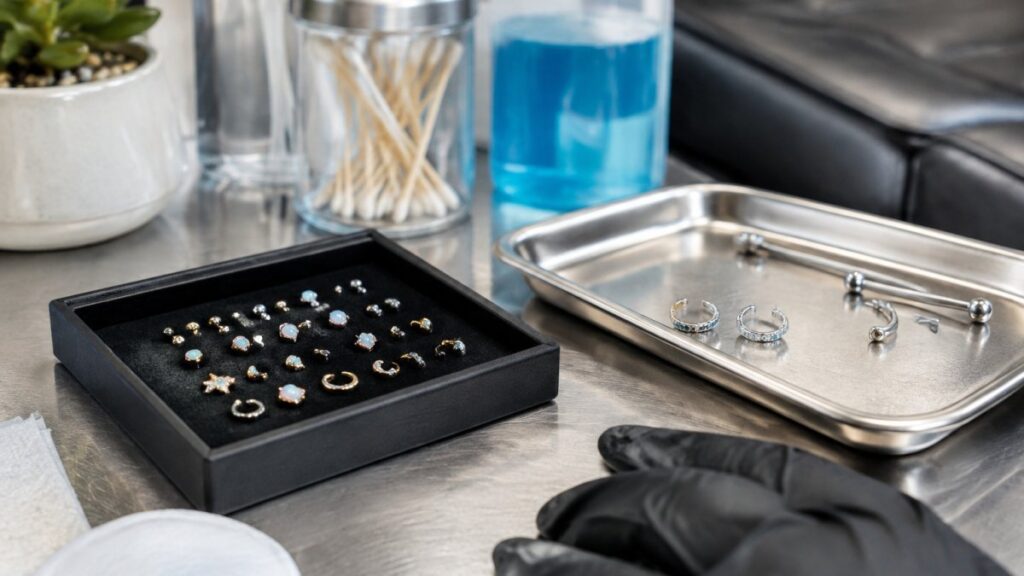
- Solid Gold, Niobium, and Other Materials Worth Considering
- How to Verify Jewelry Quality Before You Buy
- Choosing Safe Jewelry at Sideshow Tattoo and Piercing
- Frequently Asked Questions
What Hypoallergenic Jewelry Really Means for Sensitive Skin
The best piercing jewelry for sensitive skin is implant-grade titanium, followed closely by niobium and solid 14K or 18K gold. These materials share one trait: they contain no nickel and almost nothing that leaches into an open piercing.
“Hypoallergenic” is a marketing word, not a regulated one (the FDA). No US agency certifies a piece of jewelry as hypoallergenic, so any shop or brand can print it on a card. What actually matters is the metal composition underneath the label.
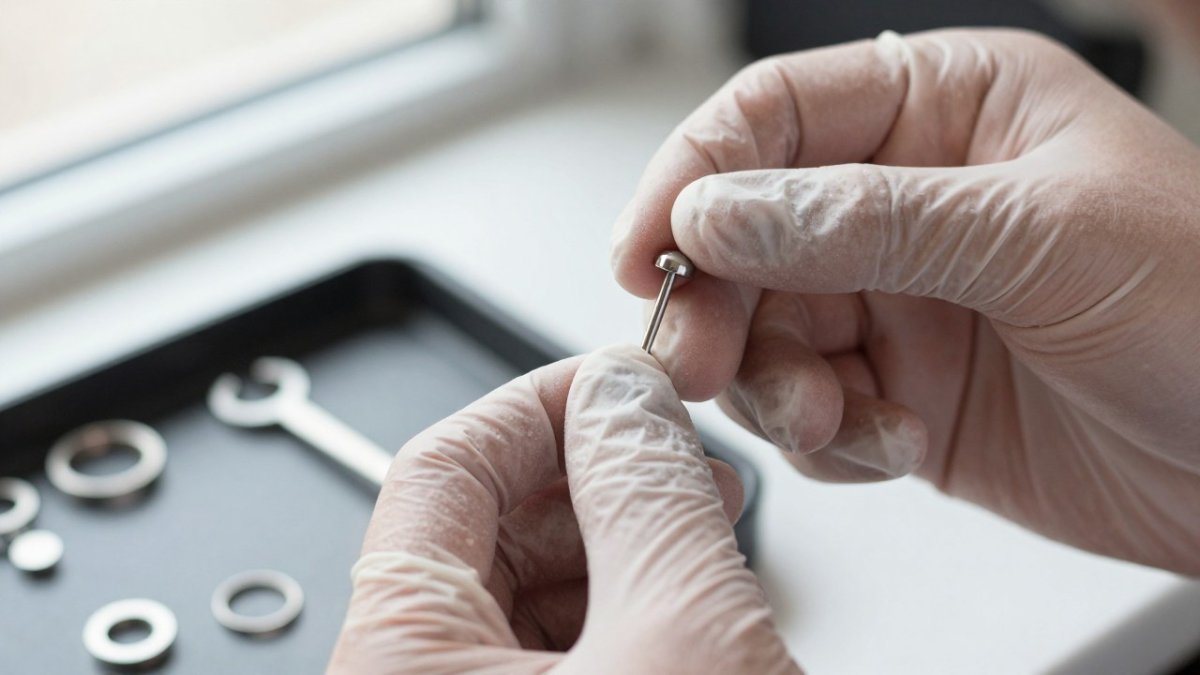
Sensitive skin reacts to what touches it, not to how the jewelry is described. That is why the material grade matters more than the packaging, and why we ask what a piece is made of before we ask what it looks like.
Titanium Piercing Jewelry: The Standard for Reactive Skin
Titanium piercing jewelry is a common recommendation for anyone with a history of metal reactions. Implant-grade titanium, often sold as Ti-6AL4V ELI, is lightweight, corrosion-resistant, and essentially nickel-free, which makes it the safest starting point for a new or healing piercing.
Not all titanium is equal. “Aircraft grade” and “commercial grade” titanium are not made for body jewelry, and some cheap pieces labeled titanium are actually coated steel. Ask for the grade in writing.
Watch out: a piece marketed as titanium with a “titanium-colored” finish is often stainless steel with a coating, and that coating wears through exactly where a healing piercing is most vulnerable. If you want to know what implant-grade titanium jewelry costs before committing, our guide on cost of implant grade titanium jewelry breaks it down.
Is Surgical Steel Good for Sensitive Skin?
Surgical steel is a poor choice for sensitive skin. Most surgical steel, including 316L stainless steel, contains nickel as a structural component, which means it can trigger a reaction in anyone with a nickel allergy even when the surface looks fine.
The confusing part is the name. “Surgical” suggests medical safety, but it describes a family of alloys, not a guarantee. Steel also contains trace elements that some people react to over time, especially in a fresh piercing where the skin is broken.
| Material | Nickel Content | Best For | Main Drawback |
|---|---|---|---|
| Implant-grade titanium | Essentially none | New and healing piercings | Fewer style options |
| Niobium | None | Sensitive lobes and cartilage | Limited colors |
| Solid 14K/18K gold | None in solid form | Healed piercings | Higher cost |
| Surgical steel (316L) | Present in the alloy | Short-term wear only | Can trigger nickel reactions |
| Sterling silver | Often alloyed with copper | Healed lobes, occasional wear | Tarnishes, not for healing |
If a shop cannot tell you what alloy its steel contains, treat that as your answer.
Nickel-Free Jewelry and the Triggers Behind Most Reactions
Nickel-free jewelry solves the single most common cause of piercing reactions. Nickel allergy is the most frequent metal allergy, and repeated exposure through earrings and body jewelry is one of the main ways people develop it.
The reaction usually looks like itching, redness, and swelling around the piercing site, sometimes with a dry, crusty patch. Because a delayed reaction can point to the metal rather than the piercing itself, Amoré Lux can help you think more carefully about which jewelry materials may suit sensitive skin.
Not every reaction is metal. Soaps, shampoos, cosmetics, hair products, and even sweat trapped under a backing can irritate a piercing. Before you blame the jewelry, think about what changed in your routine around the same time. If nothing changed but the jewelry, the metal is the likely culprit.
Use this general guide when something looks wrong:
- Itch and rash, no heat: most consistent with an allergy or contact irritation. Switch to a known-safe material and keep the area clean and dry.
- Heat, pus, worsening pain, or spreading redness: more consistent with an infection. Do not remove the jewelry on your own, because removing it can trap infection inside a closing hole. Contact a healthcare professional.
- Crusting that improves with cleaning but returns: often normal healing discharge, especially in cartilage. Compare it to what the piercing looked like a week ago rather than to a fully healed piercing.
- A bump next to the hole: frequently an irritation bump from fit, movement, or moisture rather than an allergy. Check post length and backing style before replacing the metal.
Watch out: removing jewelry from a suspected infection can seal bacteria inside the piercing channel. Leave it in and get medical advice.
If you are unsure whether you are dealing with an allergy or an infection, our breakdown of infection vs jewelry allergy walks through the differences.
Hypoallergenic Earrings for Cartilage Piercings: Fit and Finish Matter
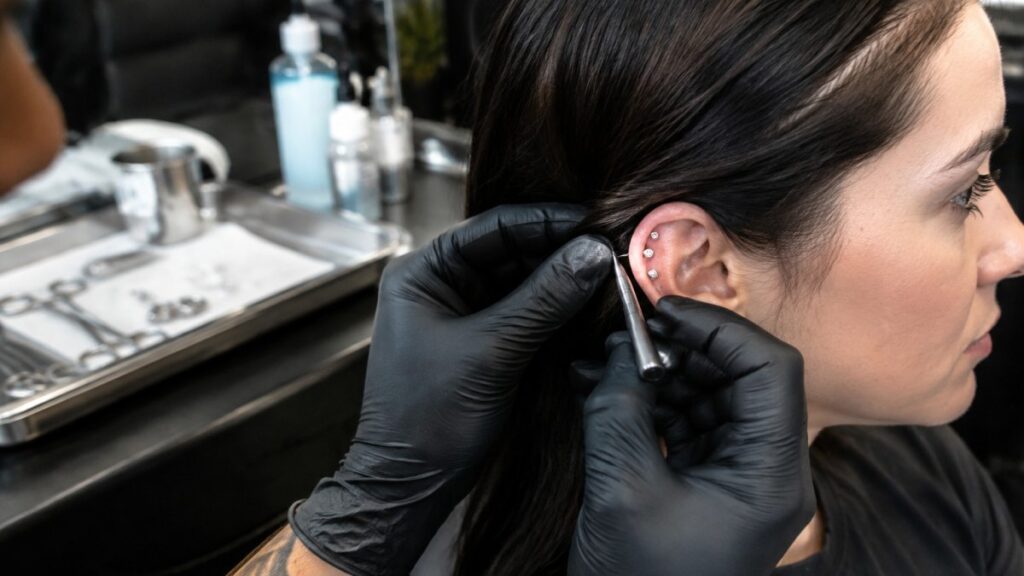
Hypoallergenic earrings for cartilage piercings need more than safe metal. Cartilage heals slowly and sits close to the surface, so a post that is too long catches on hair and masks, and a post that is too short presses into swelling. Even implant-grade titanium will irritate a helix if the fit is wrong.
Fit comes down to three things: post length, backing style, and the finish on the ends. Flat-back labret studs sit flush against the skin and cause fewer snags than butterfly backs. Polished ends glide through cleaning; rough or plated ends trap moisture. A common mistake is sizing down too early.
Construction matters as much as material. Two pieces of the same titanium can behave very differently depending on how they are made:
- Threading style: internally threaded and threadless jewelry keep the screw threads inside the post or use tension pins, so the part that passes through the piercing is smooth. Externally threaded posts have exposed threads that can scrape the healing channel on the way in.
- Polish: a mirror-polished surface has fewer microscopic pits where bacteria and residue collect. Matte or brushed finishes look good but are harder to keep clean during healing.
- Sizing increments: cartilage posts are commonly measured in small steps, often around 1/16 inch or in millimeter increments. A piercer who measures swelling and chooses a slightly longer post for the first few weeks, then downsizes once the tissue settles, prevents most fit-related irritation.
- End weight and shape: large or heavy ends on a fresh cartilage piercing pull on the tissue. Start with a low-profile end and save the statement piece for a fully healed piercing.
- Backing security: a backing that loosens lets the post slide and the end press into the skin. Threadless ends and properly tightened flat backs stay put through sleep and hair washing.
Watch out: a piercer who hands you a standard-length post without checking swelling is guessing. Ask how the length was chosen and when to come back for a downsize.
For readers comparing options, our selection of jewelry for sensitive ears includes the flat-back and threadless styles we keep on hand for cartilage.
Solid Gold, Niobium, and Other Materials Worth Considering
Solid gold and niobium round out the shortlist for sensitive skin, with one condition: the gold has to be solid, not plated. Solid 14K and 18K gold contain no nickel in the alloy and hold up for years, while gold-plated and gold-filled pieces wear down to the base metal underneath.
Niobium behaves like titanium for reactivity and takes color through anodizing rather than plating, so there is no coating to flake. Platinum and high-quality glass are also reasonable for healed piercings, though platinum costs more and glass suits stretched or decorative wear rather than everyday studs.
For readers leaning toward gold, we keep a roundup of 14K gold piercing jewelry picks for sensitive skin that covers styles and sizing.
How to Verify Jewelry Quality Before You Buy
Verification is where most buyers get burned. A mill certificate or material test report from the supplier is a strong proof of grade.
- Ask for the specific alloy and grade, not just “titanium” or “gold”
- Confirm the piece is solid, not plated or filled
- Check for a stamp: 14K, 18K, or a titanium grade designation
- Look for a mirror-polished finish with no flaking at the edges
- Ask whether the jewelry is autoclave-sterilized before insertion
- Request the mill certificate if you are spending real money
A magnet test is a rough screen, not proof: some safe metals are magnetic and some reactive ones are not. If you want a step-by-step method, our guide on how to tell if jewelry is nickel free covers the practical checks in order.
Choosing Safe Jewelry at Sideshow Tattoo and Piercing
Our team uses only quality jewelry for piercings. Hand-picked professional artists handle the placement.
If you want to browse before you visit, our selection of jewelry for sensitive ears shows the styles we keep on hand. When you are ready, contact us and we will help you pick the right piece for your piercing and your skin.
Sensitive skin does not have to mean a shelf of jewelry you cannot wear. The right metal, the right fit, and a shop that will answer questions about both make the difference between a piercing that settles and one that keeps flaring. Sideshow Tattoo and Piercing offers hand-picked professional artists and quality jewelry for piercings. Get started with Sideshow Tattoo and Piercing and wear jewelry that works with your skin instead of against it.
Frequently Asked Questions
What is the safest metal for a new piercing?
Implant-grade titanium is the safest choice for a new piercing. It is nickel-free, lightweight, and unlikely to trigger an allergic reaction during the healing months when your skin is most vulnerable. Niobium and solid 14K or 18K gold are also good options. Avoid surgical steel and plated jewelry until the piercing is fully healed, since both can release nickel and cause irritation.
Is surgical steel good for sensitive skin?
Usually not for a fresh piercing. Surgical steel contains nickel, and even small amounts can trigger a reaction in people with a nickel allergy. It also contains other alloys that may irritate sensitive skin. Some people wear it without problems once a piercing is fully healed, but implant-grade titanium is a safer bet if you know your skin reacts easily.
How can I tell if piercing jewelry contains nickel?
Ask the piercer for the material grade and a mill certificate, and look for labels like implant-grade titanium or nickel-free. Be cautious with unmarked jewelry, cheap earrings from unknown sources, and anything described only as ‘surgical steel’ without a grade. A nickel allergy test kit can confirm a reaction at home, but the most reliable check is buying from a shop that can document its materials.
Is gold or titanium more hypoallergenic?
Both can work well, but titanium is generally the safer choice for a new piercing. Implant-grade titanium is nickel-free and very unlikely to cause a reaction. Solid 14K or 18K gold is also low-risk, but lower-karat gold and gold-plated jewelry often contain nickel or a base metal that can irritate skin. If you choose gold, confirm it is solid and at least 14K.
What jewelry won’t irritate skin?
Look for implant-grade titanium, niobium, solid 14K or 18K gold, platinum, or glass. These materials are nickel-free or low-nickel and rarely cause reactions. Fit and finish matter too: a smooth, well-polished surface and the right length reduce friction and irritation. Avoid nickel-containing alloys, plated jewelry, and anything with rough edges or loose parts.
Which is better for sensitive skin, stainless steel or sterling silver?
Neither is ideal for a new or healing piercing. Sterling silver contains copper and often nickel, and it tarnishes, which can irritate skin. Stainless steel contains nickel and other alloys. If you must choose between them for a healed piercing, sterling silver is usually the milder option, but implant-grade titanium is safer and more predictable for sensitive skin.