Quick Summary
The most common tattoo design mistakes are choosing a design for how you feel today, using lines too fine or spacing too tight, and picking a placement that does not suit the artwork. Most of these are easy to avoid by checking the design against your body and long-term taste before booking.
- Ask whether you would still want the design in ten years, even if nobody else saw it.
- Thicken key lines and leave open space between elements so the ink does not blur together.
- Print the design at its intended size and hold it against your body, moving to see how it shifts.
- Ask your artist how the design will look once healed and how the shading will read over time.
- Confirm the artist will create original artwork or adapt your references rather than copy them.
Table of Contents
- Why Tattoo Design Mistakes Are So Hard to Undo
- Choosing a Design You Will Still Want in Ten Years
- Overcomplicated Designs and Fine Line Problems
- Placement Trade-Offs Most Clients Overlook
- Originality, References, and Copyright Concerns
- A Consultation Checklist to Catch Problems Early
- Booking Your Consultation at Sideshow Tattoo and Piercing
- Frequently Asked Questions
Common Tattoo Design Mistakes to Avoid Before You Book
Last Updated: November 11, 2026
Why Tattoo Design Mistakes Are So Hard to Undo
Most tattoo regrets start with the design, not the needle. Most of these mistakes are easy to avoid if you know what to look for.
A tattoo is permanent. Once the design is on your skin, changing it takes a cover-up, a touch-up, or removal, and each option costs more time and money than getting the design right the first time.
Tattoo design mistakes are hard to undo because:
- Ink stays in the skin for life, and skin changes as you age
- Removal takes many sessions and often leaves marks
- Cover-ups need a design that is bigger and darker than the old piece
This guide walks through the most common tattoo design mistakes to avoid before you book. Use it as a checklist before your appointment.
Choosing a Design You Will Still Want in Ten Years
The most common regret is choosing a design for how you feel today. Trends, friends’ opinions, and a single bad week can all push a choice that looks different in a few years.
Ask yourself a few honest questions before you commit:
- Would I still want this if nobody else saw it?
- Does the meaning still matter to me in five years?
- Does this design fit my body and my life?
Pick a design that means something stable to you. Symbols tied to a real memory or value age better than a passing trend.
Overcomplicated Designs and Fine Line Problems
Detail is where many designs go wrong, and the reason is mostly physical rather than artistic. Ink is deposited into the dermis, and as the skin heals and ages, the ink can spread slightly and the surrounding tissue changes. You can browse our fine line tattoo work in Pacific Beach to see how delicate linework is handled. A line that is crisp on the day it is done can soften over the following years, which means a design has to be judged on how it will look in a decade, not how it looks on the stencil or on a phone screen.
Several design choices determine how well a piece holds up:
- Line weight. Very thin lines are the most likely to fade or blur into one another. A line that is too fine for its size can close up over time, turning two parallel strokes into one.
- Spacing between elements. Tight gaps between lines, dots, or shading blocks are the first things to merge. Leaving open space between parts of a design gives the ink room to stay distinct.
- Density of shading. Heavy, dense shading can look rich at first and then muddy as the ink spreads. Ask your artist how the shading will read after healing.
- Color. Some colors tend to fade faster than others over time.
- Size. A design that works at four inches may collapse at one inch. Scaling a detailed piece down is one of the most common ways legibility is lost.
A practical test is to ask whether the design would still read if you squinted at it from across the room. If the main shape disappears when blurred, the design probably depends on detail that the skin will not keep.
If you love a detailed piece, a few adjustments usually help: increase the overall size, thicken the key lines, widen the gaps between elements, and cut back on fine dotwork or tiny lettering. Ask your artist to show you examples of similar work, or to explain how they would adapt the design for longevity.
The article’s main design risks come down to line weight, spacing, shading, color, and size, each with a practical consequence.
| Design factor | Why it matters | Practical adjustment |
|---|---|---|
| Line weight | Very thin lines can fade or blur together | Thicken key lines |
| Spacing between elements | Tight gaps are the first to merge | Leave open space between parts |
| Density of shading | Heavy shading can muddy as ink spreads | Ask how shading will read after healing |
| Color | Some colors fade faster over time | Ask which colors hold up best |
| Size | Detailed pieces lose legibility when scaled down | Increase overall size |
Placement Trade-Offs Most Clients Overlook
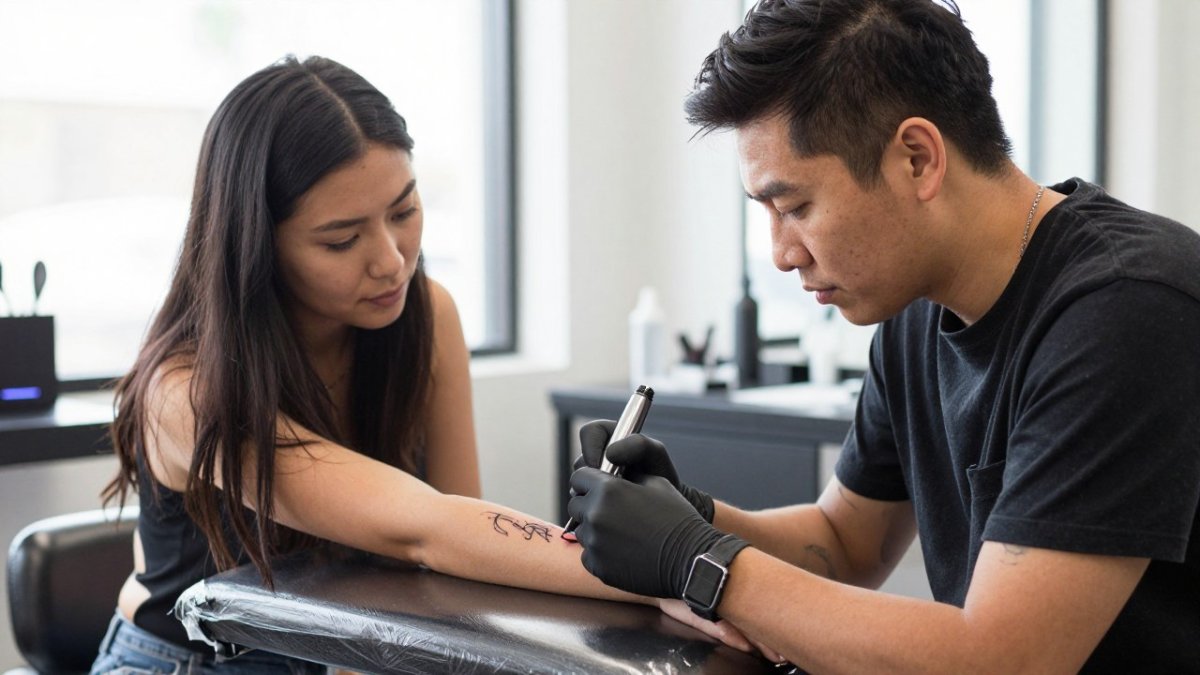
Where a tattoo goes matters as much as what it looks like, because each body area trades off visibility, movement, pain, and how well a particular design holds its shape. Most people choose placement based on how a spot looks in the mirror. A better approach is to compare placements against the specific design you want.
The main factors to weigh:
- Movement. Hands, fingers, elbows, knees, and the sides of the ribcage stretch and flex constantly. Designs in these areas can distort or spread, and fine lines are especially prone to this. Areas with less motion, such as the upper arm, outer thigh, back, and calf, usually hold detail better.
- Friction and wear. The inner forearm, the sides of the foot, the back of the hand, and the area under a bra strap or waistband see regular rubbing. Constant friction can accelerate fading and blurring over time.
- Pain. Bony areas and areas with thin skin, such as the ribs, shins, inner arm, and sternum, are generally more uncomfortable to tattoo. Longer sessions can also mean more fatigue, which affects the precision of fine work.
- Visibility and work life. A hand or neck piece is visible in almost every setting, which may be exactly what you want or a problem for certain jobs and dress codes. Covered areas give you privacy but can be harder to shift later if your preferences change.
- Design fit. Long, flowing pieces suit the arm, leg, or back. Small, self-contained motifs often work better on the wrist, ankle, or behind the ear. Forcing a design into a shape it does not suit is a frequent source of regret.
A useful exercise is to take the design you are considering, print it at the intended size, and hold it against your body in the spot you are choosing. Move your arm or bend your knee while you hold it. Notice how the shape changes and whether the key elements stay in view.
Watch out: a placement that looks ideal on a stencil may bend or wrap around a joint in a way that distorts the image. Ask your artist to check the design in several poses, not just standing still.
Discuss placement early with your artist, and ask how this specific design will sit on your body over the years, not only on the day of the appointment.
Originality, References, and Copyright Concerns
Copying another artist’s work or a famous image can create problems. Originality keeps your piece unique, and it is worth confirming that any artwork you bring in is either your own or used with permission.
Use references the right way:
- Collect images for mood, style, and composition, not to copy
- Tell your artist what you like about each reference
- Let the artist adapt the design to your body and vision
A custom piece built from several references usually ends up more personal than a direct copy.
A Consultation Checklist to Catch Problems Early
Bring this checklist to your consultation so you can catch problems before the appointment.
- I have written down what the design means to me
- I have chosen a size and checked it against my body
- I have asked how the design will look once healed
- I have discussed placement and how it moves with my body
- I have confirmed the artist will create original artwork or adapt references
- I have checked spelling, translations, and symbols with the artist
- I have asked about aftercare and expected healing time
- I have a plan for when to pause or revise the design
If any answer feels unclear, wait and ask more questions. A good artist will welcome them.
Booking Your Consultation at Sideshow Tattoo and Piercing
Planning carefully is the best way to avoid a tattoo design you regret. At Sideshow Tattoo and Piercing, our hand-picked artists are dedicated to providing a personalized tattoo experience, and we use only quality jewelry for piercing services.
contact us to book a consultation and talk through your idea before you commit.
Frequently Asked Questions
What is the 1/3 rule for tattoos?
The 1/3 rule is a common guideline suggesting that a tattoo should be sized and placed so the design can be read clearly without overwhelming the body part it sits on. Artists often use it to judge whether a design needs more space, simpler linework, or a different placement. It is a rule of thumb rather than a fixed standard, so the artist’s assessment of your specific skin area and design matters more than the number itself. Bring the design to a consultation and ask how it will look at the size you have in mind.
What are the most common tattoo design mistakes?
The most frequent mistakes include choosing an overly detailed design that blurs over time, picking a placement that stretches or fades poorly, using a reference image without checking its originality, and selecting a design impulsively without considering how it will look years later. Many clients also underestimate how much a design’s meaning may change. Taking time to research your artist’s portfolio and discussing each element of the design before booking helps prevent most of these regrets.
Should I bring a reference photo or a finished design to my artist?
Bringing reference images helps an artist understand your style and subject, but a finished design is usually better for complex or personal pieces because it lets the artist refine proportions, line weight, and composition for your body. If you bring a reference, make sure you are not copying another artist’s work without permission. A good artist will adapt your references into an original piece that fits your placement and will tell you honestly if an idea will not translate well to skin.
Why do overcomplicated tattoo designs cause problems?
Highly detailed designs with tiny lines, dense shading, or small lettering can blur as the ink spreads under the skin and as the tattoo ages. Fine details that look crisp on paper may not hold up after healing. Simplifying a design, increasing line thickness, or enlarging the piece often produces a result that stays readable for many years. Ask your artist which elements may need adjusting before you commit to the final size.