Last Updated: November 12, 2026
Quick Summary
Choosing among Clairemont tattoo and piercing shops comes down to nine questions to ask before you commit. Start with the artist’s style and portfolio, then check piercing safety, jewelry materials, sterilization, and how pricing is structured.
- Ask which artists work in the style of your design and how long they have done it.
- Ask whether piercing jewelry is implant-grade and sized correctly for healing.
- Ask where the autoclave is kept and whether spore test records are available.
- Ask four pricing questions and write down the answers from each shop you contact.
- Look up the shop’s permitting authority and last health inspection before visiting.
Table of Contents
- What Makes a Clairemont Tattoo and Piercing Shop Worth Visiting
- Finding an Artist Whose Style Matches Your Design
- Questions to Ask Before Getting a Piercing
- Safety Practices Every Shop Should Follow
- Jewelry Materials, Pricing and What Affects Cost
- Walk-Ins, Appointments and First-Timer Logistics
- Aftercare That Protects Your Tattoo or Piercing
- Booking Your Consultation at Sideshow Tattoo and Piercing
- Frequently Asked Questions
What Makes a Clairemont Tattoo and Piercing Shop Worth Visiting
Choosing among clairemont tattoo and piercing shops is harder than it looks. Many shops listed online share little detail about pricing, piercing policies or how they keep their work safe. At Sideshow Tattoo and Piercing, we think the best starting point is a short list of questions you can ask any shop before you commit.
A good shop should answer those questions clearly and without pressure. Look for a studio that welcomes questions, shows its work, explains its jewelry and sterilization practices, and tells you what to expect on your first visit. If a shop avoids these topics, treat that as information in its own right.
The sections below walk through the questions that matter most: how to judge an artist’s style, what to ask about piercing safety, how jewelry and pricing work, what to expect from walk-ins versus appointments, and how to care for your new tattoo or piercing afterward.
Finding an Artist Whose Style Matches Your Design
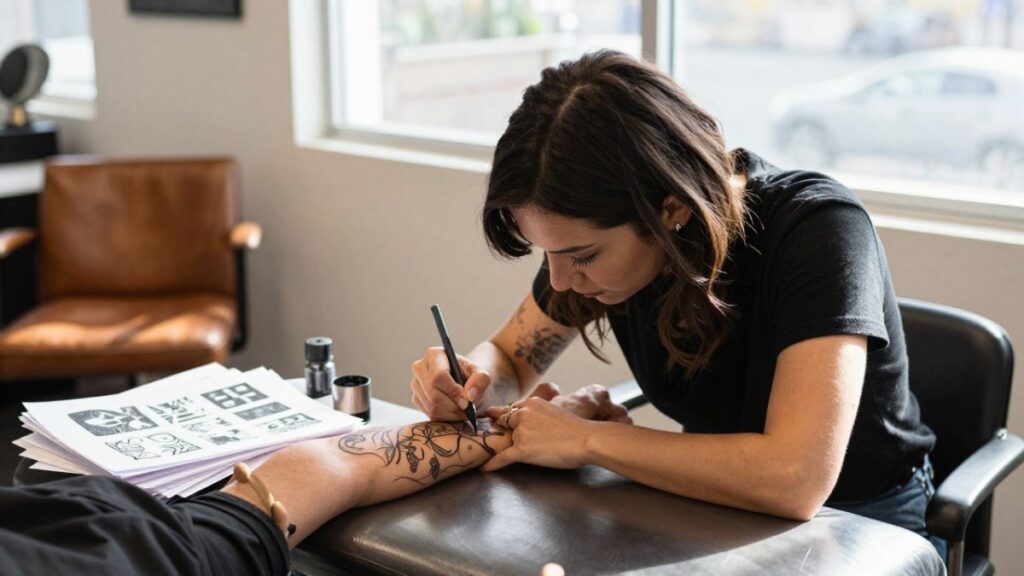
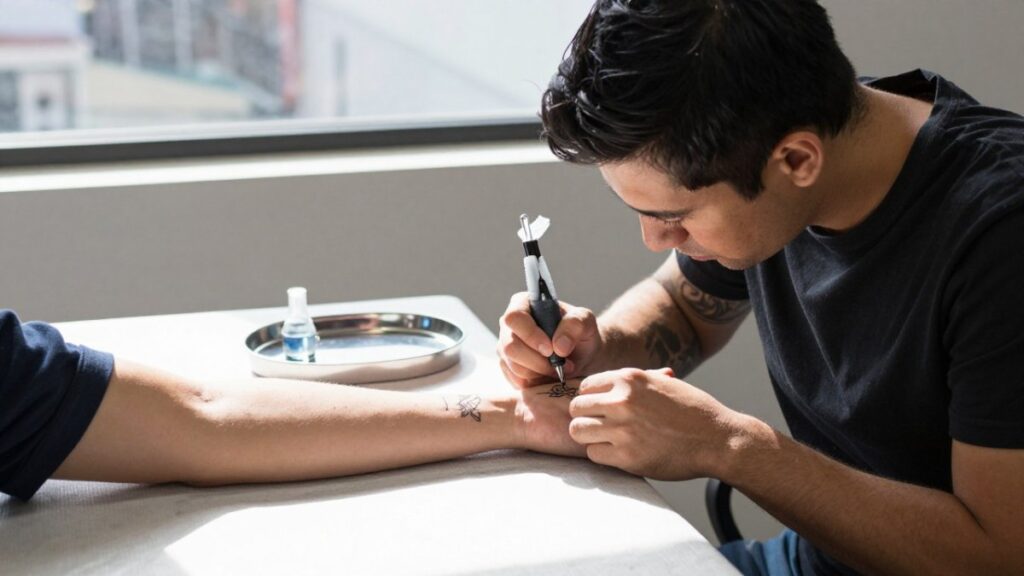
Start with the artist, not the shop. A studio can be well run and still have no one who specializes in the style you want. Ask which artists work in the style of your design. Ask how long they have been tattooing that style.
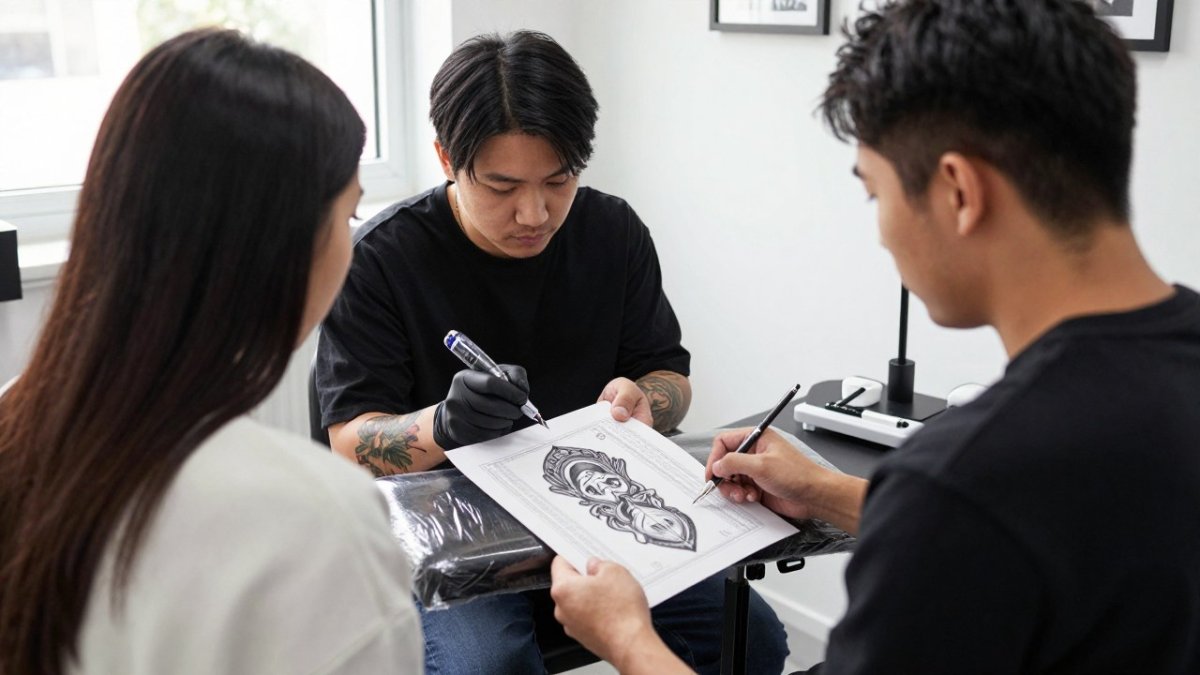
Bring a reference image and ask the artist to explain how they would adapt it to your body placement. A skilled artist will talk about line weight, shading and how the design will age over time. Avoid anyone who agrees to everything without asking questions about your idea.
A common mistake is choosing a shop because of its location rather than its artists. Design details such as lettering size and spacing are easier to get right when the artist reviews the design with you before booking.
What to Look for in an Artist Portfolio
A portfolio tells you more than a shop’s marketing. When reviewing a portfolio, healed work can be more telling than fresh photos, because healed tattoos show how lines and color hold up over time. Check that the portfolio includes the style you want and not just a few examples.
Pay attention to consistency. Clean lines, even shading and sharp edges across many pieces suggest a dependable artist. One standout piece with weak work surrounding it does not.
Questions to Ask Before Getting a Piercing
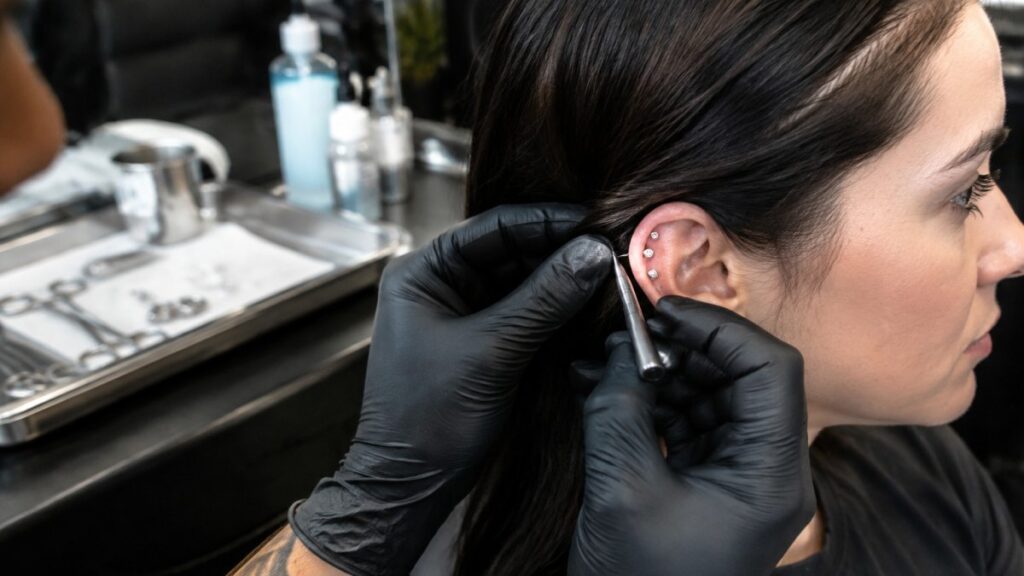
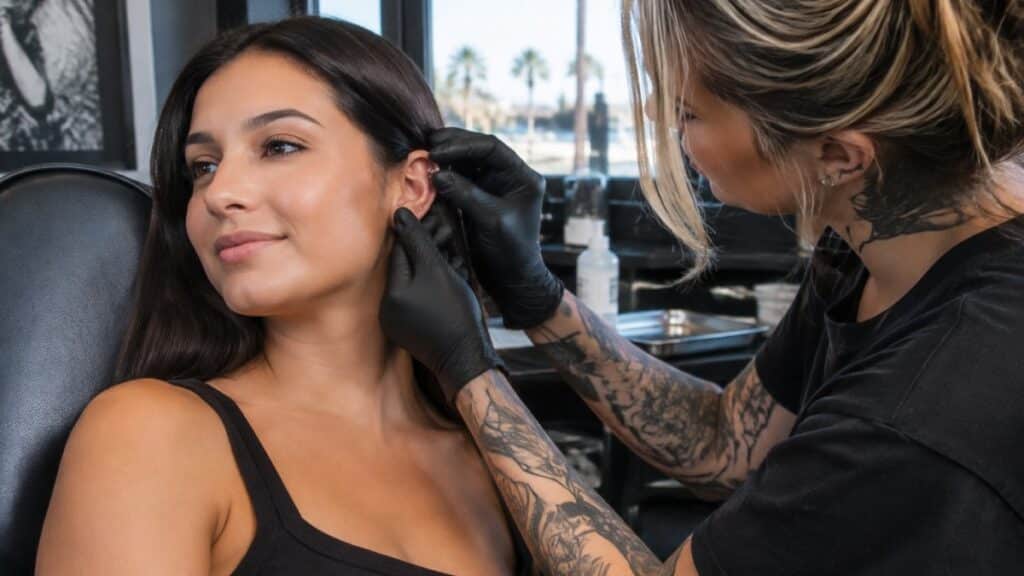
Piercing questions deserve as much attention as tattoo questions. Ask the piercer what jewelry materials they use and whether they are implant-grade. Ask whether the initial jewelry is sized correctly for healing, since jewelry that is too short or too tight can cause problems. Ask whether they use single-use needles and how they handle sterilization between clients.
Ask about age and consent policies before you arrive. Many shops require clients to be adults or to have a parent or guardian present, and the rules can differ for minors. Confirm these requirements in advance so you are not turned away at the door.
Finally, ask what aftercare they recommend and whether you can contact them with questions during healing. A shop that gives you clear written instructions and a way to reach them is usually one that cares about the outcome.
Safety Practices Every Shop Should Follow
Safety is the single most important factor when choosing a shop, and it is also the easiest to verify if you know what to look for. The basics to look for without asking: single-use, pre-sterilized needles opened in front of you; disposable gloves changed between clients; work surfaces covered or disinfected between appointments; and sharps dropped into a proper medical waste container rather than a trash can.
The part most clients never check is the sterilization chain. Ask where the autoclave is kept, whether spore test records are available, and how instruments are bagged and dated after sterilization. A shop that runs an autoclave should be able to show you a log; a shop that cannot produce one is asking you to take its word for the most important step in the process. Ask whether the shop uses an autoclave at all or relies on pre-sterilized disposable instruments, because both are legitimate but only one requires that paperwork.
In many areas, tattoo and piercing businesses are permitted and inspected by a local health department, and some publish inspection results online. Look up the shop before you visit, and ask the studio which agency permits it. A shop that can name its permitting authority and its last inspection is generally one that expects to be checked.
Ask how the shop handles complications. An honest answer describes what to do if a piercing migrates, a tattoo shows signs of infection, or jewelry needs to be swapped during healing, and it includes a way to reach someone. A shop that brushes the question aside is telling you something.
Watch out: a clean-looking front room says nothing about the back room. Ask to see where sterilization happens, and treat a refusal as a decision made for you.
Jewelry Materials, Pricing and What Affects Cost
Jewelry material matters for both comfort and healing, and it is one of the few things you can compare across shops before you ever sit down. Implant-grade titanium, niobium, solid gold of a known karat and surgical stainless steel are materials commonly used for new piercings. Ask what the jewelry is made from before you agree to any piercing, and ask for the material, gauge and size to be written on your receipt or aftercare sheet. If a shop cannot tell you the gauge or the alloy, that is a reason to keep looking.
Pricing is often not published online, so build your own comparison instead of waiting for a published menu. When you call a shop, ask four separate questions and write the answers down:
- Is there a minimum charge for a tattoo, and does it apply to small pieces?
- Is the piercing fee separate from the jewelry cost, or bundled?
- Does the quoted price include the initial jewelry, aftercare supplies and any follow-up visit to downsize or check healing?
- Is a deposit required to book, and is it applied to the final price or forfeited on reschedule?
Separating those four numbers is what makes shops comparable. A shop with a lower piercing fee but jewelry priced separately can end up costing more than one that bundles everything, and a tattoo minimum that looks high may include the artist’s design time while a cheaper shop charges for drawing on top of the hourly rate. Ask whether the artist charges by the hour or by the piece, because the two structures can favor different sizes of design.
Watch out: a price far below others in the area can signal a concern about the jewelry alloy or the sterilization routine, so ask about both before deciding.
For current figures at any specific studio, call or check its website directly. No article can keep a live price list accurate, but the four questions above will get you a real number from every shop you contact.
The article compares jewelry materials and the four questions to ask when pricing a shop.
| Question to ask | Why it matters |
|---|---|
| Minimum charge for a tattoo? | Small pieces may be priced differently |
| Is the piercing fee separate from jewelry? | Bundled pricing can change total cost |
| Does the price include aftercare and follow-up? | Affects what you actually pay |
| Is a deposit required, and is it refundable? | Determines the cost of rescheduling |
Walk-Ins, Appointments and First-Timer Logistics
Ask whether a shop takes walk-ins or works by appointment only. Walk-in availability can change by day and by artist, so call ahead before you visit. Some appointment-only shops ask for a deposit and a consultation, which can give the artist time to plan your design.
If this is your first tattoo or piercing, say so when you book. Ask what to expect in the first session, how long it will take, whether you can bring a friend and what to wear. A shop that is comfortable with first-timers will walk you through each step and answer questions without making you feel rushed.
Plan your transportation as well. Confirm the address, parking and public transit options before you go, and allow extra time so you are not hurried on arrival.
Aftercare That Protects Your Tattoo or Piercing
Good aftercare is what keeps a tattoo sharp and a piercing healthy. Follow the instructions your artist or piercer gives you, and do not change jewelry until the piercing has fully healed. Keep new tattoos clean and moisturized, and avoid soaking them, sun exposure and picking at scabs.
Watch for signs of trouble. Redness that spreads, swelling that worsens over several days, unusual discharge or fever should prompt a call to the shop or a medical professional. Early attention makes most problems easier to manage.
If you have questions during healing, contact the shop. A reputable studio expects follow-up calls and would rather hear from you early than after a problem has grown.
Booking Your Consultation at Sideshow Tattoo and Piercing
If you are weighing these questions against a shop, Sideshow Tattoo and Piercing is available to answer them directly. Our artists are hand-picked to match each client’s needs, and we use quality jewelry for all piercings. Whether you are planning a first piercing or a custom tattoo, a consultation is the best way to talk through your design, your options and your concerns.
Get started with Sideshow Tattoo and Piercing and bring your questions to the chair. Call the studio or visit our website to book a consultation and get a clear answer before you commit.
Frequently Asked Questions
What should I look for in a tattoo and piercing shop?
Look for licensed staff, a clean and visibly sterilized workspace, single-use needles, and jewelry made from implant-grade or body-safe materials such as titanium or 14-karat gold. Check whether artists show a portfolio of healed work and whether staff explain their process before you book. Reviews help, but read them for comments about hygiene, communication and how the shop handled problems rather than only star ratings. A shop that answers questions patiently and clearly is usually a good sign.
Do tattoo and piercing shops in Clairemont offer walk-ins?
Some shops accept walk-ins for small, simple tattoos or standard piercings, while custom work almost always requires a booked consultation and design session. Walk-in availability changes by day and by artist, so calling ahead or checking the shop’s current booking page is the most reliable way to confirm. If you are visiting for only a few days, ask whether a quick appointment can be scheduled during your stay.
What questions should I ask before getting a piercing?
Ask which jewelry brands and materials the shop uses, whether needles are single-use and sterilized, and how the piercer handles aftercare instructions. Confirm the piercer’s experience with the specific placement you want, and ask about any age or consent policies if you are booking for someone under 18. A reputable shop will answer these questions directly and will not pressure you into a faster or cheaper option.
How do I choose a tattoo artist for a custom design?
Review the artist’s portfolio for work in the style you want, including healed photos where available, since fresh tattoos can look different once they settle. Bring reference images to your consultation and notice whether the artist asks questions about placement, size and how the design will age. An artist who explains what will and will not work well is generally a safer choice than one who agrees to everything without discussion.