Last Updated: October 23, 2026
Quick Summary
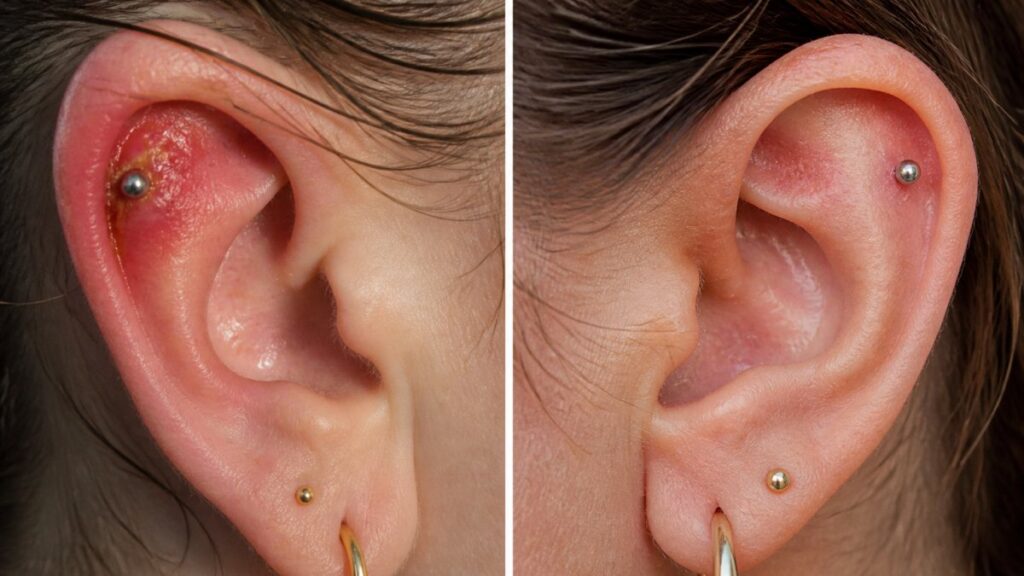
Infection vs jewelry allergy comes down to the cause: bacteria versus your immune system reacting to the metal. Infections show throbbing pain, yellow or greenish drainage, and warmth within days of piercing, while allergies cause itching and rashes that can appear anytime, even years later.
- Infections develop days 3-7 after piercing with concentrated redness and intense throbbing pain.
- Jewelry allergies produce itching and rashes that spread beyond the immediate area without fever.
- Metal allergy rashes typically clear within two to three weeks after removing the triggering jewelry.
- Nickel allergies are most common; titanium and solid gold work better for sensitive skin.
- If a rash persists beyond three weeks after removing jewelry, see a healthcare provider.
Table of Contents
- Infected Piercing Symptoms vs Jewelry Allergy
- Piercing Infection vs Irritation: Key Differences
- How Long Does a Metal Allergy Rash Last
- Frequently Asked Questions
Infected Piercing Symptoms vs Jewelry Allergy
Both cause redness and discomfort, but understanding infection vs jewelry allergy helps you know whether you need medical attention or just a jewelry change.
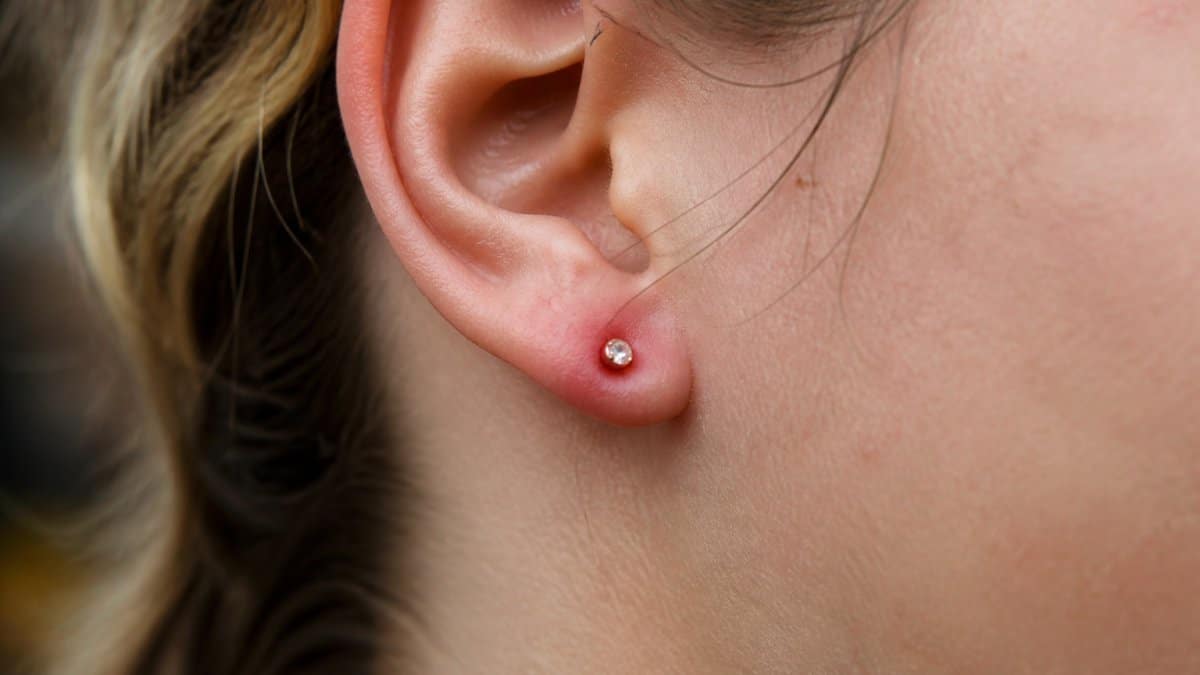
An infection vs jewelry allergy comes down to the cause: bacteria versus your immune system reacting to the metal.
| Symptom | Infection | Jewelry Allergy |
|---|---|---|
| Onset | Days 3-7 after piercing | Can appear anytime, even years later |
| Redness | Concentrated around piercing hole | Spreads beyond the immediate area |
| Drainage | Thick, yellow, or greenish pus | Clear fluid or mild weeping |
| Pain | Throbbing, intense | Itching more than pain |
| Warmth | Site feels hot to touch | No unusual warmth |
| Swelling | Rapid and pronounced | Gradual, localized |
Piercing Infection vs Irritation: Key Differences
An infection means bacteria entered the wound; irritation means the piercing isn’t healing cleanly, often from movement, pressure, or low-quality jewelry.
Signs of a true infection include throbbing pain, yellow or greenish drainage, warmth, and sometimes fever, with spreading redness and worsening swelling.
Irritation brings mild redness, clear drainage, and stable tenderness that improves once you stop touching the piercing or switch to better jewelry.
Jewelry allergy is dominated by itching, plus a rash that rings the piercing or spreads across the earlobe. Fever doesn’t occur with allergy.
How Long Does a Metal Allergy Rash Last
A metal allergy rash typically clears within two to three weeks after removing the triggering jewelry, with some improvement within days of switching to a hypoallergenic material.
Remove the source immediately, since leaving the allergenic metal in place keeps the rash active.
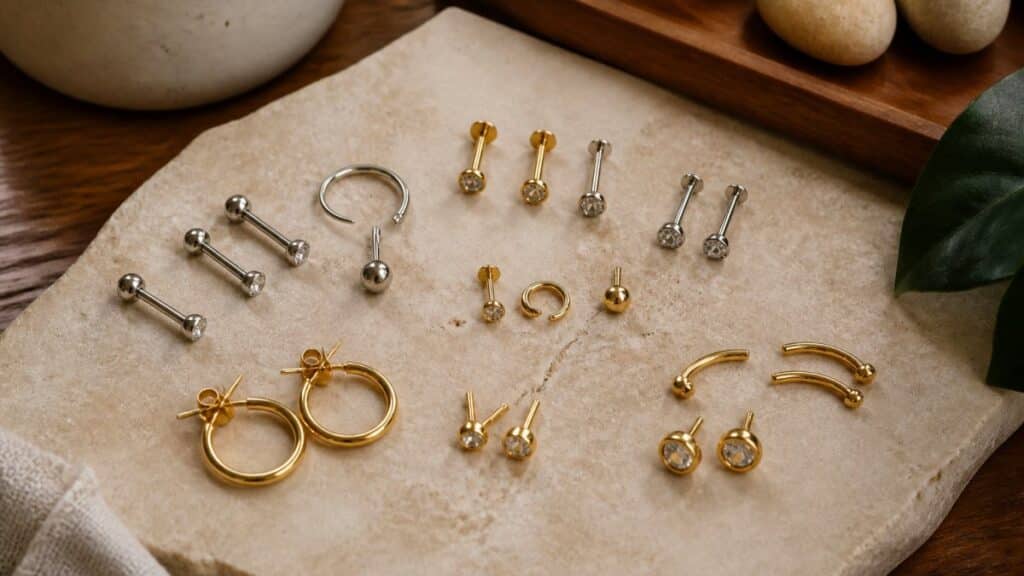
Once you identify the metal, avoid it permanently. Nickel allergies are most common; stainless steel, titanium, and solid gold work better for sensitive skin.
If a rash persists beyond three weeks after removing the jewelry, see a healthcare provider.
Frequently Asked Questions
How can I tell if my piercing is infected or reacting to jewelry?
Infection typically involves pus, warmth, throbbing pain, and sometimes fever. A jewelry allergy causes itching, redness, and a rash that may spread but usually stays localized. Infection symptoms worsen over days; allergy symptoms often appear within hours to days of wearing the jewelry. If you’re unsure, remove the jewelry and see a healthcare provider. Sideshow Tattoo and Piercing uses only high-quality jewelry designed to minimize allergic reactions.
What are the signs of a jewelry allergy?
Jewelry allergy symptoms include intense itching, redness, swelling around the piercing site, and a rash that may have a ring-shaped pattern. Blistering and skin discoloration can occur. Symptoms typically appear within hours or days of wearing the problematic metal and improve once you remove the jewelry. The rash may last 1-2 weeks after removal. Nickel is the most common trigger, so switching to nickel-free materials often solves the problem.
How long does a metal allergy rash last after I remove the jewelry?
Most metal allergy rashes resolve within 1-2 weeks after removing the triggering jewelry. Severe reactions may take longer. To speed healing, keep the area clean and dry, avoid scratching, and consider over-the-counter hydrocortisone cream if approved by your healthcare provider. Once healed, you can repierce with hypoallergenic materials like titanium. Contact Sideshow Tattoo and Piercing to discuss jewelry options that won’t trigger your allergy.
When you’re uncertain about what’s happening with your piercing, the safest move is professional evaluation. At Sideshow Tattoo and Piercing, we help clients understand their symptoms and recommend next steps based on what we observe. We use only high-quality jewelry designed to minimize allergic reactions, which prevents many of these problems before they start. If you’re dealing with piercing concerns, reach out and let us help you find clarity.