Last Updated: November 22, 2026
Quick Summary
Tattoo healing depends mainly on how the body repairs the needle wound, the care you give in the first weeks, and how much friction and sun the area sees. Placement on a moving joint or a sun-exposed spot can also shape how the ink looks for years. Good aftercare and a sensible design choice give the ink its best chance to last.
- Ink sits in the dermis, so peeling skin does not mean the tattoo fell out.
- Surface healing often takes two to four weeks, while the dermis remodels for two to three months.
- Do not pick at flakes, because removing them can pull pigment out.
- Redness spreading past the tattoo after day three, pus, or fever calls for a doctor.
- Sunscreen slows fading, especially for bright colors like yellow and light blue.
Table of Contents
- How Tattoo Healing Works in the First Weeks
- Tattoo Healing Stages: What to Expect Day by Day
- How Placement, Movement and Skin Type Shape the Result
- Sun Exposure, Lifestyle and Ink Choices That Affect Aging
- Tattoo Aftercare Tips That Protect Healing
- How to Make a Tattoo Last Longer
- Best Tattoo Designs for Aging Well
- Booking Your Tattoo With a Healing Plan in Mind
- Frequently Asked Questions
How Tattoo Healing Works in the First Weeks
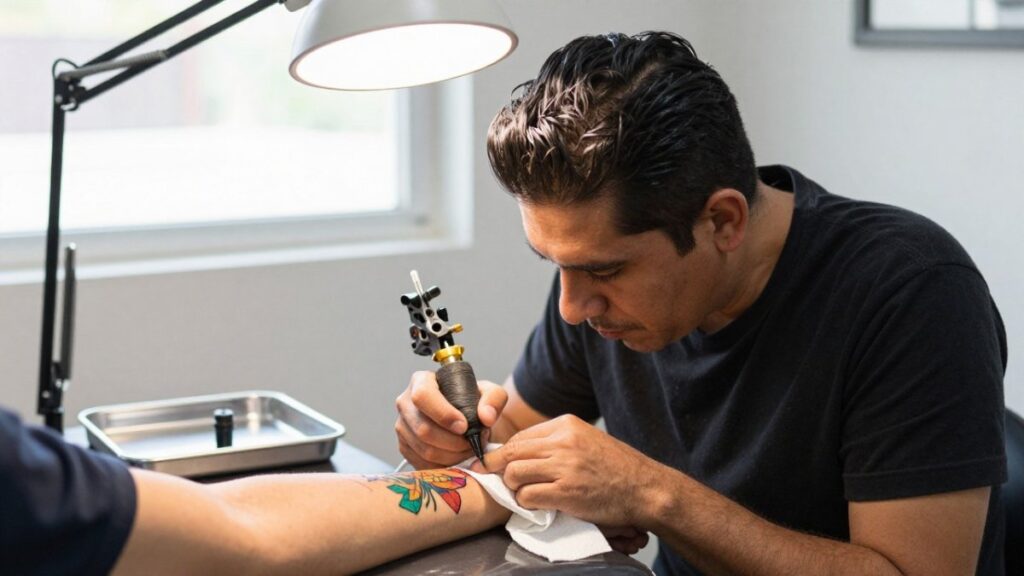
A common question is why one tattoo heals cleanly while another looks patchy. The answer starts with what the needle actually does. A tattoo machine deposits ink into the dermis, the layer of skin below the surface (the FDA). Your body treats that as a wound, and the immune system sends cells to clear it. The first weeks are the body’s repair window, and how well you protect that window shapes how the tattoo looks for years.
Healing is not the same as the skin looking finished. The surface may close within days while the deeper layers take much longer to settle. That is why a tattoo can look sharp on day three and dull or flaky by day ten. Peeling is normal. Picking at it is not, because removing scabs can pull pigment out with them.
Several factors drive how smoothly this goes:
- Depth of the ink: Lines and shading placed too deep or too shallow heal less evenly.
- Your immune response: Health conditions, stress, and sleep all affect how fast the body repairs.
- Care in the first days: Keeping the area clean and moisturized reduces irritation.
- Friction and exposure: Clothing rubbing the area or sun on fresh ink can slow healing.
The first two weeks often set the tone, and good habits here make the later stages easier.
Tattoo Healing Stages: What to Expect Day by Day
Healing is not a straight line, but it follows a predictable arc. Knowing what each phase looks like, and what it should not look like, is the difference between riding out a normal itch and catching an infection early.
Days 1 to 3, the open-wound stage. The skin is raw and weeping a clear-to-yellowish plasma mixed with excess ink. Mild swelling, warmth, and a sunburn-like sting are expected. Keep the wrap on for the interval your artist specifies, then wash gently.
Days 3 to 7, the scabbing stage. A thin, flexible scab or shiny film forms over the lines. Itchiness peaks here because histamine release accompanies tissue repair. Light flaking at the edges is fine; thick, cracked scabs that bleed when the skin flexes are a sign the area is too dry or was overworked.
Days 7 to 14, the flaking stage. The top layer sheds in sheets, and the tattoo looks milky or faded underneath. This is the single most common reason people panic and assume their ink fell out. It has not, the pigment sits in the dermis, below the layer that is peeling. Do not help it along.
Weeks 3 to 4, the settling stage. The surface is smooth, the milky look clears, and true color emerges. Fine lines may look slightly softer than on day one, that is the skin remodeling over the ink, not fading.
When to stop watching and call a professional. Normal healing includes redness confined to the tattoo, mild swelling that peaks around day two or three, and itching.
Individual factors that bend the timeline. Healing can run slower in people with certain health conditions, and some medications can increase bleeding and bruising during a session. If you take a daily medication, tell your artist and, if you are unsure about interactions, your prescriber before the appointment, not after.
The healing timeline runs in predictable phases, and each one has signs that are normal and signs that need attention.
| Stage | Timing | What is normal |
|---|---|---|
| Open-wound stage | Days 1 to 3 | Clear to yellowish plasma, mild swelling, sunburn-like sting |
| Scabbing stage | Days 3 to 7 | Thin, flexible scab; itching peaks |
| Flaking stage | Days 7 to 14 | Top layer sheds; tattoo looks milky or faded |
| Settling stage | Weeks 3 to 4 | Surface smooth, true color emerges |
| Full remodeling | Roughly two to three months | Dermis keeps remodeling; wait before judging color |
How Placement, Movement and Skin Type Shape the Result
Two tattoos done on the same day can age very differently, and the variables are mostly anatomical. Placement decides how much mechanical stress the ink absorbs over a lifetime. Skin decides how well it holds. Neither is something you fix after the fact, both are decisions you make before the needle touches you.
Placement and mechanical stress. Areas that flex constantly, elbows, knees, knuckles, the sides of the feet, the wrist, the neck, stretch and compress the dermis thousands of times a day. Mitigating the inevitable irritation caused by this constant friction requires careful aftercare, a process that Graphoenix LLC explores in relation to skin recovery and long-term ink stability.
Skin type and texture. Thinner skin over bone, like the collarbone or ankle, can show lines sharply but blows out more easily if the artist overshoots depth. Oily skin tends to hold ink well and heal with fewer dry patches; very dry or eczema-prone skin heals more slowly and needs a lighter, more frequent moisturizing routine rather than a heavy occlusive layer.
Skin tone and pigment visibility. This is where generic advice fails. Pigment visibility can vary with skin tone, and lighter pale pigments may read differently on some skin. Discuss uncertain colors with your artist before committing to a large area.
Tailoring aftercare to the spot. A tattoo on the ribs or back is easy to keep clean and hard to keep from rubbing against a waistband; a tattoo on the hand is nearly impossible to keep dry through normal handwashing.
What to ask your artist. Before you commit to placement, ask three questions: how much does this spot move day to day, how much sun will it see, and how has this artist seen similar skin types hold this style. The answers will tell you more about how the piece will look in ten years than any photo of it fresh off the table.
Sun Exposure, Lifestyle and Ink Choices That Affect Aging
Sun exposure is one of the biggest causes of tattoo fading. Ultraviolet light breaks down pigment over time, and bright colors like yellows, light blues, and pinks are especially vulnerable. Consistent sunscreen use, with broad-spectrum protection, slows this down a lot (the FDA).
Lifestyle habits matter too. Smoking reduces blood flow to the skin, which can slow healing and blur fine detail. Diet, hydration, and regular exercise support skin health. Heavy sun, hot tubs, and long soaks in pools or the ocean can also affect a fresh tattoo.
Ink choices count as well. Bold, dark lines generally hold up better than very fine detail or pale shading. Saturated colors and well-placed black work tend to keep their look longer. Talk with your artist about how a design will age, not just how it looks on the day it is finished.
Tattoo Aftercare Tips That Protect Healing
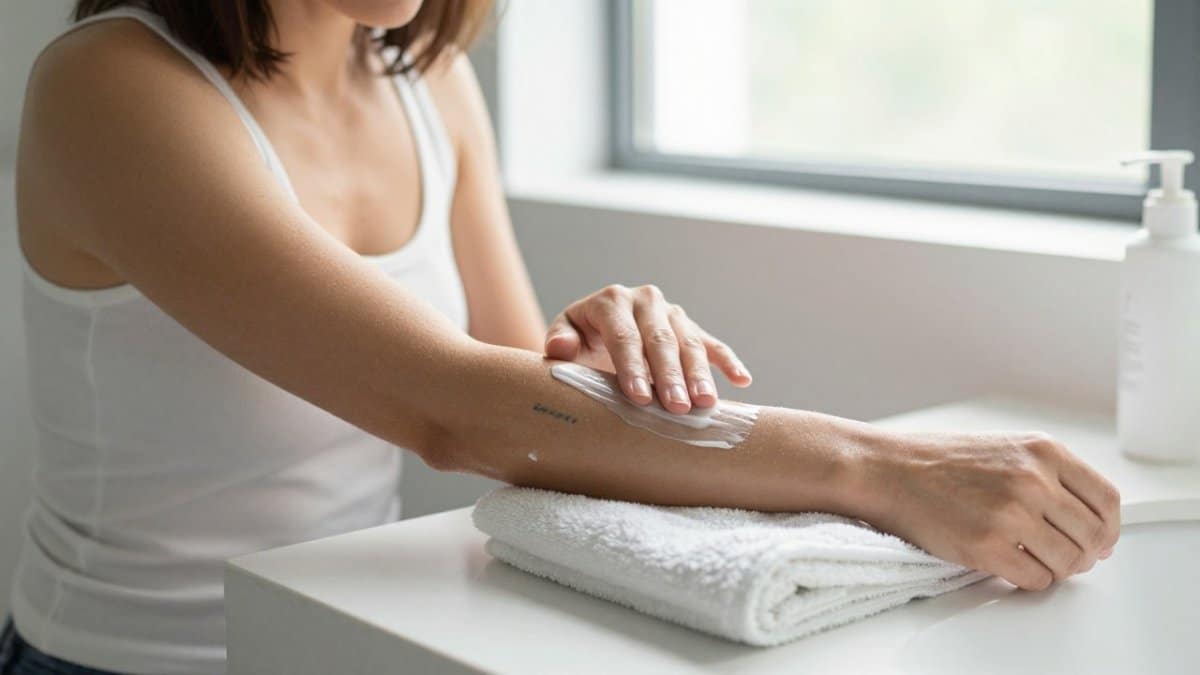
Good aftercare is the most controllable factor you have. Follow these habits from the first day:
- Wash the tattoo gently with fragrance-free soap and lukewarm water, then pat it dry.
- Apply a thin layer of recommended ointment or fragrance-free lotion, not a thick coat.
- Keep clothing loose over the area so it does not rub.
- Avoid soaking the tattoo in baths, pools, or the ocean until it is fully healed.
- Do not pick, scratch, or peel flakes.
For a fuller checklist, see our guide to 7 Things to Look for in a Sterile Tattoo Studio. And if you want to support healing from the inside, What to Eat Before Getting a Tattoo: A Practical Guide covers practical food choices before your appointment.
How to Make a Tattoo Last Longer
Long-term care comes down to a few habits you repeat for years:
- Use sunscreen daily on the tattoo once it is healed, and reapply on long days outside.
- Moisturize regularly so the skin stays supple and the ink looks fresh.
- Get touch-ups when lines soften or colors fade.
- Stay active and healthy, since good circulation and skin health support the look of the ink.
Expect some change over time. Even well-cared-for tattoos soften a little, which is why planning the design matters so much.
Best Tattoo Designs for Aging Well
Some styles hold up better than others. Bold outlines, solid black areas, and designs with fewer tiny details generally keep their shape. Traditional and American-style work with thick lines often ages well. Very fine linework, delicate dotwork, and pale watercolor pieces can blur faster.
Scale matters too. A design that gives each element room to breathe will look better than one packed with small parts. Ask your artist which details are likely to hold up at your chosen size and placement.
If you are planning a larger piece, How to Plan a Large Tattoo Composition: A Step-by-Step Guide walks through choosing a layout that stays readable over the years.
Booking Your Tattoo With a Healing Plan in Mind
A good appointment starts before the needle touches your skin. Bring your questions about placement, color, and aftercare, and be honest about your health, sun habits, and skin type. Those details help your artist shape the design and the plan.
Plan your schedule so you are not rushing back to work or an active event right after the session. Stock up on fragrance-free soap, lotion, and loose clothing before you go. If you want a first-hand walkthrough of what to prepare, 7 Steps to Prepare for Your First Large Scale Tattoo lays out the practical checklist. And if you are thinking about an ear or body piercing alongside your tattoo, How to Tell If Your Ear Anatomy Suits an Industrial Piercing explains how anatomy affects healing there too.
Contact Sideshow Tattoo and Piercing to book a consultation and talk through your design, placement, and aftercare plan.
Frequently Asked Questions
What factors affect how quickly a tattoo heals?
Tattoo healing speed depends on several factors: the size and depth of the design, where it sits on the body, your skin type and overall health, how well you follow aftercare, and whether you avoid friction and sun while the skin recovers. Areas with thin skin or frequent movement, like the feet, hands and ribs, often take longer to settle. Keeping the area clean, moisturized and protected from rubbing gives the skin the best chance to heal evenly. If redness, heat, swelling or discharge worsens after the first few days, contact a healthcare provider promptly.
How long does a tattoo take to heal?
Most tattoos show surface healing within two to four weeks, but the skin beneath can take several months to fully settle. During the first stage, the tattoo may feel tender, scab and peel as the outer layer regenerates. Fading or patchiness that appears in the first month is often temporary. Full healing timelines vary with placement, design density and individual skin response, so plan for a period of careful aftercare rather than expecting a fixed date.
How does sun exposure affect tattoo longevity?
Ultraviolet light breaks down pigment particles over time, which is one of the main reasons tattoos fade and lose vibrancy. Sun exposure can also cause lighter inks to shift in tone. Once a tattoo has healed, applying a broad-spectrum sunscreen with a high SPF whenever the area is exposed, and covering it with clothing outdoors, does more to preserve color than any single product. Avoid sun exposure on fresh tattoos until they are fully healed.
Can skin type or placement affect how a tattoo ages?
Yes. Skin with higher elasticity and thicker dermis tends to hold ink more evenly, while thinner or more sun-exposed skin can soften lines over the years. Placement matters because areas that stretch, rub or sit in constant sunlight, such as hands, feet, the inner arm and the sides of the body, typically show more change. Choosing a design with bold lines and enough spacing for the chosen location can help the tattoo hold its shape longer.