Last Updated: November 19, 2026
Quick Summary
The signs of a professional tattoo shop are visible within the first thirty seconds: clean floors, sealed supplies, gloved hands, and an artist who stops to greet you. A safe shop is a clean shop with a paper trail, meaning visible hygiene, current licensing, and artists who welcome questions.
- Watch for a fresh pair of gloves pulled from the box right before your skin is prepped.
- Needles must come out of sealed, dated packaging in front of you, after you are seated.
- Sharps containers should be rigid, closable, labeled, and within arm’s reach of the station.
- Walk out if you see reused gloves, no visible sharps container, or needles opened before you arrive.
- Ask to see both the shop license and the artist’s bloodborne pathogen certificate.
Table of Contents
- How to Tell If a Tattoo Shop Is Safe
- Tattoo Shop Hygiene Checklist: What to Look For
- Questions to Ask a Tattoo Artist Before Booking
- Tattoo Shop Red Flags That Should Stop You Cold
- Professionalism, Consent, and Client Boundaries in a Professional Tattoo Shop
- How to Verify Licensing and Health Requirements
- Booking Your Visit at Sideshow Tattoo and Piercing
- Frequently Asked Questions
How to Tell If a Tattoo Shop Is Safe
Walk into any studio and you can learn a lot before anyone says a word. The signs of a professional tattoo shop environment are visible in the first thirty seconds: clean floors, sealed supplies, gloved hands, and an artist who stops to greet you.
A safe shop is a clean shop with a paper trail. That means visible hygiene, current licensing, and artists who welcome questions.
Below, we break down exactly what to check, from the front door to the chair.
Walk-In Impressions: What the Space Says Before Anyone Speaks
The front room tells you plenty. Look for swept floors, covered trash, and a bathroom you would actually use. A shop that keeps its lobby clean usually keeps its workstations cleaner.
Watch how staff handle a walk-in. Do they greet you, ask what you want, and explain the process? Or do they ignore you until you wave?
If you plan to drop in without an appointment, it helps to know how to prepare for a walk-in tattoo before you go.
The Setup at a Glance: Station, Chair, and Supplies
A safe station looks almost boring. That is the point.
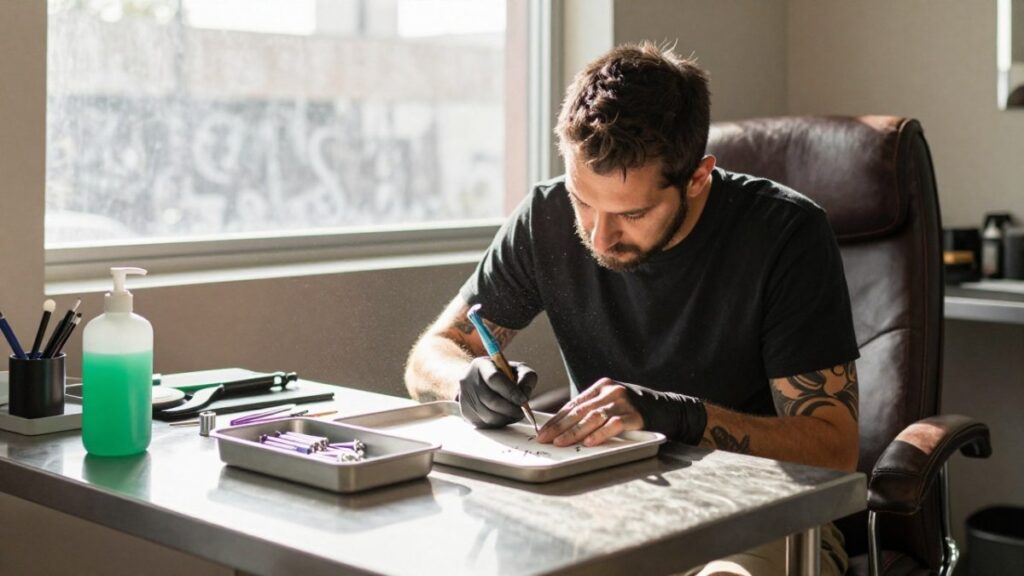
- A fresh barrier sheet on the tray and chair
- Sealed needles opened in front of you
- A sharps container within arm’s reach
- Bottles of disinfectant with visible labels
- A sink or hand sanitizer station nearby
If supplies sit out in the open, unsealed, or the tray looks reused, ask why. You are allowed to ask.
Tattoo Shop Hygiene Checklist: What to Look For
A tattoo shop hygiene checklist comes down to four things: clean hands, fresh gloves, disinfected surfaces, and single-use supplies. The difference between a professional shop and a careless one is that you can watch each of those four things happen in sequence, in front of you, without having to take anyone’s word for it.
Handwashing, Gloves, and Barrier Protection
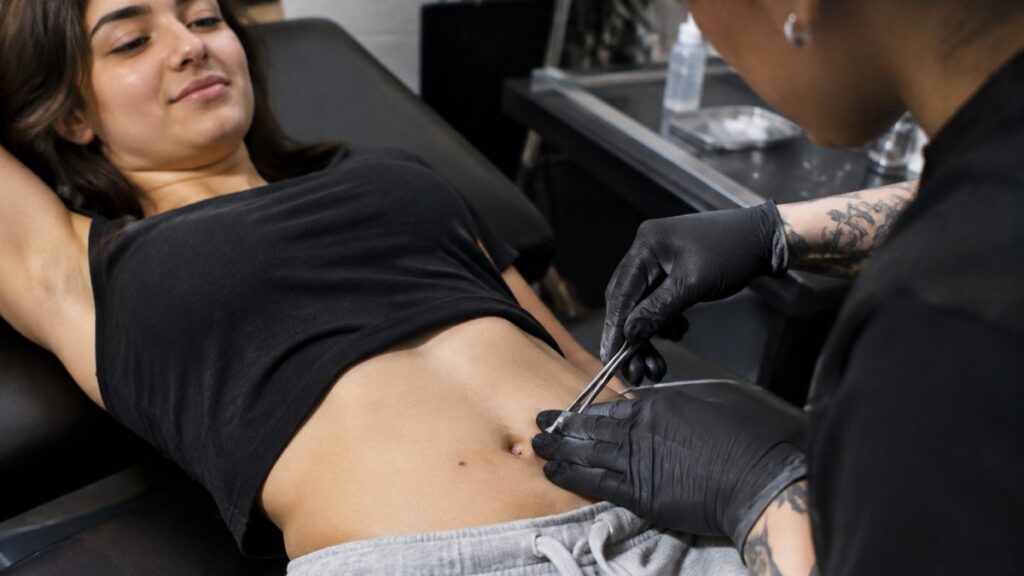
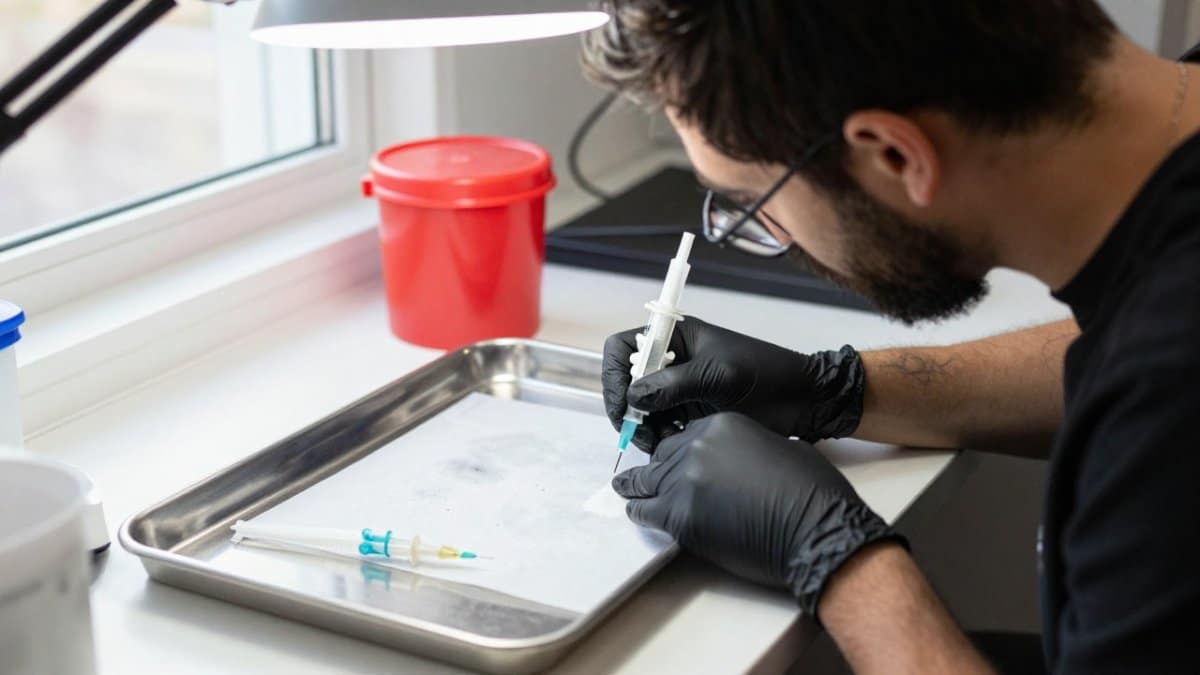
Watch for the swap. A fresh pair pulled from the box right before your skin is prepped is a good sign. The same pair worn from setup through the first line is not.
Barrier protection is the part clients overlook most. Trays, clip cords, machine grips, spray bottles, and the armrest of the chair should be wrapped in plastic film or covered with a fresh barrier sheet that gets peeled off and thrown away between clients. If you see a bare tray being wiped with a rag instead of re-covered, ask whether the surface was disinfected with a hospital-grade product and how long it was left wet.
Needles, Ink, and Sharps Disposal
Needles must come out of sealed, dated packaging in front of you. The package should show a sterilization indicator, usually a color-change strip or dot, and the artist should open it after you are seated, not before.
Sharps containers should be rigid, closable, labeled, and within arm’s reach of the station, not across the room and not overflowing. Bloodborne pathogen rules from OSHA’s bloodborne pathogens standard require proper handling and disposal of contaminated waste, and the container is the visible proof that the shop is following them.
What a Safe Setup Actually Looks Like
- A fresh barrier sheet on the tray and chair
- Sealed needles and single-use tubes still in packaging
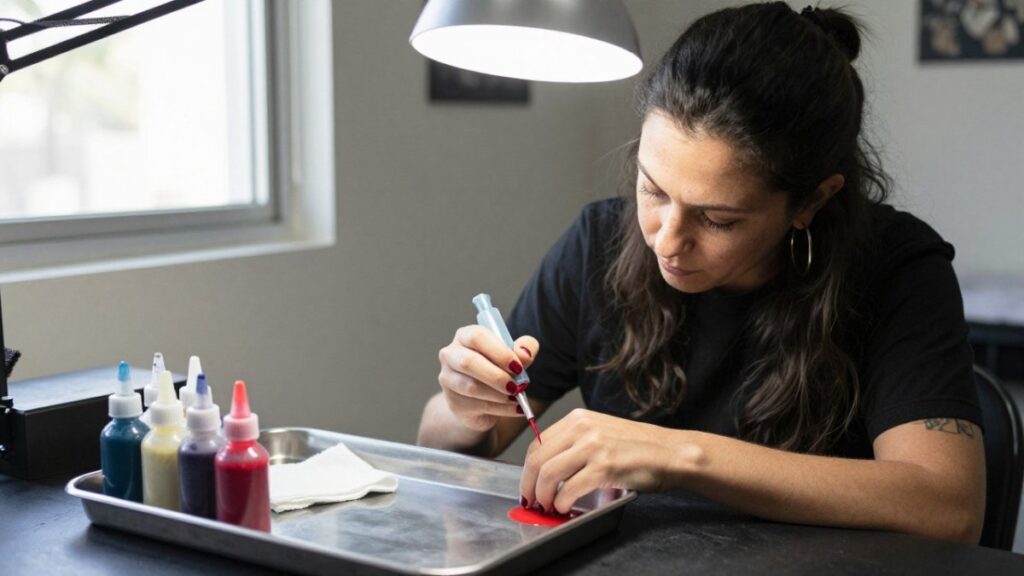
- Small ink cups poured fresh, not shared
- A closed sharps container within reach
- Disinfectant bottles with readable labels and a visible expiration date
- A sink with soap, or hand sanitizer at the station if a sink is not adjacent
If supplies sit out unsealed, if the tray looks reused, or if the artist cannot tell you when the surface was last disinfected, ask why. You are allowed to ask, and the answer tells you as much as the setup does.
Here is the four-part hygiene check the article says you should be able to watch happen in front of you.
| Hygiene item | What to look for |
|---|---|
| Clean hands | Sink with soap or hand sanitizer at the station |
| Fresh gloves | New pair pulled from the box before skin prep |
| Disinfected surfaces | Fresh barrier sheets on tray and chair |
| Single-use supplies | Sealed needles opened after you are seated |
| Sharps container | Rigid, closable, labeled, within arm’s reach |
| Ink cups | Poured fresh, not shared |
| Disinfectant bottles | Readable labels and a visible expiration date |
Questions to Ask a Tattoo Artist Before Booking
Ask these before you put down a deposit:
- Can I see your portfolio and healed work?
- What is your cleaning routine between clients?
- Do you use single-use needles and cups?
- How do you handle a design you have never done before?
- What aftercare do you recommend?
Listen for clear, calm answers. If an artist gets defensive, that tells you something. You can also read more on how to find a reputable tattoo artist before you commit.
Tattoo Shop Red Flags That Should Stop You Cold
Some warning signs are deal-breakers. Walk out if you see any of these:
- Needles opened before you arrive
- Gloves reused or missing
- No visible sharps container
- A dirty bathroom or cluttered station
- Artists who dodge questions about licensing
- Pressure to skip a consultation
Watch out: A shop that rushes you past setup is hiding something. The setup is where safety happens.
Professionalism, Consent, and Client Boundaries in a Professional Tattoo Shop
A professional tattoo shop treats consent as a process, not a formality. Artists should confirm placement, size, and design before starting. They should stop when you say stop.
Good shops also explain aftercare in plain language. They hand you written instructions. They tell you who to call if something looks wrong.
Communication is the clearest sign of professionalism. An artist who listens, repeats your idea back, and adjusts without attitude is one you can trust.
How to Verify Licensing and Health Requirements
Licensing and inspection rules vary by state, county, and sometimes city, so there is no single national certificate to look for. What you can do is verify the paper trail yourself instead of trusting a framed document on the wall.
What the License Actually Covers
Licensing structures for tattoo establishments vary by jurisdiction. Ask to see the shop’s license and the artist’s own credential. A shop that displays one but cannot produce the other is worth a second question.
How to Check Inspection Records
Most local health departments publish inspection results online, often searchable by shop name or address. Look for the date of the most recent inspection and whether any violations were noted and corrected. A single minor violation from two years ago that was resolved is not the same as repeated citations for sterilization or waste handling. If your health department does not post records publicly, a phone call to the environmental health office is usually enough to confirm whether a shop is licensed and in good standing.
Reading the Answers
Ask the person at the front desk a direct question: “Can you show me the shop license and the artist’s bloodborne pathogen certificate?” A professional shop answers without hesitation, because the documents are already on hand. Vague answers, “it’s in the back,” “the owner handles that,” “we’ve never had a problem”, are not proof of anything, but they are a reason to keep looking.
Watch out: A license on the wall proves the shop was inspected at some point, not that today’s setup is clean. Treat licensing and station hygiene as two separate checks, and walk away if either one fails.
Reading recent client reviews is another quick way to confirm a shop’s reputation; you can see real client reviews from past customers before you book, but weigh them against what you can verify in person.
Booking Your Visit at Sideshow Tattoo and Piercing
At Sideshow Tattoo and Piercing, our hand-picked artists are matched to client needs. We use only quality jewelry for piercings and prioritize safety at every visit.
Ready to book? Browse the best tattoo artists in Pacific Beach to find your match, or reach out with your design idea and we will help you plan the next step.
Choosing a shop is really a test of attention. The right studio shows you its standards before you ask, answers your questions without flinching, and treats your comfort as part of the job. If you want a space where safety and care come standard, get started with Sideshow Tattoo and Piercing and book a visit with an artist who takes your idea seriously.
Frequently Asked Questions
What should a clean tattoo studio look like?
A clean studio should have clear work zones, with a defined station for each artist. Floors and counters should be free of ink splatters and clutter. Barrier film should cover spray bottles, clip cords, and machine parts. If you cannot tell where the clean area ends and the dirty area begins, ask the artist to walk you through their setup before you commit.
What questions should I ask before getting a tattoo?
Ask how the shop handles needles and sharps disposal, whether they use single-use supplies, and what their aftercare instructions include. Request to see the artist’s portfolio and ask about their experience with your specific style. Confirm the shop’s licensing and ask how they handle consent and age requirements. A professional tattoo shop answers these questions directly and without defensiveness. If an artist dodges a question or brushes off your concern, treat that as a sign to keep looking.
What are red flags when choosing a tattoo artist?
Watch for unsealed needles, gloves not changed between tasks, a dirty station, or an artist who will not show a portfolio. Other warning signs include no visible licensing, pressure to decide quickly, vague aftercare instructions, and a shop that feels chaotic or unclean. If an artist dismisses your questions or makes you feel rushed, walk away. A professional tattoo shop welcomes scrutiny because it reflects how they already operate.
How should a professional tattoo shop handle consent and aftercare?
A professional shop explains the procedure, risks, and aftercare before any needle touches skin. A good shop confirms you understand and gives you a chance to ask questions. Aftercare instructions should be written and specific, covering washing, moisturizing, and what to avoid while healing. If a shop skips this conversation or hands you a generic sheet without explanation, that is a sign they treat consent and aftercare as paperwork rather than part of the service.