
Last Updated: November 21, 2026
Quick Summary
No, swimming with new ear piercings is off the table while the piercing is still healing, since a fresh piercing is an open wound and pool, ocean, lake, or hot tub water can carry bacteria straight into it. Wait until the piercing is fully healed, which takes about six to eight weeks for lobes and several months for cartilage.
- Chlorinated pool water still carries bacteria, and chlorine can dry out and irritate healing tissue.
- Hot tubs and spas carry the highest risk because heat and bacteria make a bad combo for a new piercing.
- A piercing is not healed if you cannot twist the jewelry without discomfort.
- Cover the piercing with a waterproof bandage, keep your head above water, and rinse with saline right after.
- For accidental splashes, rinse with saline, pat dry with a clean paper towel, and watch for changes.
Table of Contents
- Can You Swim After Getting Ears Pierced? The Short Answer
- How Long After a Piercing Can You Swim in a Pool?
- How Long After a Piercing Can You Swim in the Ocean?
- Swimming After Ear Piercing: Cartilage Takes Longer Than Lobes
- How to Protect a New Ear Piercing When Swimming
- What to Do If Your New Piercing Gets Wet by Accident
- Signs of Infection and When to See a Doctor
- Get Pierced at Sideshow Tattoo and Piercing
- Frequently Asked Questions
Can You Swim After Getting Ears Pierced? The Short Answer
No, swimming with new ear piercings is off the table while the piercing is still healing. A fresh piercing is an open wound, and pool, ocean, lake, or hot tub water can carry bacteria straight into it.
The wait is worth it. A piercing that heals cleanly is far less likely to cause trouble later, while one that gets infected can set you back weeks.
So how long do you actually need to stay out of the water? It depends on where the piercing sits and how your body heals. Below, we break down the timelines by water type and piercing location, plus what to do if you get splashed before you’re ready.
How Long After a Piercing Can You Swim in a Pool?
Wait until your piercing is fully healed before you swim in a pool. Healing times vary, and earlobe piercings and cartilage piercings each take a different amount of time to heal. Healing varies from person to person, so treat these ranges as a rough guide rather than a fixed schedule.
Chlorinated water sounds safer than a lake, but it isn’t a free pass. Pool water still carries bacteria, and chlorine can dry out and irritate healing tissue.
How to tell whether your piercing is actually healed
“Healed” is not the same as “no longer sore.” A piercing can look fine on the surface and still be healing underneath. Before you get back in the pool, run through this check:
- No crusting or discharge for at least a week.
- No redness or swelling around the site.
- No pain when you clean it or sleep on that side.
- Jewelry moves freely without a tug or sting. If you can’t twist the jewelry without discomfort, it isn’t ready.
- No irritation bumps on the front or back of the piercing.
If any of those fail, give it more time. A piercer can look at it and tell you whether it’s ready.
Water-type risk comparison
No water type is risk-free for a fresh piercing, but the risks differ:
| Water type | Main risk | Relative risk for a healing piercing |
|---|---|---|
| Chlorinated pool | Bacteria, chlorine irritation, shared water | Moderate to high |
| Hot tub or spa | Heat plus bacteria, highest exposure | Highest |
| Lake or river | Bacteria, algae, sediment | High |
| Ocean | Bacteria, sand, debris, salt irritation | High |
| Home bath | Bacteria, soap residue, soaking softens tissue | Moderate |
A few things to keep in mind:
- Healing time first. Check with your piercer before you get back in the water.
- Hot tubs are worse than pools. Heat and bacteria make a bad combo for a new piercing.
- No diving or dunking. Splashes are one thing. Full submersion is another.
If you swim regularly for sport, talk to your piercer about timing before you book your piercing. Planning ahead beats a setback.
How Long After a Piercing Can You Swim in the Ocean?
Ocean water is not sterile. It carries bacteria, sand, and debris that can irritate a healing piercing. Salt water can feel soothing on healed skin, but it is not a substitute for proper aftercare.
For ocean swimming, the same rule applies: wait until the piercing is fully healed. Lobes usually reach that point in six to eight weeks. Cartilage can take several months.
What most guides miss is that “healed” is not the same as “no longer sore.” A piercing can look fine and still be healing underneath. If you can’t twist the jewelry without discomfort, it isn’t ready for the ocean.
Avoid these until you’re cleared:
- Swimming in the ocean
- Snorkeling or surfing
- Long soaks in the water
Swimming After Ear Piercing: Cartilage Takes Longer Than Lobes
Cartilage piercings heal much slower than earlobe piercings. That means a longer wait before you swim.
Here’s the rough breakdown we share with clients:
| Piercing Type | Typical Healing Time | Swim Wait |
|---|---|---|
| Earlobe | 6-8 weeks | Until fully healed |
| Cartilage (helix, conch, daith) | Several months | Until fully healed |
| Multiple piercings at once | Longer than a single piercing | Until all are healed |
Cartilage has less blood flow than the fleshy lobe, which is one reason it heals slowly.
Treat cartilage like a long game: wait it out, keep it clean, and don’t rush back to the pool.
How to Protect a New Ear Piercing When Swimming
If you can’t avoid swimming with new ear piercings, protect the piercing as best you can. No method makes a fresh piercing fully waterproof, and a waterproof bandage is not a seal against pool or lake water. Treat any covering as damage control, not permission.
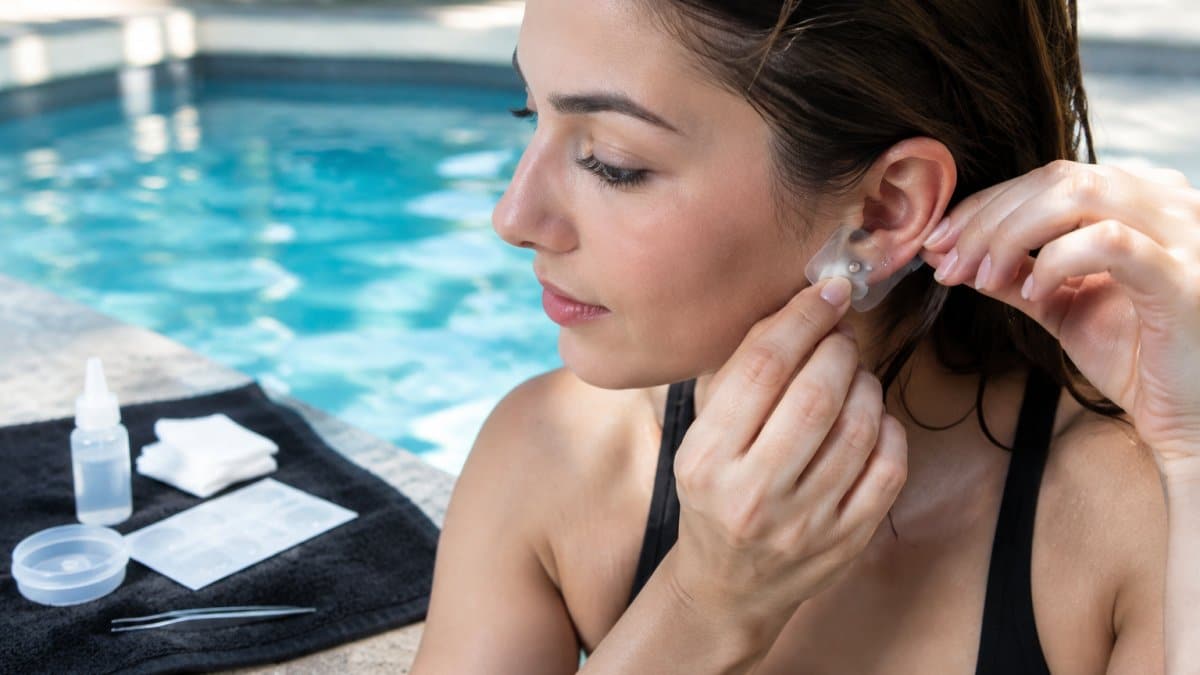
Here’s a practical approach:
- Cover the piercing. Use a waterproof bandage or a snug waterproof cover over the site. Change it if it lifts or fills with water.
- Keep your head above water. Avoid full submersion. A freestyle set with your head in the water is the worst case for a new ear piercing.
- Rinse and dry right after. Clean the piercing with saline solution and pat it dry with a clean paper towel.
- Skip the hot tub. Heat and bacteria are a bad mix for a new piercing.
- Check the jewelry. Make sure it’s snug and won’t catch on goggles, a swim cap, or a towel.
If you’re a competitive swimmer or practice regularly
Daily practice is the hardest case. A few practical moves help:
- Talk to your piercer before you book. If you have a break from the pool coming up, consider scheduling the piercing then.
- Ask about a snug, low-profile stud. Long jewelry catches on caps and goggles and moves more in the water.
- Rinse immediately after practice. Don’t wait until you get home.
- Watch for irritation bumps. Repeated wet exposure is the usual cause, and they take weeks to settle.
- Be ready to take a short break. A week out of the water now can save months of irritation.
For detailed cleaning steps, see our aftercare guidance for body piercings. And if you’re choosing jewelry to swim with, our guide to the best piercing jewelry for sensitive skin covers which materials are safest for a healing piercing.
Watch out: a waterproof bandage that stays on for hours can trap moisture against the piercing, which is its own irritation risk. Take it off and clean the site as soon as you’re out of the water.
What to Do If Your New Piercing Gets Wet by Accident
Don’t panic. A quick splash usually isn’t a disaster. What matters is how fast you clean up.
Here’s what to do after accidental water exposure:
- Get out of the water. Don’t stay in longer than you have to.
- Rinse with saline solution. Skip harsh soaps and alcohol.
- Pat dry with a clean paper towel. Don’t rub.
- Leave it alone. No twisting or touching for the rest of the day.
- Watch for changes. Check for redness, swelling, or pain over the next few days.
A single splash is usually manageable with quick cleanup, while repeated exposure is more likely to cause irritation.
Signs of Infection and When to See a Doctor
Some redness and swelling right after piercing is normal. An infection looks different, and it needs medical care.
Watch for these signs:
- Spreading redness that gets worse, not better
- Swelling that grows over several days
- Thick yellow or green discharge with a bad smell
- Increasing pain or heat around the site
- Fever or chills
Mild irritation often settles with better cleaning. A true infection needs a doctor, not just more saline. If you’re unsure whether it’s irritation or something more, our guide on how to tell if a piercing is rejecting walks through the difference.
When in doubt, call your piercer and your doctor. It’s always better to check.
Get Pierced at Sideshow Tattoo and Piercing
Getting pierced by a professional sets you up for a smoother healing process. At Sideshow Tattoo and Piercing, we use only high-quality jewelry for piercing services. Our team is here to answer your questions. Choosing a professional who uses quality jewelry and welcomes questions can make healing easier, and Skin Evolution Tattoo offers another perspective on what to consider when selecting a piercing studio.
If you’re ready to book, visit our piercing services in Clairemont or contact our team to schedule your appointment. We’ll help you plan the timing so you’re not stuck waiting on the sidelines longer than you need to.
Swimming with a fresh piercing comes down to patience. Wait until you’re fully healed, protect the site when you can’t avoid water, and clean up fast after any accidental exposure. If you want a piercing done right the first time, our team is here to help. Get started with Sideshow Tattoo and Piercing and book a safe, professional piercing with quality jewelry.
Frequently Asked Questions
What is the 3/2 piercing rule?
The 3/2 piercing rule is a commonly repeated guideline for waiting before swimming, though it is not a medical standard. Healing times vary based on piercing type and individual health, so always consult your piercer for personalized advice before swimming with new ear piercings.
Can you swim in a pool with a new ear piercing?
It is not recommended to swim in a pool with a new ear piercing until it is fully healed, which varies by piercing type and individual healing. Pool water, even chlorinated, can introduce bacteria and irritate the healing tissue. If you must swim, use a waterproof bandage and clean the piercing immediately afterward with saline solution.
Does chlorine irritate a new ear piercing?
Yes, chlorine can irritate a new ear piercing. It is a harsh chemical that can dry out the skin, cause redness, and slow the healing process. Additionally, pool water may contain bacteria that can lead to infection. It is best to avoid chlorinated water until the piercing is fully healed, and if exposure occurs, rinse the area with saline solution and dry it gently.
What should you do if your new piercing gets wet while swimming?
If your new piercing gets wet while swimming, exit the water as soon as possible. Gently clean the piercing with a saline solution, then pat it dry with a clean paper towel. Avoid touching the jewelry with unwashed hands. Monitor the site for signs of infection such as redness, swelling, or discharge, and contact your piercer or doctor if you notice any concerning symptoms.