Last Updated: October 30, 2026
Quick Summary
Preparing for your first large scale tattoo starts with choosing an artist whose healed portfolio proves they’ve done pieces that size, then planning design, placement, and a realistic session schedule. Pack water, protein-and-carb snacks, loose clothing, ID, and a charger, eat a real meal one to two hours before, and hydrate all day.
- Look for healed photos in an artist portfolio, not just fresh tattoos.
- Eat a real meal with protein and slow carbs one to two hours before your appointment.
- Pack water, a sports drink, snacks, loose clothing, photo ID, and a phone charger the night before.
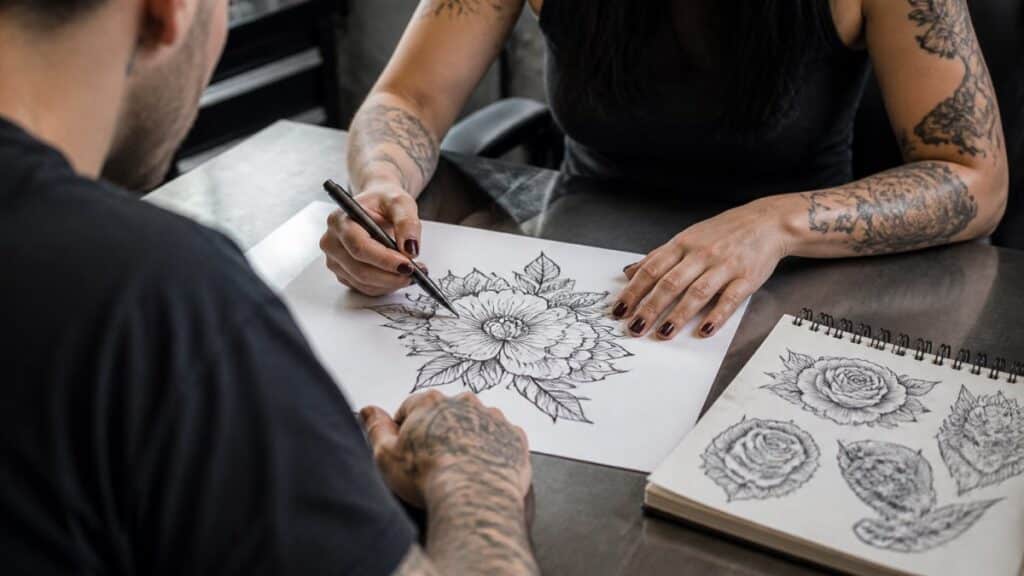
- Ask your artist to sketch a written session plan covering sittings, coverage, and spacing.
- Take short, frequent breaks to stand and stretch rather than one long break.
Table of Contents
- Choosing the Right Artist for a Large Scale Tattoo
- Planning Your Design, Placement, and Long-Term Look
- Your Tattoo Appointment Checklist Before Session One
- What to Eat Before a Tattoo and How to Hydrate
- What to Wear to a Tattoo Appointment
- How Large Tattoo Session Length Shapes Your Schedule
- Managing Pain, Breaks, and Comfort Across Multiple Sessions
- Book Your Consultation at Sideshow Tattoo and Piercing
- Frequently Asked Questions
Choosing the Right Artist for a Large Scale Tattoo
Preparing for your first large scale tattoo starts long before you sit in the chair. It starts with picking the right artist. A large-scale tattoo is a long-term commitment, and the person holding the machine matters more than almost anything else.
Here’s how to do that homework yourself.
Reading an Artist Portfolio for Large Work
Look for healed photos, not just fresh ones. Once you’ve compared portfolios, you can browse our tattoo artists to see who fits your style. Fresh tattoos hide how lines settle and how color holds. Healed shots tell you what the piece will actually look like in six months.
Questions to Ask During a Consultation
A consultation is your chance to interview the artist. Good questions include:
- Have you done pieces this size before?
- How do you break a large design into sessions?
- Can I see healed examples of similar work?
- How do you handle touch-ups?
For a deeper walkthrough of what to expect, see our guide on booking a custom tattoo consultation.
Planning Your Design, Placement, and Long-Term Look
Placement decides more than looks. It affects pain, healing, and how the design ages. Skin on the ribs, spine, and knees hurts more. Skin on the outer arm and back tends to take ink well.
Think about how your body may change over decades. Weight shifts, sun exposure, and aging all change how a large tattoo reads.
If you want more depth on choosing where a piece should go, our guide on how to pick tattoo placement covers the trade-offs. You can also explore the best body parts for large-scale tattoos to see how sleeves and big pieces flow.
Your Tattoo Appointment Checklist Before Session One
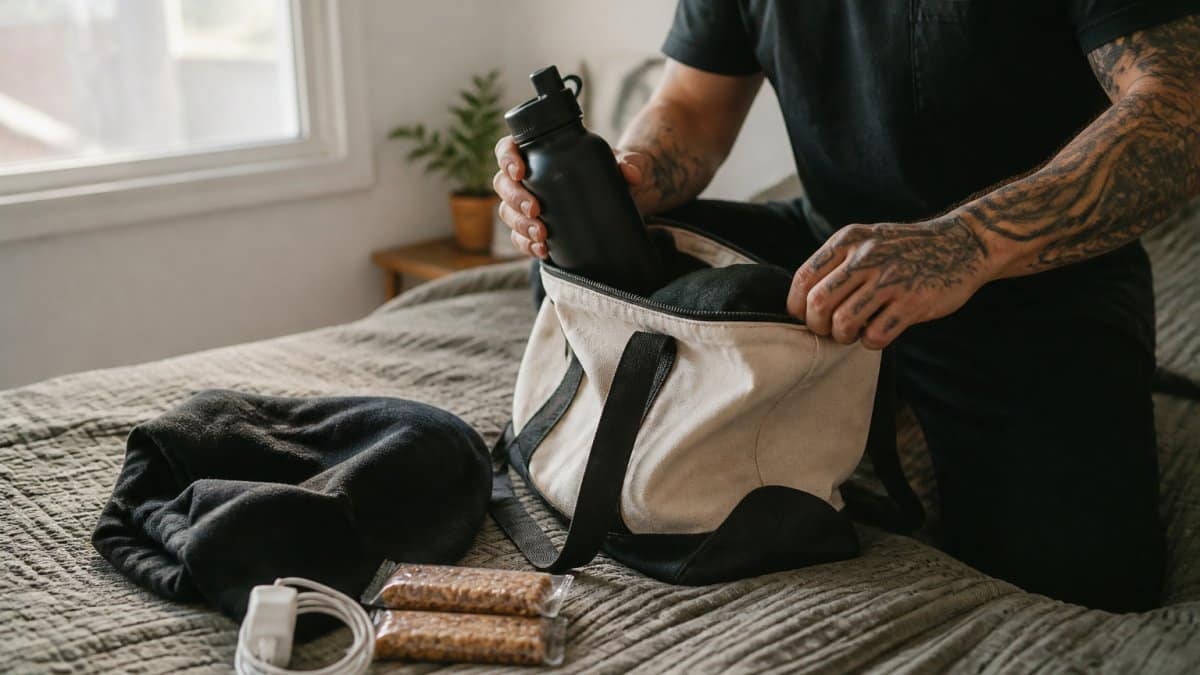
A tattoo appointment checklist keeps you from forgetting the basics on a nerve-wracking day. Pack these the night before:
- Water bottle and a sports drink
- A snack with protein and carbs
- Loose clothing that exposes the tattoo area
- Photo ID and payment method
- A phone charger for long sessions
- Headphones or something to read
Avoid alcohol before your session.
Pack these the night before so nothing gets forgotten on the day.
| Item | Why you need it |
|---|---|
| Water bottle and a sports drink | Stay hydrated through long sessions |
| Snack with protein and carbs | Keeps energy steady |
| Loose clothing exposing the tattoo area | Comfort and easy access |
| Photo ID and payment method | Required at the appointment |
| Phone charger | For long sessions |
| Headphones or something to read | Distraction during the work |
What to Eat Before a Tattoo and How to Hydrate
Eat a real meal one to two hours before your appointment. Something with protein and slow carbs, like eggs and toast or rice and chicken, keeps your energy steady through a long session.
Hydration matters just as much. Drink water throughout the day before, not just right before you walk in.
What to Wear to a Tattoo Appointment
Wear loose, comfortable clothing you don’t mind getting ink on. Tight waistbands and stiff fabrics rub against fresh work and make long sessions miserable.
Dress for the placement. A tank top works for a shoulder piece. Shorts work for a thigh piece. Layers help you stay warm during breaks.
Skip anything you’d be upset to stain. Ink splatters happen, and it doesn’t always wash out.
How Large Tattoo Session Length Shapes Your Schedule
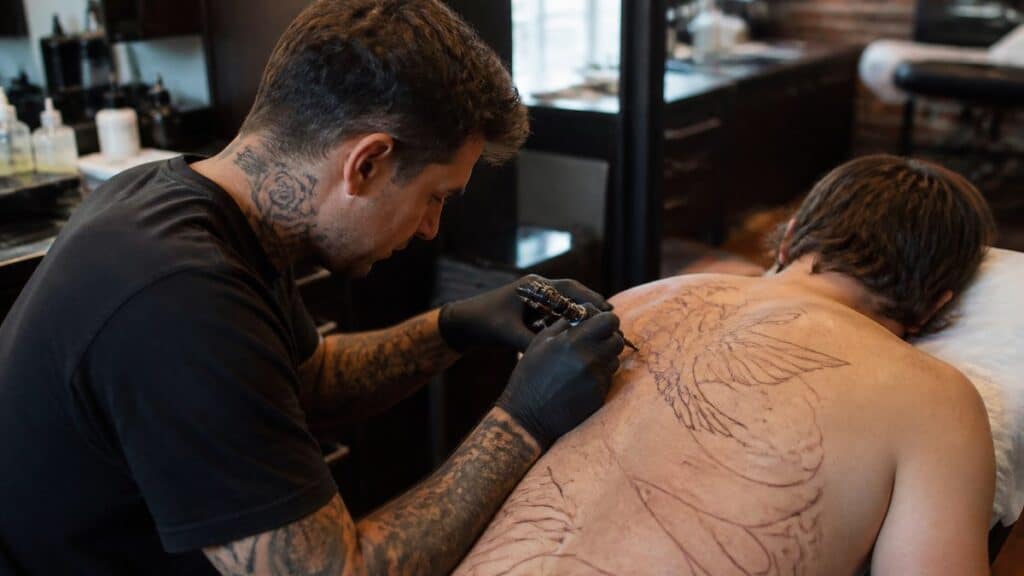
A large piece is rarely finished in one sitting. Large pieces like sleeves, back pieces, or chest panels are typically completed over a sequence of sessions, and understanding that sequence before you book helps the project run smoothly.
How artists divide large work into sessions
A common pattern is to break a large design into logical chunks rather than by clock time alone. An artist might outline the whole piece in session one, then block in background and shading in later sittings, then return for color and detail. Others work section by section, finishing the upper arm before moving to the forearm, so you leave each appointment with a completed zone instead of a half-shaded map.
Ask your artist which approach they prefer and why. Section-by-section work lets you see progress and heal in stages. Outline-first work gets the full composition locked in early, which matters if the design wraps around a joint or needs to flow with muscle.
Realistic appointment lengths
Sitting length is driven by three things: the size of the area, the density of detail, and your own tolerance.
Don’t assume longer is better. A tired client who flinches produces shakier lines than a rested one who taps out early. Ask your artist what session length they recommend for your specific piece rather than picking a number yourself.
Spacing sessions around healing
Healing time between appointments matters as much as the work itself. Fresh tattooed skin is inflamed and sensitive, and going back over an area that hasn’t settled can be painful and can compromise how the ink takes. A common approach is to space sessions far enough apart that the previous work has passed its most tender stage, even if it isn’t fully healed.
Your artist will set the interval based on the placement and how your skin responded last time.
Booking around your real life
Schedule each session when you have a light day or two afterward. You’ll be tired, sore, and possibly swollen, and a packed calendar makes recovery harder. Avoid booking the day before a big work presentation, a flight, or anything that requires you to be sharp.
Before your first session, ask your artist to sketch out the full session plan, how many sittings, roughly what each one covers, and the recommended spacing. Having that roadmap in writing makes the whole project feel manageable instead of open-ended.
If you’re still deciding how big to go, our guide on the best body parts for large-scale tattoos shows how sleeves and big pieces flow across the body.
Managing Pain, Breaks, and Comfort Across Multiple Sessions
How you position your body, when you take breaks, and how you dress all change how a long session feels, and most first-timers don’t think about any of it until hour three.
Positioning matters more than you’d expect
You’ll hold roughly the same position for hours. A spot that’s mildly uncomfortable in the first twenty minutes becomes genuinely miserable by hour four. Tell your artist early if a position is straining your neck, back, or shoulder, they can usually adjust the table, add a pillow, or shift the angle. Speaking up at minute ten is far easier than at hour three when you’re stiff and clenched.
Build breaks into the plan
Ask for breaks when you need them. Short, frequent breaks, a few minutes to stand, stretch, and reset, often work better than one long break, because stiffness sets in fast when you stop moving.
A common pattern is to use breaks to eat a snack and sip water rather than to scroll your phone.
Dress for access and comfort
Loose clothing that exposes the tattoo area is the baseline, but think about what happens during breaks. Layers help you stay warm when you step away from the chair, and clothing you don’t mind staining saves you a ruined favorite shirt. Tight waistbands and stiff fabrics rub against fresh work and make long sessions worse.
Coping strategies that actually help
- Bring headphones and a playlist or podcast
- Eat and hydrate before every session, not just the first
- Ask your artist for guidance before using any numbing product, and read our guide on whether professional tattoo numbing cream is worth it before you buy anything.
- Plan a low-key evening after each session rather than pushing through a full schedule
Talk to your artist before your session about any medications you take.
The mental side of long sessions
Knowing the session plan, what’s being worked on today and what’s left, keeps the discomfort in context. A piece that feels endless in hour five looks very different when you know the outline is done and only shading remains.
Book Your Consultation at Sideshow Tattoo and Piercing
Preparing for a large scale tattoo comes down to planning: the right artist, a clear design, and a body that’s ready for long sessions. That’s a lot to juggle alone.
At Sideshow Tattoo and Piercing, our hand-picked artists match your style and keep safety and comfort front and center.
Get started with Sideshow Tattoo and Piercing and book a consultation that turns your idea into a piece you’ll wear for life.
Frequently Asked Questions
How do I prepare for my first large scale tattoo?
Start by booking a consultation with an artist whose portfolio shows work in the style you want. Plan the design in stages, ask about session length and how many appointments the piece will take, and treat skin prep as part of the process: keep the area clean and moisturized, avoid sunburn, cuts, and shaving it in the days before. Sleep well, eat a full meal, and bring water and snacks. A large scale tattoo is a marathon, so the preparation matters as much as the design.
What should I eat before a long tattoo session?
Eat a full meal with protein and complex carbohydrates within a couple of hours of your appointment, such as eggs and toast, a chicken sandwich, or pasta. Avoid going in on an empty stomach. Bring snacks like granola bars, fruit, or nuts for breaks, and drink water steadily rather than in one big gulp at the start.
How long does a large tattoo session usually take?
Large tattoo session length varies with the design’s complexity, placement, and how your skin responds. A sleeve or back piece is rarely finished in one sitting and is usually broken into multiple sessions of a few hours each. Ask your artist during the consultation how they plan to split the work and how long each appointment should run. Plan the rest of your day lightly afterward, since soreness and fatigue are normal, and leave buffer time before any commitment.
Should I shave the area before a tattoo appointment?
No. Let the artist handle shaving at the shop. Focus on keeping the skin clean and moisturized instead, and avoid harsh scrubs, sunburn, or anything that breaks the surface in the week before your session.