Table of Contents
- Piercing Gun Risks vs. Professional Needle Piercing
- Ear Piercing Infection Symptoms and Other Complications
- How to Care for a New Ear Piercing
- Frequently Asked Questions
Last Updated: October 19, 2026
Piercing Gun Risks vs. Professional Needle Piercing
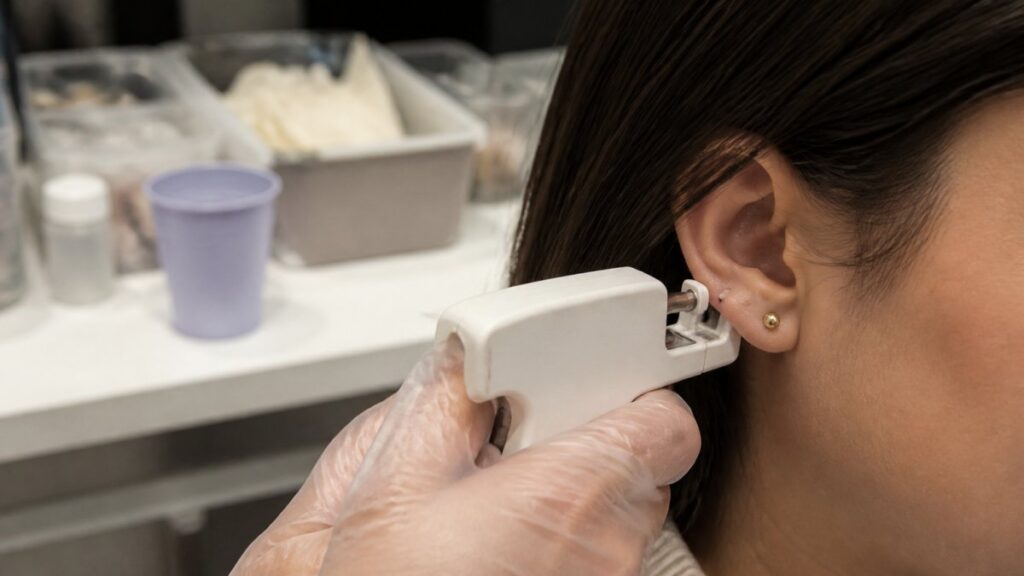
Mall piercing shops often use piercing guns, and that’s the first thing to understand about the risks of getting piercings at the mall. A gun forces a blunt stud through tissue instead of slicing a clean channel like a hollow needle, causing more trauma, swelling, and slower healing.
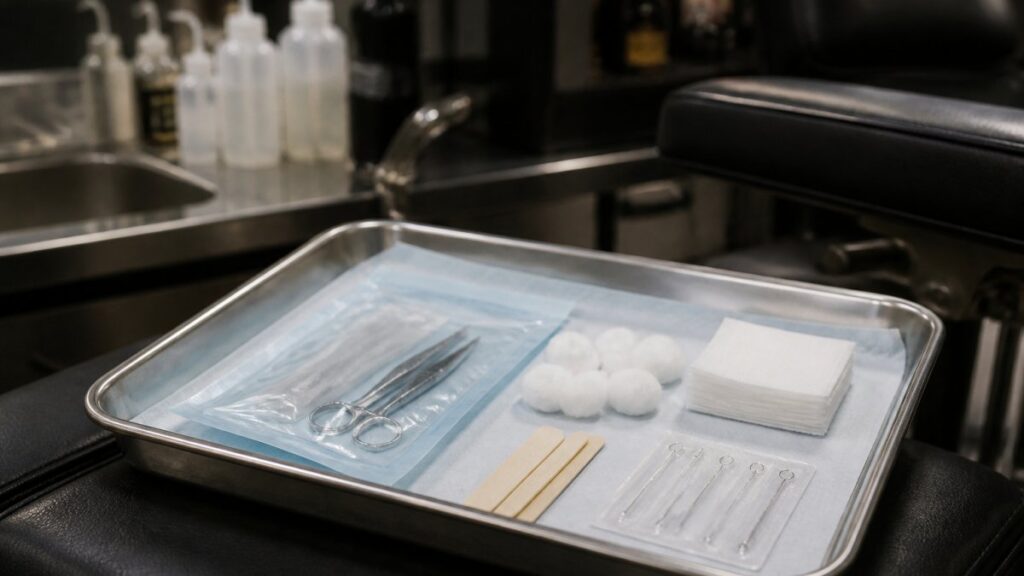
At Sideshow Tattoo and Piercing, we pierce with single-use needles and quality jewelry. The difference comes down to force versus precision.
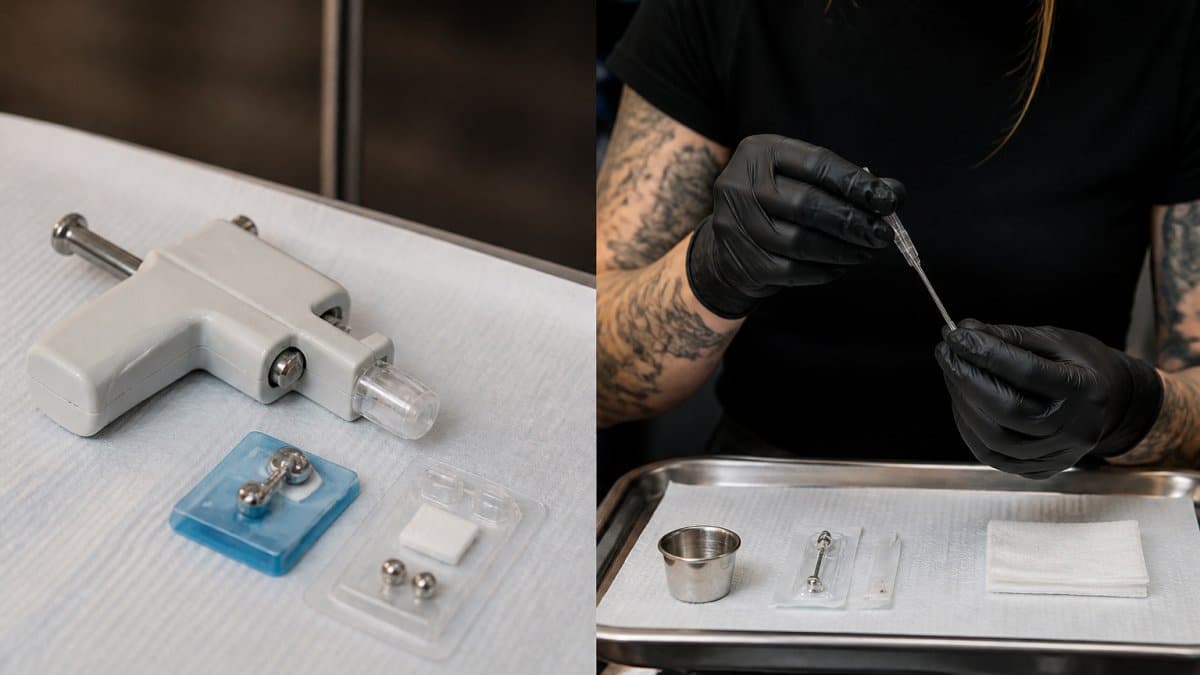
Here’s what a gun does differently:
- It can’t be fully sterilized between clients, so contamination risk climbs
- The blunt stud crushes tissue rather than cutting it
- Cartilage can crack or shatter under the force
- Placement is often guessed rather than measured
Needles are sterile, single-use, and let a piercer control depth and angle. For cartilage especially, that control matters. The Association of Professional Piercers sets clear standards for sterile technique, and mall kiosks rarely follow them.
Ear Piercing Infection Symptoms and Other Complications
Ear piercing infection symptoms show up as spreading redness, warmth, swelling, and yellow or green discharge that smells off. A little crusting is normal; pus, fever, or pain worsening after day three is not.
Watch for these warning signs:
- Redness spreading beyond the piercing site
- Throbbing pain that won’t settle
- Thick or foul-smelling discharge
- Fever or feeling unwell
- Jewelry sinking into the skin
Cartilage infections worry us most: less blood flow than an earlobe means it fights infection poorly and can scar permanently. Nickel allergies are common too, showing up as itching and rash rather than pus.
If a complication looks serious, don’t wait. Remove the jewelry only with professional guidance, and seek medical care for spreading redness, fever, or pus. The CDC guidance on skin infections is a useful reference for when a reaction needs a doctor.
How to Care for a New Ear Piercing
How to care for a new ear piercing comes down to three habits: clean hands, gentle cleaning, and leaving it alone. Wash up before touching it, clean twice daily with sterile saline, and skip alcohol, hydrogen peroxide, and harsh soaps that dry tissue and slow healing.
A few rules that keep healing on track:
- Don’t twist or rotate the jewelry
- Keep hair and makeup away from the site
- Avoid pools, lakes, and hot tubs until healed
- Sleep on a clean pillowcase or travel pillow
- Return for a follow-up check if anything looks off
Earlobes typically heal in six to eight weeks. Cartilage can take several months, and delayed healing is common when jewelry quality is poor or aftercare slips. If you want a piercing done with sterile technique and quality jewelry, Mayo Clinic’s piercing overview is a solid starting point, and our team at Sideshow Tattoo and Piercing is happy to help you heal it right.
Frequently Asked Questions
What are the risks of getting your ears pierced at the mall?
Mall piercings often rely on piercing guns, which can crush tissue rather than make a clean cut, raising the risk of cartilage damage and delayed healing. Shared equipment and inconsistent sterilization increase contamination concerns. Poor placement and low-quality jewelry can trigger allergic reactions or rejection. Choosing a professional piercer who uses single-use needles and high-quality jewelry lowers these risks and supports safer healing.
Are piercing guns safe for ear piercings?
Piercing guns carry piercing gun risks, especially on cartilage. The blunt force can damage tissue and increase swelling, redness, and healing time. Guns are also hard to fully sterilize, which raises contamination concerns. A professional piercer using a sterile single-use needle creates a cleaner wound and can place jewelry more precisely, which matters for both earlobe and cartilage piercings.
How can I tell whether a piercing studio follows safe hygiene practices?
Look for single-use needles opened in front of you, gloves changed between steps, and a clean, well-lit station. Ask how tools are sterilized and whether jewelry is high-quality and sealed. A professional piercer should explain aftercare and follow-up care clearly. If a provider cannot answer hygiene questions or rushes the process, that is a sign to look elsewhere for your ear piercing.
Mall piercings carry real risks: tissue damage, infection, and jewelry reactions that a professional setting works hard to prevent. If you want a piercing done safely and cared for properly, Sideshow Tattoo and Piercing offers hand-picked professional artists, a clean and welcoming studio, and only high-quality jewelry for every piercing. Contact us to book your visit and get a piercing you can feel good about.