Last Updated: November 22, 2026
Quick Summary
Bring reference photos of designs you like, a written list of questions, a valid government-issued photo ID, and a notebook for notes. Include medical details such as allergies, skin conditions and medications, since your artist plans the tattoo around your health history. Plan to use the tattoo consultation to settle design, placement and expectations before any ink goes in.
- Save several reference images at a decent size, and include a few you want to avoid.
- Write your questions down before you go so you don’t forget them in the chair.
- Bring a valid government-issued photo ID and check the shop’s age requirements.
- Share allergies, skin conditions, medications and chronic conditions so your artist can plan safely.
- Avoid alcohol for at least 24 hours before your appointment, since it can thin your blood.
Table of Contents
- Why the Consultation Matters Before Your Appointment
- Gathering Your Tattoo Reference Photos
- Writing Down Your Tattoo Consultation Questions
- Essential Items to Bring to Your Appointment
- How to Prepare for a Tattoo Appointment Physically
- Common Mistakes to Avoid at Your Consultation
- Booking Your Consultation at Sideshow Tattoo and Piercing
- Frequently Asked Questions
Why the Consultation Matters Before Your Appointment
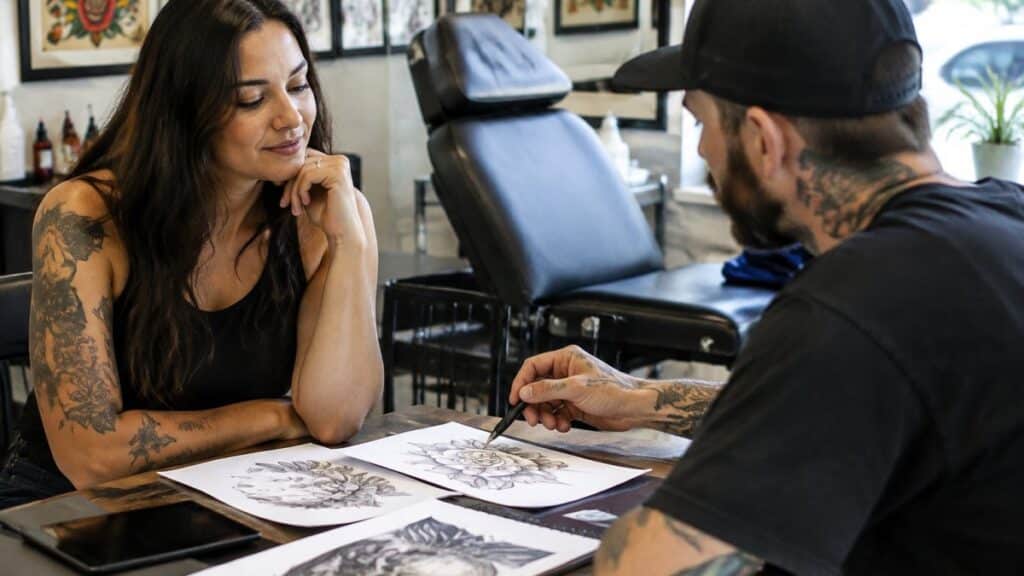
A tattoo consultation is the step where your design, placement and expectations get checked before any ink goes in. Coming prepared makes that conversation faster and more useful for you and your artist.
Think of the consultation as a planning meeting, not a sales pitch. Your artist needs to understand what you want, where it will sit on your body and how much time the work will take.
Many people show up with only a vague idea and leave with a clearer design. Bringing the right items shortens that process.
Gathering Your Tattoo Reference Photos
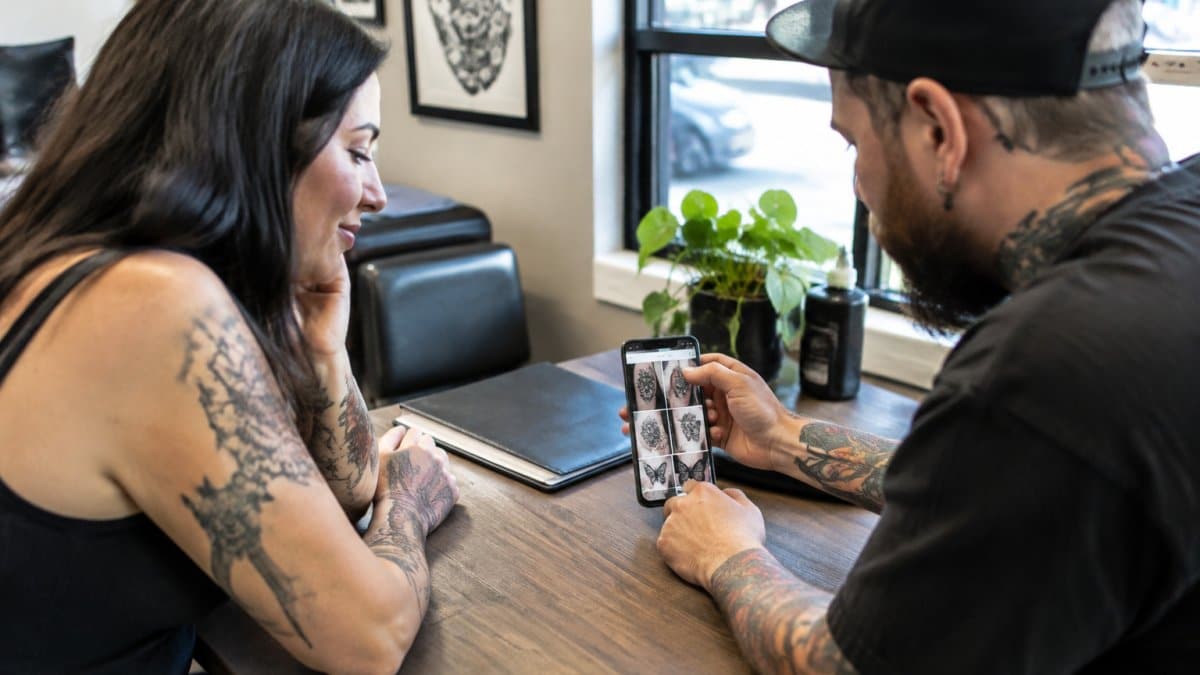
Reference photos are the fastest way to show an artist your style. Save images you like, then note what appeals to you in each one: line weight, shading, color or subject matter.
Keep your references organized so they are easy to scroll through during the meeting:
- Use one folder or album for the whole idea
- Label images with short notes, such as “bold lines” or “soft shading”
- Include a few photos that show the look you do not want
- Save images at a decent size so details are visible on screen
Your artist will use these photos to judge style and scale.
Writing Down Your Tattoo Consultation Questions
Write your questions before you go. Our guide to booking a custom tattoo consultation explains what the meeting covers and how to schedule one. It is easy to forget them once you are sitting in the chair.
Useful questions to bring:
- How long will this design take to complete?
- How many sessions will I likely need?
- Is this placement good for the detail I want?
- How should I prepare my skin before the appointment?
- What does aftercare look like for this area?
Ask about the artist’s experience with your style, too. A question like “Have you done pieces similar to this one?” is a useful starting point. Write down the answers so you can refer back to them later.
Essential Items to Bring to Your Appointment
Pack a small bag with the items that make your consultation smooth:
- Your reference photos, saved on your phone or printed
- A written list of your questions
- A valid government-issued photo ID
- A notebook and pen for notes
- [ ]
- Your schedule, so you can check available dates
- Any medical information relevant to tattooing, such as allergies or skin conditions
- A list of any medications you take
Bring a friend if you want a second set of ears. Just check whether the shop allows guests before you go.
Here is a quick reference for the items the article recommends bringing, with the reason each one matters.
| Item | Why it matters | Note |
|---|---|---|
| Reference photos | Shows your style quickly | Save several images at a decent size |
| Written list of questions | Keeps you from forgetting points in the chair | Write it before you go |
| Valid government-issued photo ID | Required for the appointment | Check age requirements with the shop |
| Notebook and pen | Lets you record the artist’s answers | Refer back to notes later |
| Schedule | Helps you check available dates | Know your open days in advance |
| Medical information | Lets the artist plan safely | Include allergies and skin conditions |
| List of medications | Some can change how skin heals | Mention anything you take regularly |
How to Prepare for a Tattoo Appointment Physically
Your body plays a role in how a tattoo session feels and how well your skin takes the ink. Our seven steps to prepare for your first large-scale tattoo walk through the physical prep for a big session. Simple habits in the days before your visit can make a real difference, and so can an honest review of your health history.
Follow these steps before your consultation or session:
- Wear comfortable clothing. Choose loose clothes that give your artist access to the placement area. A short-sleeve shirt for a forearm piece beats a tight long-sleeve every time.
- Eat a full meal. A good meal helps you stay steady during longer sessions. Low blood sugar is one of the most common reasons clients feel lightheaded in the chair.
- Keep the skin healthy. Avoid sunburn and harsh scrubs on the area for several days beforehand. Freshly exfoliated or sunburned skin takes ink unevenly and heals slower.
- Stay hydrated. Drink plenty of water in the days leading up to your appointment. Well-hydrated skin is more elastic and tends to hold lines more cleanly.
- Plan for breaks. Bring snacks and a drink if the session is long. A granola bar and a bottle of water in your bag cost little and prevent a mid-session crash.
Eating, Sleeping, and Avoiding Alcohol
Sleep and food matter more than most people expect. Get a full night of rest before your appointment so you feel alert and calm. Eat a balanced meal beforehand instead of arriving on an empty stomach.
Avoid alcohol for at least 24 hours before your appointment. Alcohol can thin your blood and make bleeding and swelling harder to manage. Many artists will ask you to skip it, and it is a good habit to follow. The same logic applies to aspirin and some other over-the-counter blood thinners, so mention anything you take regularly.
Health Factors Your Artist Needs to Know
This is the part most clients skip, and it is the part that most affects how your tattoo heals. Your artist plans around your health history, so it helps to share it.
Bring a short written list of anything in these categories:
- Medications. Some medications can change how skin heals and how well it holds pigment, so mention anything you take.
- Skin conditions. Point out any skin conditions or patches near where the tattoo will sit.
- Allergies. Say so up front about any allergies so your artist can plan accordingly.
- Chronic conditions. Mention any chronic conditions so your artist can plan session length and aftercare.
- Pregnancy or nursing. If pregnancy or nursing applies to you, check with your artist and reschedule if needed.
Watch out: if you are unsure whether a medication or condition matters, ask your artist before the appointment rather than deciding for them. A two-minute phone call beats a canceled session.
What to Do the Day Of
On the day itself, keep it simple. Shower, eat, hydrate, and wear clothing that exposes the placement area without forcing your artist to work around fabric. Skip lotions and oils on the skin unless your artist asked for them, since some products interfere with stencil transfer. Bring your ID and your question list, and arrive a few minutes early.
Common Mistakes to Avoid at Your Consultation
Most consultation problems come from a few avoidable mistakes. The trick is understanding why each one costs you, so you can spot it in the moment.
- Showing up without references. Words alone rarely capture a style. “Something geometric but soft” means different things to different artists, and pictures close that gap in seconds. Bring at least three images you like and one you dislike so the artist can triangulate.
- Skipping the placement talk. A design can look great on paper and still lose detail on certain body areas. Fine linework on a finger or the side of a foot blurs faster than the same design on a forearm because those areas see more friction and cell turnover. Ask your artist to walk you through how the placement will age, not just how it looks fresh.
- Not asking about aftercare. Know the healing steps before you commit. Ask what the first 48 hours look like, what products the shop recommends, and what signs would mean you should call them. Ask whether the artist can provide written aftercare instructions.
- Pressuring yourself to decide on the spot. Take time to think it over after the meeting. Take time to think it over after the meeting before you book a session. If you feel rushed, that is information.
- Hiding medical details. Share any allergies, conditions or medications so your artist can plan safely. This is the mistake with the highest cost, because it can turn a routine session into a healing complication.
- Forgetting to ask about the artist’s portfolio. Ask to see healed photos, not just fresh ones. Fresh tattoos photograph well; healed ones show how the artist’s linework and saturation actually hold up over months.
- Ignoring the shop’s vibe. Cleanliness, licensing, and how staff treat walk-ins can tell you a lot. If the shop feels off, trust that instinct before you put down a deposit.
A clear conversation at this stage prevents bigger headaches later. If something feels off, speak up. The consultation is the cheapest place to change your mind.
Booking Your Consultation at Sideshow Tattoo and Piercing
Ready to book? You can submit a booking request online or book your visit to see available times. If you have a question before you commit, you can contact Sideshow Tattoo and Piercing directly.
Bring your references, your questions and your ID, and our team will help you map out the next step.
Frequently Asked Questions
Do I need to bring reference photos to a tattoo consultation?
Yes, reference photos help your artist understand your style quickly.
Should I eat before a tattoo appointment?
Yes, eating a full meal helps you stay steady during the session.
What ID do I need for a tattoo consultation?
Bring a valid government-issued photo ID.
Can I bring a friend to my consultation?
Check with the shop before you visit to confirm whether guests are allowed.
Frequently Asked Questions
What should I bring to a tattoo consultation?
Bring a valid photo ID, a list of your questions, and your reference photos saved on your phone or printed out. If you are considering a placement, wear or bring clothing that lets your artist see the area clearly. Bring a notebook or use your phone to take notes on sizing, placement, and pricing questions. A friend can come along for support, though some shops limit the number of guests in the studio, so check ahead. Having these items ready helps the consultation stay focused and productive.
Should I bring reference photos to a tattoo consultation?
Yes. Reference photos give your artist a clear starting point for style, linework, color, and composition. Collect several images that show what you like about each piece, not just a single design you want copied exactly. Note what appeals to you in each reference, such as bold outlines, soft shading, or a particular color palette. Your artist can then adapt those elements to your body and placement, which usually produces a better result than copying one image directly.
Do I need to know my tattoo design before a consultation?
No, you do not need a finished design. A consultation is where you and your artist develop the design together. Arrive with a general idea of the subject, size range, and placement, along with your reference photos. Your artist can then sketch options and suggest changes based on how the tattoo will sit on your body and age over time. Walking in with a fixed design can limit the discussion, so keep your plan flexible.
How do I prepare for a tattoo appointment after the consultation?
Once you have a design and a booked session, prepare your body and your schedule. Eat a full meal before the appointment, get a good night of sleep, and ask your doctor or artist about alcohol and any medications you take before the appointment. Stay hydrated and wear comfortable clothing that gives easy access to the tattoo area. Plan time to rest afterward, because long sessions can be tiring.