Last Updated: November 24, 2026
Quick Summary
Choosing an artist for large scale tattoos starts with matching their style to your vision, then confirming they have proven experience with long sessions and full-limb compositions. Ask to see healed photos of large pieces, and book a consultation to discuss session count, pacing, placement and aftercare before you commit.
- Style is the first filter: check line weight, healed color and full sleeve or back pieces.
- Ask how the artist schedules a full-day session to judge pacing and stamina.
- Always request healed photos, not just fresh day-one shots of tattoos.
- Bring a written question list covering sessions, touch-ups and breaks to the consultation.
- Postpone if skin is broken, infected, sunburned or mid-flare to protect the final result.
Table of Contents
- How to Choose a Tattoo Artist for Large Scale Tattoos
- Style Match Comes Before Everything Else
- Why Experience With Large Scale Tattoos Matters
- Tattoo Artist Portfolio Examples That Show Large-Work Experience
- Questions to Ask a Tattoo Artist Before Booking
- How to Choose a Tattoo Artist: A Consultation Checklist
- Skin Preparation by Placement and Skin Type
- What to Bring to a Long Tattoo Session
- When to Postpone: Skin Conditions and Medication Precautions
- Booking Your Large Scale Tattoo Consultation
- Frequently Asked Questions
How to Choose a Tattoo Artist for Large Scale Tattoos
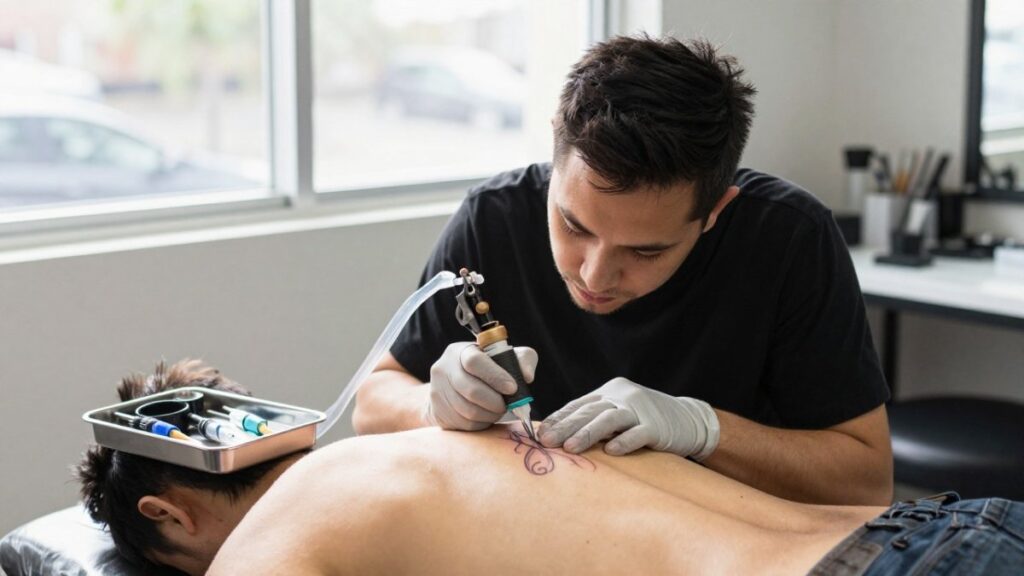
Choosing an artist for large scale tattoos is a decision that shapes months of your life and decades of how your skin looks. A back piece or full sleeve takes multiple sessions and hours under the needle. The right artist makes that process calm and controlled.
Below, we break down exactly what to look for, what to ask, and how to prepare your skin.
Style Match Comes Before Everything Else
Style is the first filter. An artist who draws bold traditional work may not be the right fit for fine line or realism. Look at whether their finished pieces match the look you want on your body.
Ask yourself three things:
- Does their line work match the weight you want?
- Do their color blends hold up in healed photos?
- Can they show you a full sleeve or back piece, not just small flash?
Large scale tattoos read as one composition. An artist needs to plan flow across the whole limb or back.
Why Experience With Large Scale Tattoos Matters
Experience with long sessions changes the outcome. A multi-hour session tests stamina, skin tolerance, and an artist’s ability to keep line quality consistent from hour one to hour six.
A common mistake is booking an artist based on one great small tattoo. Large work needs someone who plans placement, pacing, and breaks. Ask how they schedule a full-day tattoo session. The answer tells you a lot.
Tattoo Artist Portfolio Examples That Show Large-Work Experience
A strong portfolio shows range and proof. Look for full-limb pieces, healed shots, and designs that wrap naturally around the body.
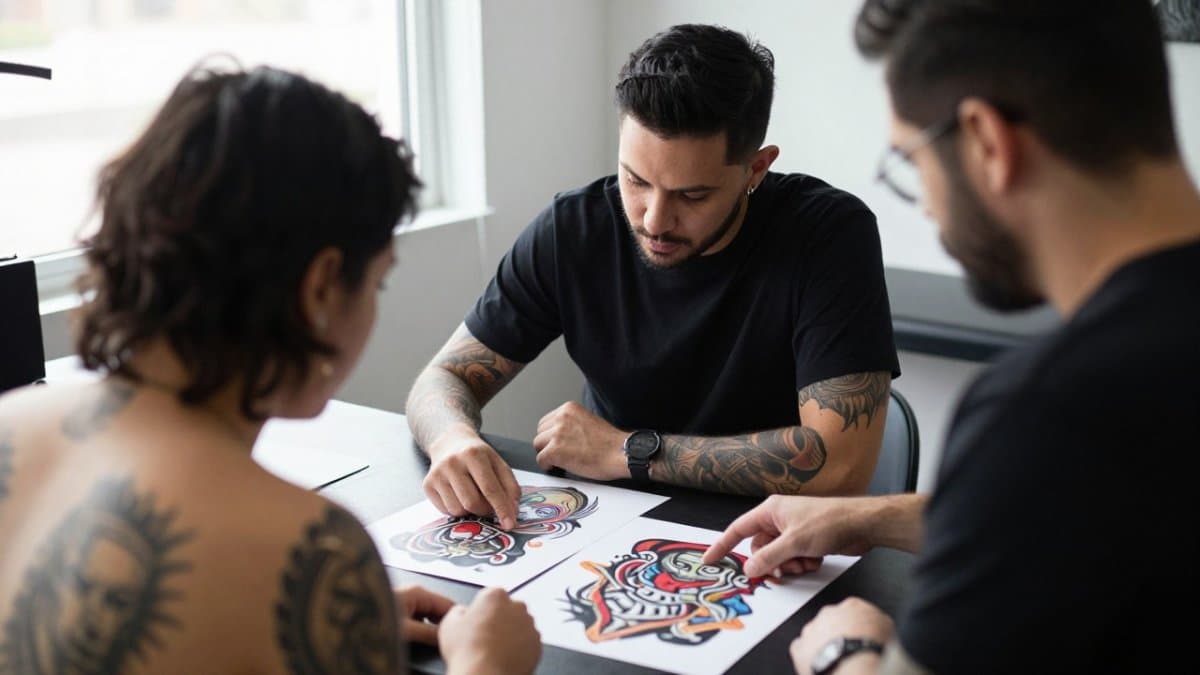
In-progress photos can show how a piece is built across sessions. If you want to understand how a custom design moves from concept to final artwork, read our guide to the custom tattoo design process.
Healed Work Versus Fresh Work
Fresh tattoos look sharp because the skin is still settling. Healed work shows how lines hold and how color sits after weeks of healing. Always ask to see healed photos, not just day-one shots.
Questions to Ask a Tattoo Artist Before Booking
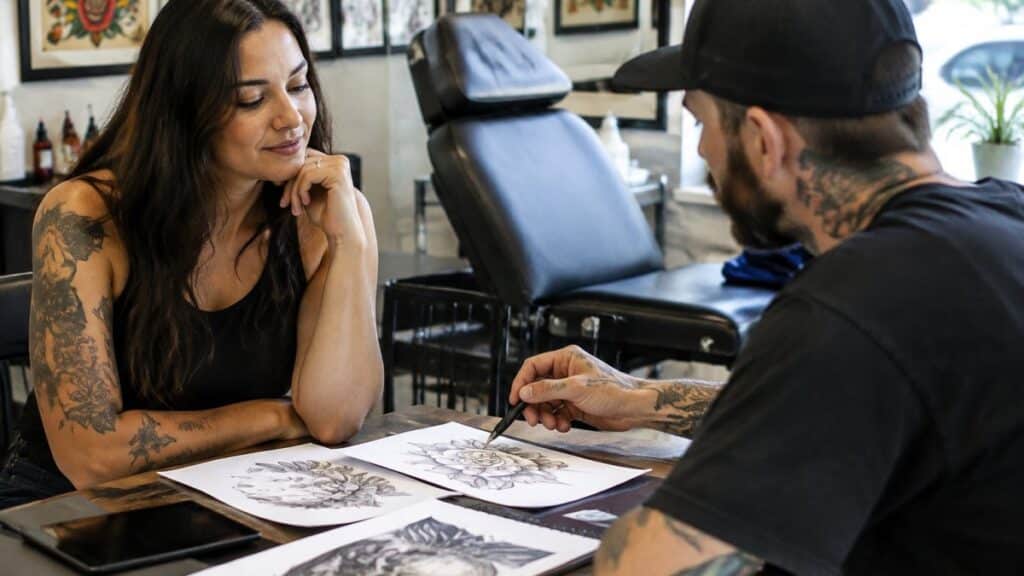
The best way to judge an artist is to talk to them. A short consultation reveals their process, their limits, and how they handle your ideas.
Bring a written list. Our full tattoo consultation guide covers more ground, but start with these:
- How many sessions will this take?
- Do you draw custom designs, or use existing flash?
- How do you handle breaks during a long session?
- What is your touch-up policy?
- Can I see healed photos of similar work?
Watch how they answer. Clear, patient responses signal a professional.
How to Choose a Tattoo Artist: A Consultation Checklist
Use this checklist during your consultation. It keeps the conversation focused and helps you compare artists fairly.
- Artist shows a portfolio with large healed pieces
- Style matches your vision
- They explain session count and pacing
- They discuss placement and how the design flows
- They ask about your skin type and health
- They explain aftercare and healing
- They answer questions without rushing
- The shop is clean and licensed
- You feel comfortable asking anything
If any box stays unchecked, keep looking.
Use this checklist during your consultation to keep the conversation focused and compare artists fairly.
| Checklist item | What to confirm |
|---|---|
| Portfolio | Shows large healed pieces |
| Style | Matches your vision |
| Sessions | They explain session count and pacing |
| Placement | They discuss placement and design flow |
| Skin and health | They ask about your skin type and health |
| Aftercare | They explain aftercare and healing |
| Questions | They answer without rushing |
| Shop | Clean and licensed |
Skin Preparation by Placement and Skin Type
Healthy, intact skin takes ink more predictably than skin that is irritated, sunburned, or mid-flare-up. A calm, well-moisturized surface is generally easier to work on, but no routine guarantees a better heal. The practical move is a short timeline plus adjustments for where the piece sits and how your skin behaves.
A three-stage preparation timeline
One to two weeks before: Moisturize dry areas daily with a plain, fragrance-free lotion. Keep the tattoo area out of direct sun and skip tanning beds. Avoid shaving the area for a few days beforehand so you don’t arrive with razor irritation.
The day before: Get a full night’s sleep, eat normally, and skip alcohol. Keep the skin clean and moisturized, but do not apply lotion, oils, or numbing creams on the morning of the appointment unless your artist has told you to.
Appointment day: Arrive with clean skin, no lotion on the area, and loose clothing that gives access to the placement. Normal hydration is sensible as part of general good health.
Adjusting for placement
- Arms and legs: Moisturize daily and avoid shaving for a few days before. Loose sleeves or shorts let the artist work without fabric dragging across the area.
- Back and ribs: Keep the skin clean and avoid tight straps, bra bands, or waistbands that rub the placement in the days before. Plan clothing that opens at the back or side.
- Chest and sternum: Skip tight necklines and anything that chafes; skin here is thin and easily irritated.
- Hands, feet, and ankles: These areas see more friction and sun, so keep them protected and moisturized in the run-up. Expect faster fading regardless of prep.
Adjusting for skin type
- Sensitive or reactive skin: Patch test any new lotion on a small area a few days ahead, and stick to products you already know. Skip new soaps, scrubs, or essential oils.
- Dry skin: Moisturize consistently for the full one to two weeks rather than only the night before; flaky skin can make line work uneven.
- Oily skin: Clean gently and avoid heavy occlusive products on appointment day, which can interfere with the artist’s prep.
- Eczema or psoriasis: Only proceed when the area is calm and unbroken, and clear it with your artist and, if relevant, your doctor first.
Tell your artist about any numbing cream, retinoid, or exfoliant you have used on the area.
If you are still deciding where your piece will live, our guide to the best body parts for large scale tattoos can help you plan around skin type and placement.
What to Bring to a Long Tattoo Session
Comfort items matter on an all-day tattoo session. Pack a water bottle, snacks, and entertainment. Bring a phone charger and headphones for music.
A simple kit:
- Water bottle and electrolytes
- Protein snacks and a light meal
- Headphones and a playlist
- A loose, breathable layer
- A pillow for longer sessions
Wear loose clothing that gives the artist easy access to the tattoo placement. For a fuller plan, see our guide to preparing for a large tattoo session.
When to Postpone: Skin Conditions and Medication Precautions
A large piece is a multi-session commitment, and rescheduling a single appointment is preferable to a compromised heal. Use the following as a general guide, and confirm anything uncertain with your artist and a health care provider.
Skin conditions that warrant waiting
- Sunburn or windburn: Tattooing over burned skin is painful and can heal unevenly. Wait until the area has fully settled, which usually means the peeling and redness are gone.
- Cuts, scrapes, or recent surgery: Broken skin is a risk for infection. Wait until the area is closed and healed, and check with your doctor after any procedure near the placement.
- Rashes, hives, or contact dermatitis: An active rash can spread under the wrap and distort how ink sits. Let it clear first.
- Infection or suspected infection: Redness, warmth, swelling, or pus means postpone and see a provider. Tattooing over an infection is a clear no.
- Eczema or psoriasis flare-ups: Tattooing calm, unbroken skin is one thing; tattooing an active flare is another. Wait for the flare to settle and get clearance from your artist and, if relevant, your doctor.
- Cold sores or shingles near the placement: Active viral outbreaks should clear before the session.
- Recently treated skin: Lasers, peels, microneedling, and prescription topicals can leave skin more sensitive for days to weeks. Tell your artist what you had done and when.
Medication and topical-product precautions
Disclose, don’t decide. Tell your artist about anything you take or apply, and talk to the prescriber before changing a prescribed medication on your own.
- Blood thinners and antiplatelets: These can increase bleeding during the session. Do not stop a prescribed medication without your doctor’s guidance; your artist may adjust technique or timing instead.
- Retinoids (topical or oral): These can thin and sensitize skin. Disclose use on the placement area.
- Numbing products: Some contain ingredients that irritate skin or affect ink. Ask your artist before applying anything, and follow label directions.
- Active skin treatments: Exfoliating acids, benzoyl peroxide, and prescription creams can leave skin reactive. Pause them on the area only if your artist or doctor advises it.
- Immune-suppressing medications: These can affect healing and infection risk. Loop in your doctor before a long session.
A simple decision rule
If the skin is broken, infected, sunburned, or mid-flare, postpone. If you are unsure about a medication or a recent treatment, ask before the appointment rather than on the day. Rescheduling can protect the final result.
Booking Your Large Scale Tattoo Consultation
The final step is simple: book a consultation and meet the artist in person. Come with your questions, your references, and an open mind about design.
Our hand-picked professional artists are matched to your style and needs. When you are ready to move forward, book a consultation with our team and start planning your piece.
Picking an artist for a large piece is about trust, not luck. The right artist plans the work, protects your skin, and keeps you comfortable through every session.
Frequently Asked Questions
How do I choose an artist for a large-scale tattoo?
Start with style: find an artist whose existing work matches the look you want, then check their portfolio for healed photos of large scale tattoos, not just small pieces. Ask how many multi-hour sessions they typically run and how they plan placement across a full limb or back. A consultation lets you test communication and see whether they listen to your vision before you commit to a deposit.
What should I look for in a tattoo artist’s portfolio?
Look for healed photos of large scale tattoos, consistent linework, and designs that flow with the body’s contours. Fresh photos hide how a piece settles after healing, so ask to see healed examples at least a year old. Check whether the artist shows full pieces rather than cropped sections, and whether the portfolio includes work in your chosen style and on your planned placement.
What questions should I ask before booking a large tattoo?
Ask how many sessions the piece will take, how the artist plans placement and flow, what the deposit and rescheduling policy is, and whether they have healed photos of similar work. Confirm their hygiene routine, whether they use single-use needles, and how they handle breaks during long sessions. Also ask what they recommend for skin preparation and what to bring on appointment day.
What should I bring to a long tattoo session?
Pack a water bottle, snacks with protein and sugar, headphones, and a phone charger. Wear loose, breathable clothing that gives the artist access to the tattoo area, and bring a light layer in case the studio is cold. A small pillow or support can help on long sessions. Avoid alcohol the night before and eat a substantial meal beforehand so your energy holds up over multiple hours.