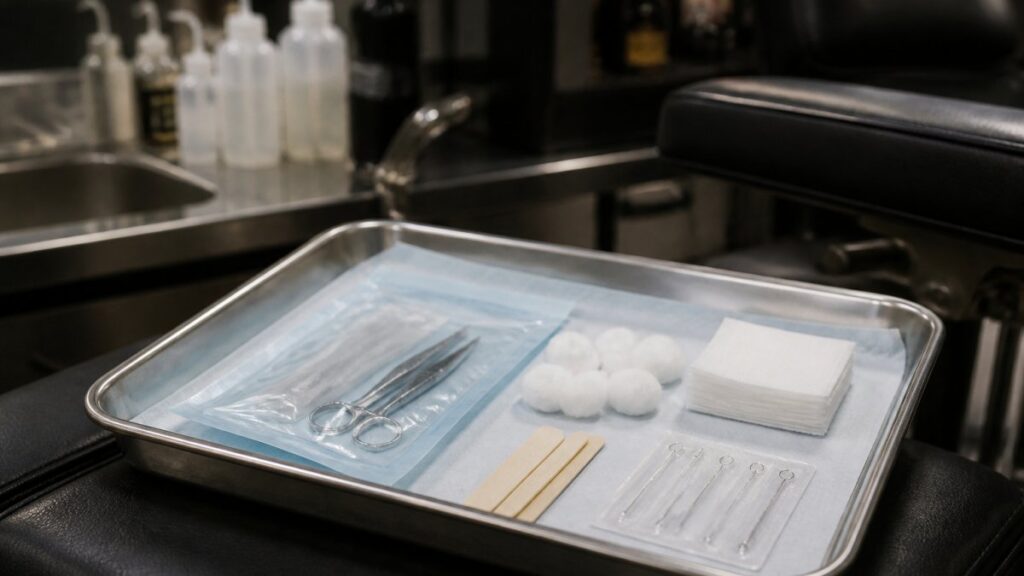
Table of Contents
- Piercer Certifications and Training: What to Look For
- Piercing Sterilization Procedures: Autoclave Use and Verification
- Piercing Jewelry Materials: Implant-Grade Metals and Safety
- Frequently Asked Questions
Last Updated: October 17, 2026
Piercer Certifications and Training: What to Look For
Professional piercing safety standards begin with the person holding the needle. At Sideshow Tattoo and Piercing, credentials come first.
Piercer certification is formal recognition that a practitioner has completed approved training in bloodborne pathogens, infection control, and safe piercing technique. In the United States, the Occupational Safety and Health Administration bloodborne pathogens standard requires employers to train any worker with occupational exposure to blood, and that training must be documented and refreshed. Ask to see it.
Verifiable markers: a current bloodborne pathogens certificate with a visible expiration date, documented apprenticeship or coursework in anatomy and aseptic technique, and willingness to answer sterilization questions.
Credentials belong to individuals, not storefronts. Ask specifically about the person piercing you.
Skipping the credential check is the single most common mistake first-time clients make. A piercer without current bloodborne pathogens training may not recognize cross-contamination risks, and that gap shows up weeks later as an infection that could have been prevented.
Piercing Sterilization Procedures: Autoclave Use and Verification
Sterilization is where professional piercing safety standards get tested. An autoclave uses high-temperature steam to destroy bacteria, viruses, and spores on reusable equipment.
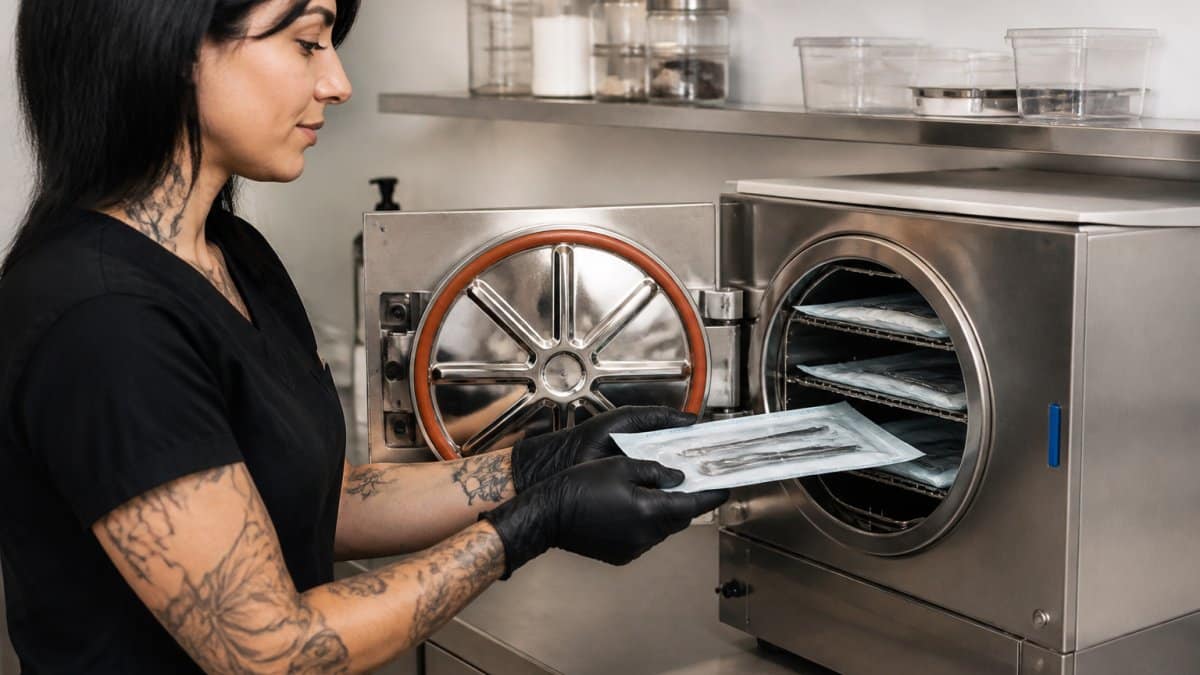
Every load should be monitored: chemical indicators change color at the right temperature, while biological indicators use live spores to prove the autoclave killed microorganisms. Regular spore testing catches a failing unit early.
Single-use needles are non-negotiable: a fresh needle comes out of sterile packaging in front of you and goes into a sharps container afterward. Piercing guns cannot be fully sterilized between clients and cause more tissue trauma.
Ask to see the autoclave’s most recent spore test result before your appointment. A studio that tracks this keeps a log, and a studio that does not will change the subject.
Piercing Jewelry Materials: Implant-Grade Metals and Safety
The metal in your ear matters as much as the needle. Implant-grade jewelry is manufactured for prolonged contact with living tissue.
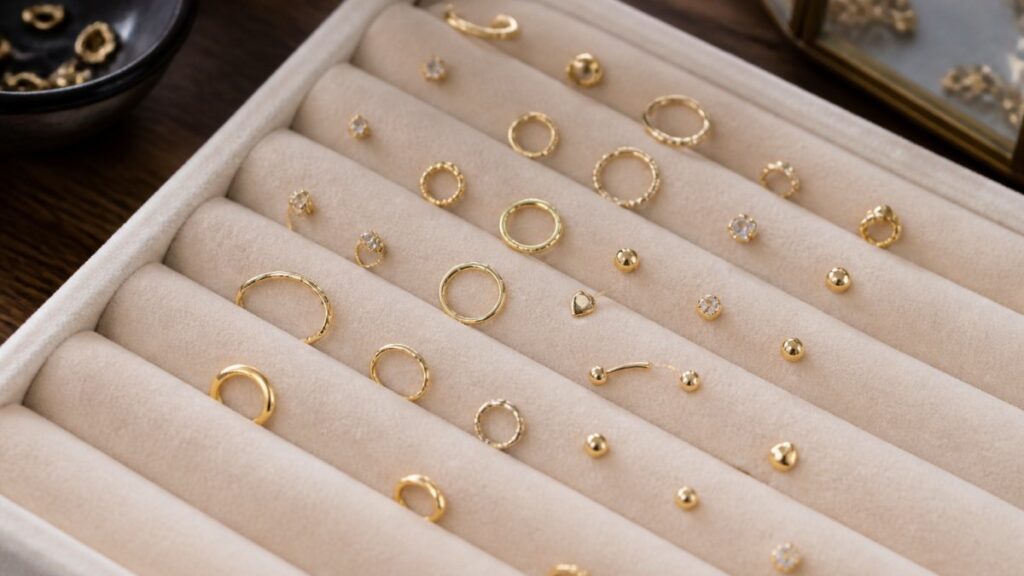
The safest choices resist corrosion, release minimal nickel, and hold a smooth, polished surface bacteria struggle to colonize. Titanium, niobium, solid gold, and implant-grade stainless steel are common picks.
| Material | Why It Works | Watch For |
|---|---|---|
| Titanium | Lightweight, corrosion-resistant, low nickel release | Verify it is implant-grade, not commercial |
| Niobium | Hypoallergenic, easy to anodize for color | Limited style options |
| Solid gold | Inert when high purity, classic look | Plated or filled gold is not the same |
| Implant-grade stainless steel | Durable and affordable | Confirm the mill certificate |
A studio sourcing from reputable suppliers can usually produce material verification on request. If nobody can tell you what your jewelry is made of, that is your answer.
At Sideshow Tattoo and Piercing, we use only quality jewelry, and our hand-picked artists match the piece to your anatomy and healing goals.
Frequently Asked Questions
What certifications should a professional piercer have?
Look for a piercer who holds current CPR and first aid certification, and who has completed bloodborne pathogens training. Many also pursue voluntary credentials through professional piercing organizations. Ask about their apprenticeship and continuing education. A reputable piercer will gladly share their training background and demonstrate knowledge of sterilization procedures and aftercare.
How can you tell whether a piercing studio follows safe practices?
Check for a clean, well-lit space, visible autoclave logs, and single-use needles opened in front of you. Staff should wear fresh gloves and follow hand hygiene. Ask about their piercing studio safety checklist and whether they use spore testing for sterilization. A studio that welcomes questions and shows documentation is more likely to meet professional piercing safety standards.
What jewelry materials are appropriate for a new piercing?
Implant-grade titanium, niobium, and surgical stainless steel are common choices for initial piercings. Solid gold (14k or higher) is also acceptable. Avoid nickel, brass, or unknown metals. Ask for documentation of the jewelry material and ensure it is smooth and free of scratches. Proper piercing jewelry materials reduce irritation and infection risk.