Table of Contents
- How the Custom Tattoo Design Process Works
- How to Communicate Tattoo Ideas to Artists
- What to Bring to a Tattoo Consultation
- Tattoo Design Revision Etiquette
- Average Time for Custom Tattoo Design
- Digital vs Hand-Drawn Design Workflows
- Why the Consultation Matters Most
- Frequently Asked Questions
Last Updated: October 7, 2026
How the Custom Tattoo Design Process Works
The custom tattoo design process is the step-by-step path from your first idea to a finished piece of art made only for you.
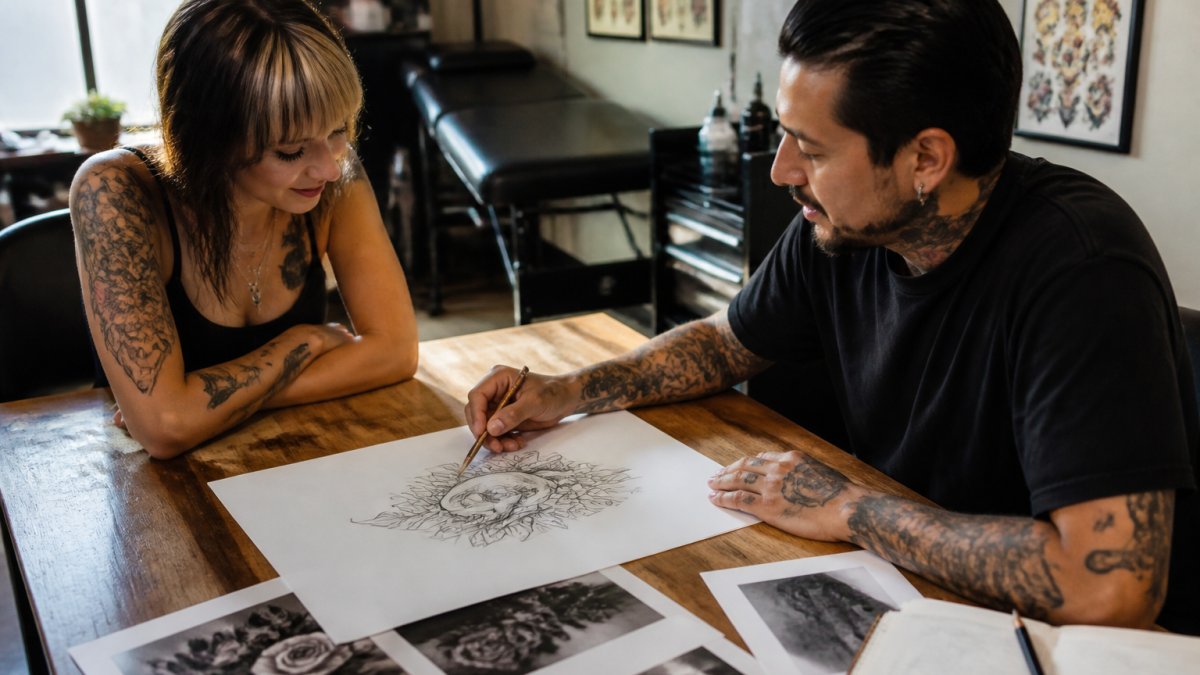
Most first-timers think the artist draws on the spot. In reality, a custom piece moves through several stages:
- Consultation and idea sharing
- Reference gathering and a design brief
- Artist sketches the concept
- Revision rounds and final approval
- Stencil application and the tattoo session
Skip a stage and you risk a design that doesn’t match the picture in your head.
How long does a custom tattoo design take?
A simple design takes a few days; detailed pieces take several weeks, depending on size, detail, and revision rounds. Ask for a realistic estimate at the consultation.
Who owns the design?
In most cases, the artist or studio owns the artwork, even after it’s on your body. You’re paying for the service, not the copyright. If you want to reproduce the design elsewhere, ask first, and get it in writing if it matters.
Never assume you can resell, reprint, or hand your custom design to another artist. That’s a copyright issue, and it can end a professional relationship fast.
How to Communicate Tattoo Ideas to Artists
Clear communication is the biggest factor in getting a design you love. Show up with references, not vague descriptions.
Words alone rarely capture a vision.
To communicate tattoo ideas to artists effectively:
- Bring reference photos, even rough ones
- Describe the mood, not just the subject
- Point out what you don’t want
A mood board helps too, you’re giving direction, not a copy order.
What if I want a mix of styles?
Say so directly. A blend like Japanese and geometric is common and doable, but the artist needs to know from day one. Name both styles and bring examples of each.
Bring more references than you think you need. Ten images give an artist far more to work with than two, and it helps them spot the pattern in what you actually like.
What to Bring to a Tattoo Consultation
A good consultation runs on preparation. Show up ready, and the artist can give you a sharper design and a clearer timeline.
What to bring to a tattoo consultation:
- Reference photos and a mood board
- Notes on size, placement, and style
- Any medical info that affects healing
You don’t need a finished design, that’s the artist’s job. Your job is to bring the vision.
Should I bring my own sketch?
You can, and some artists welcome it. Just be ready for them to interpret it, not copy it line for line, turning an idea into something that works as a tattoo is different from working on paper.
How involved will the artist be in the design?
Very. A skilled artist thinks about line weight, shading, and how the piece sits on your body. A design that looks great flat on paper can fall apart on a curved shoulder or bony ankle, so good artists adjust for body flow before you see the stencil.
Tattoo Design Revision Etiquette
Revisions are normal. The design phase exists so you can get it right before it’s permanent.
Etiquette that keeps things smooth:
- Be specific about what you want changed
- Ask for one round of changes at a time
- Respect the artist’s process and timeline
The goal is a design you’re excited about. Clear, kind feedback gets you there faster than silence followed by a last-minute panic.
The design phase is your best chance to fix anything you’re unsure about. Once the stencil hits skin, changes get much harder. Use your revision rounds.
What if I change my mind completely?
Tell your artist as soon as you know. A full redesign is a bigger ask than a tweak, and it may reset your timeline or affect your deposit. The earlier you speak up, the easier it is to sort out.
What about design regret?
It happens, and it’s fixable. If you approve a design and then doubt it, say something before your session, artists would rather redraw than tattoo something you’re not sure about. Once it’s on your skin, your options narrow to cover-ups or laser.
Average Time for Custom Tattoo Design
Most custom designs take a few days to a few weeks, depending on complexity and the artist’s schedule. The average time for custom tattoo design shifts with a few factors:
| Factor | Speeds It Up | Slows It Down |
|---|---|---|
| Design complexity | Simple linework | Detailed shading, color |
| Revision rounds | One and done | Multiple reworks |
| Reference quality | Clear mood board | Vague direction |
| Artist schedule | Open calendar | Booked weeks out |
| Placement | Flat, open areas | Curves, joints, small spots |
A clear design brief and solid references cut the timeline the most. Vague ideas add rounds, and every round adds days.
Can I rush a custom design?
Sometimes, but expect trade-offs. A rush job may mean less detail or a simpler concept. Tell your artist up front so they can set realistic expectations.
Does placement affect design time?
Yes. Designs for curved areas, joints, or spots that flow with the body take more planning. That extra work shows up in the timeline, but a design built for your anatomy looks better for life.
Digital vs Hand-Drawn Design Workflows
Artists work on paper or on a tablet, and neither is automatically better. Hand-drawn designs feel more organic; digital rendering lets artists test color, scale, and placement fast. Many mix both, sketching by hand and refining on screen.
Why the Consultation Matters Most
If you take one thing from this guide, make it this: the consultation sets the tone for everything.
At Sideshow Tattoo and Piercing, we match you with a hand-picked artist whose style fits your idea. Come in with your references and questions, and we’ll take it from there.
Frequently Asked Questions
How do I explain my tattoo idea to an artist?
Start with the feeling and story behind the idea, then get specific about style, size, and placement. Bring reference photos, even rough ones, and describe what you like about each. A good artist will ask follow-up questions about line weight, shading, and how the design should flow with your body. You do not need perfect words; honest descriptions and visual references go further than a polished pitch.
Do I need to bring a drawing for my custom tattoo?
No drawing is required. Most clients bring reference photos, mood board images, or a written description instead. Your artist handles the actual design work, including composition, spacing, and artistic interpretation. If you do sketch something, treat it as a starting point rather than a final blueprint, since your artist will adapt it for skin texture, placement, and long-term healing.
How long does it take to design a custom tattoo?
The average time for custom tattoo design varies with complexity. Small, simple pieces may take a few days, while large custom work with detailed shading or color theory can take several weeks. Your artist will give you a realistic timeline during the consultation. Ask about the design brief and revision process upfront so you know when to expect the first draft.
Can I ask for changes to my tattoo design before the appointment?
Yes, and you should. Revision etiquette is simple: review the draft carefully, gather your feedback into one clear list, and send it in a single message rather than a stream of small changes. Most artists include a reasonable number of revisions before the tattoo session. Speak up about placement, size, or details before the stencil goes on, not after.
Getting a custom tattoo should feel exciting, not stressful. The trick is knowing what happens at each stage and asking the right questions early. Sideshow Tattoo and Piercing pairs you with a hand-picked artist who fits your style, guides you through every revision round, and makes the whole experience feel comfortable from your first consultation to your final session. Get started with Sideshow Tattoo and Piercing and turn the design in your head into something you’ll be proud to wear.