Table of Contents
- How to Verify a Piercer Is Certified: What Actually Counts
- Questions to Ask Your Piercer Before You Sit Down
- Signs of a Reputable Piercing Studio You Can Spot in Five Minutes
- How to Spot Fake Certifications and Check Membership Status
- Red Flags That Should End the Conversation
- A Quick Checklist for Studio Safety
- Frequently Asked Questions
Last Updated: October 4, 2026
How to Verify a Piercer Is Certified: What Actually Counts
Learning how to verify a piercer is certified starts with one uncomfortable fact: there is no single national license for piercers in the United States. At Sideshow Tattoo and Piercing, we walk clients through this every week. What matters is a mix of local health department permits, bloodborne pathogens training, and first aid certification.
Certification is not one document. It is a stack: a local permit, a bloodborne pathogens certificate, first aid training, and often a membership in a professional piercing organization.
Certification verification means confirming each piece is real and current, not just hearing the word “certified.”
Questions to Ask Your Piercer Before You Sit Down
The fastest way to judge a piercer is to ask direct questions and listen for direct answers. Vague answers are a warning sign.
Ask before anyone opens a sterile pouch:
- Where did you get your bloodborne pathogens training, and when?
- Which health department issued your permit, and is it current?
- Do you use single-use needles, and can I see one opened in front of me?
- What material is this jewelry, and do you have mill certificates?
- What are the aftercare instructions, and who do I contact if something goes wrong?
A piercer who welcomes these questions has nothing to hide. One who gets defensive is telling you something.
If you want to see how a studio handles this in practice, you can contact our team and ask us the same questions.
Ask to see the autoclave log and spore testing records. A reputable studio keeps both and will show them without hesitation. If the log is missing or blank, that is your answer.
Signs of a Reputable Piercing Studio You Can Spot in Five Minutes
You can judge most studios before you speak to a piercer. Walk in and watch how the space is run.
Look for:
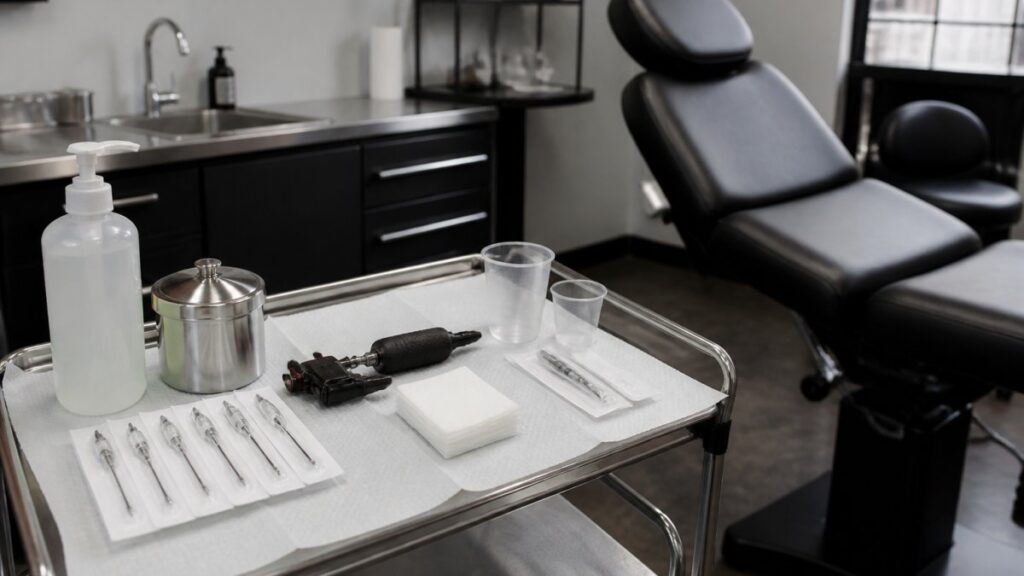
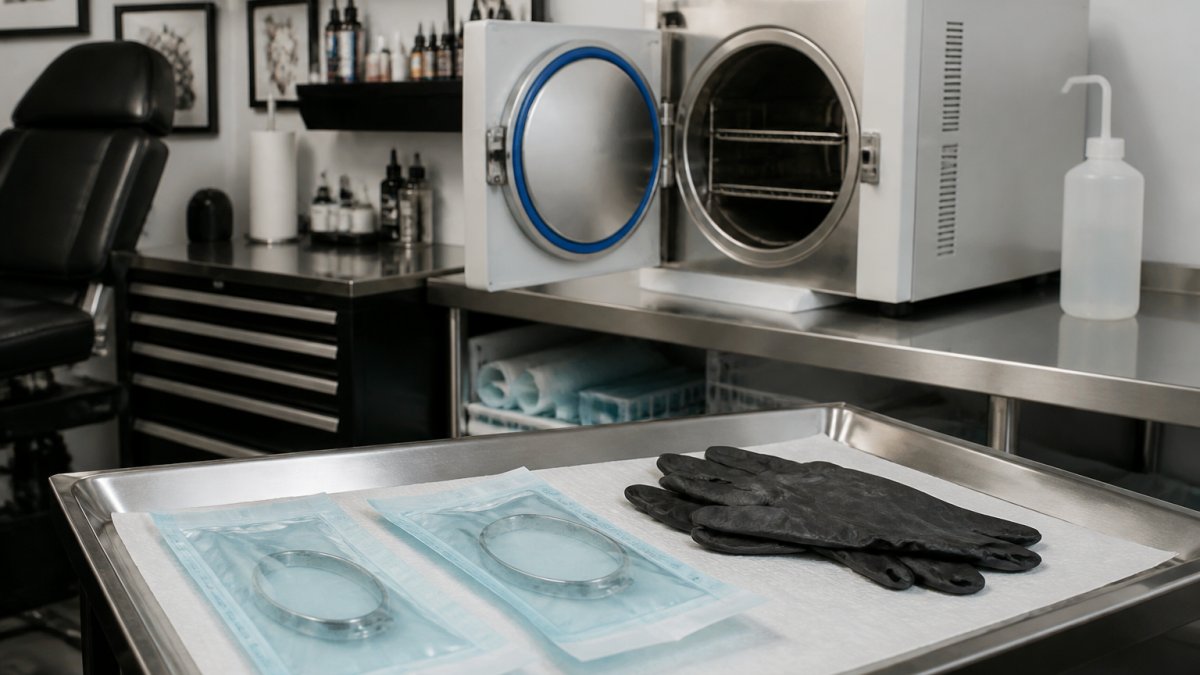
- Disposable medical gloves pulled fresh from the box, never reused
- Single-use needles in sealed, dated packaging
- An autoclave with visible spore testing records nearby
- A biohazard disposal bin for used sharps
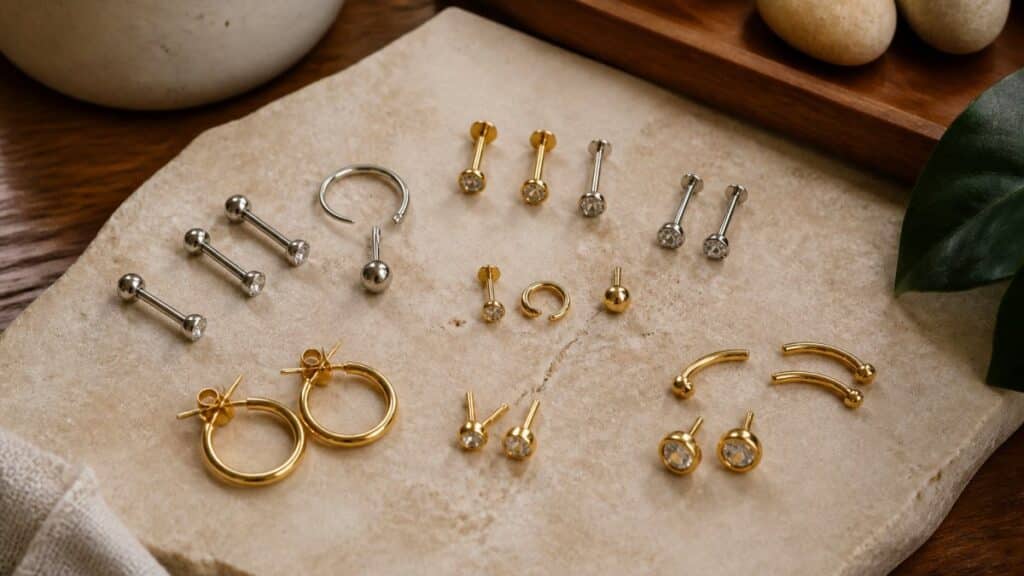
- Implant grade materials like titanium or niobium, with mill certificates on request
- Informed consent forms and written aftercare instructions for every client
Watch whether the piercer touches a phone, a drawer, or their hair with gloved hands. If they do, that glove is dirty.
Never let anyone pierce you with a piercing gun. Guns cannot be fully sterilized, and they cause more tissue trauma than a needle. The risk of infection and scarring goes up sharply.
How to Spot Fake Certifications and Check Membership Status
Fake or expired certificates are more common than most people expect. So is the vague claim of being “certified” with no paper behind it.
To check certification verification properly:
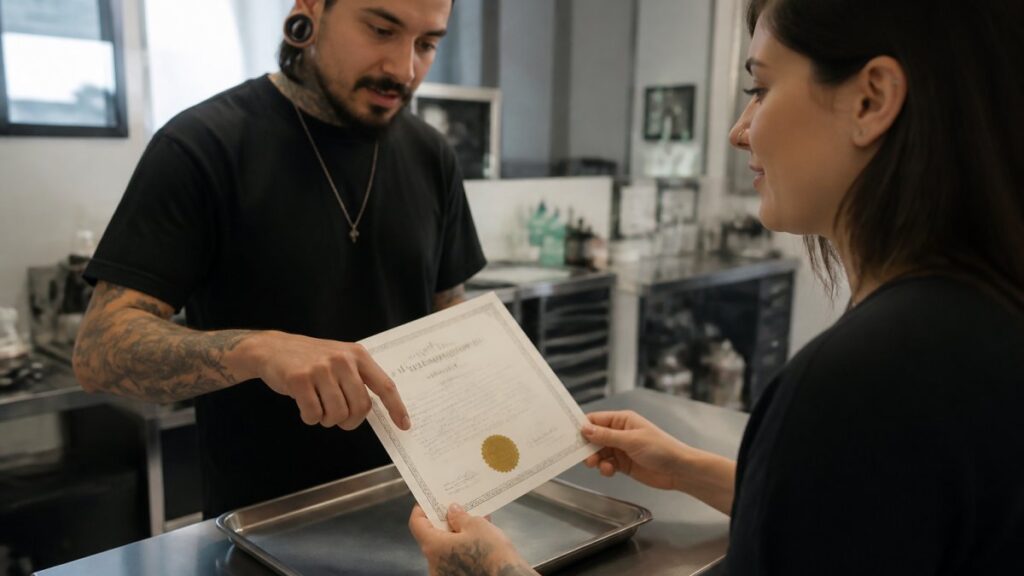
- Ask to see the physical certificate, not a photo.
- Read the issue and expiration dates.
- Note the issuing body and look it up independently.
- Call the local health department and confirm the studio’s permit.
- Check whether the piercer is listed in a professional organization’s member directory.
Professional licensure and membership status differ: a license or permit comes from a government body, a membership from a professional association. Both matter, but only one is legally required, and it varies by state.
State rules differ widely: some require a license, others leave it to county health departments, and a few have almost no formal requirement.
You can confirm your state’s rules through the CDC’s guidance on body art and infection control and your local health department.
Red Flags That Should End the Conversation
Some warning signs are big enough to walk out over:
- No gloves, or the same gloves used for setup and the piercing
- Jewelry pulled from an open bin instead of a sealed pouch
- No autoclave on site, or one clearly not in use
- A piercer who cannot name the metal in the jewelry
- No aftercare instructions offered
- Pressure to skip questions or “just get it done”
- A shop that will pierce a minor without a parent present
Any one of these is enough to leave. A good piercer will never rush you past a safety question.
A Quick Checklist for Studio Safety
Run through this every time:
- Permit posted and current
- Bloodborne pathogens training confirmed
- First aid certification on file
- Fresh disposable gloves used
- Single-use needles opened in front of you
- Autoclave with spore testing logs
- Biohazard disposal bin present
- Implant grade jewelry with mill certificates
- Informed consent form signed
- Written aftercare instructions provided
Pass all ten and you are in good hands. Fail three or more and find somewhere else.
Frequently Asked Questions
What does it mean for a piercer to be APP certified?
APP certification means the piercer is a member of the Association of Professional Piercers, a nonprofit that sets voluntary industry standards for jewelry quality, sterilization, and technique. To verify piercer certified status through the APP, check the member directory on their website. Membership requires proof of training, adherence to safety protocols, and use of implant-grade materials. It is not a government license, but it signals a piercer has met stricter standards than most states require.
What is the difference between a state license and professional certification?
A state license is a legal requirement set by your state’s health department. It confirms a piercer has met minimum training and hygiene rules. Professional certification is voluntary and comes from industry groups like the APP. Certification shows a piercer went beyond what the law requires for jewelry quality, sterilization, and technique. When you verify a piercer is certified, check both: the license for legality and the certification for higher standards.
How can I check if a piercing studio follows health department regulations?
Search your state or county health department website for the studio’s inspection records. Many post results online. You can also call the health department directly and ask if the studio holds a current permit and when it was last inspected. In the studio, look for a posted permit, sealed single-use needles, an autoclave with spore testing logs, and staff wearing disposable medical gloves. These are the same body piercing health and safety regulations inspectors check.
Getting a piercing should feel exciting, not risky. The trouble is that “certified” gets thrown around so loosely that a clean, safe studio and a careless one can sound identical at the front desk. At Sideshow Tattoo and Piercing, we use only quality jewelry, keep our piercing process focused on safety and care, and hand-pick artists who take the time to answer every question you bring. Reach out to our team, ask us the hard questions, and see the difference for yourself.