
Table of Contents
- Why Gold Earrings Are Not Automatically Safe for a Nickel Allergy
- Karat, Alloy and Color: What Determines Whether 14k Gold Earrings Contain Nickel
- Gold-Plated Earrings and Nickel Allergy: Why Plating Wears Off
- How to Tell If Jewelry Contains Nickel Before You Buy or Wear It
- Best Earrings for Nickel Allergy: Materials That Are Usually Safer
- What to Do If Your Ears React to Gold Earrings
- Choosing Your Next Pair: Getting Earrings You Can Wear Without Irritation
- Frequently Asked Questions
Last Updated: October 28, 2026
Yes, you can wear gold earrings with a nickel allergy, but only certain gold earrings. Plenty of people assume that gold is automatically safe, and that assumption is where most irritation starts. This guide explains what to check and what to avoid.
Gold is a precious metal, but pure gold is too soft for everyday jewelry. Most gold earrings are made from a gold alloy, which means other metals are mixed in to add strength. Browse our guide to jewelry for sensitive ears to compare materials that suit a nickel allergy. Some of those added metals can include nickel. So the gold on the surface does not tell you everything about what touches your skin.
Why Gold Earrings Are Not Automatically Safe for a Nickel Allergy
Gold jewelry is not always nickel free. The reason is simple: the alloy is what matters, not the color.
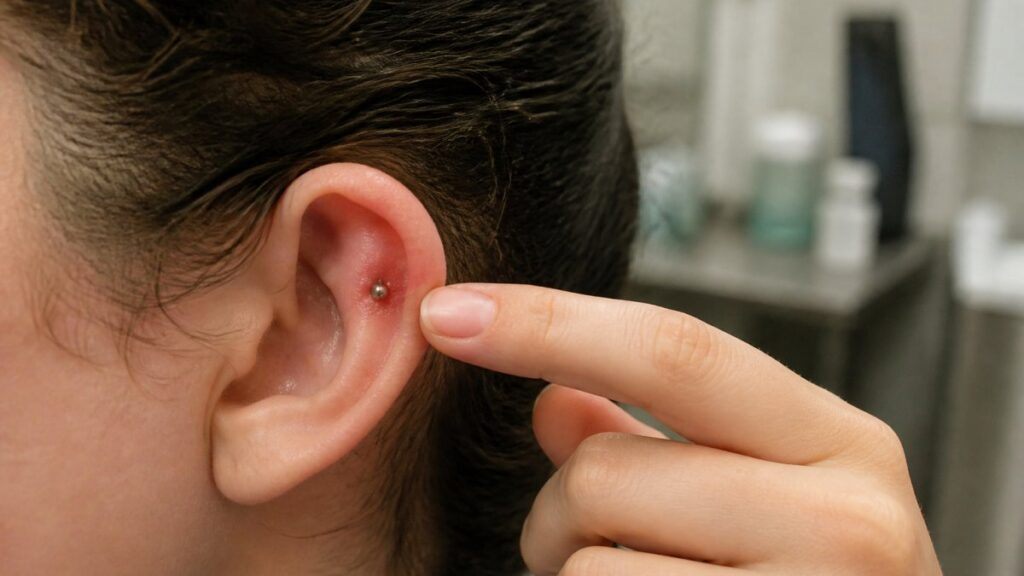
Many people with a nickel allergy react to earrings because the post, clasp or back contains nickel, even when the front looks like gold. Here are the parts to think about:
- The earring post, which goes through the skin
- The earring back or clasp
- Any solder joints or decorative parts that touch the skin
- The main body of the earring
A common mistake is focusing only on the visible front. If the post is not nickel free, the earring can still cause a reaction.
Karat, Alloy and Color: What Determines Whether 14k Gold Earrings Contain Nickel
Karat tells you how much pure gold is in a piece, not what the rest of it is. That distinction is the whole ballgame for a nickel allergy.
Here is the math. Pure gold is 24k. Each karat is 1/24 of the total, so:
- 24k is about 99.9% gold and too soft for most earrings.
- 18k is 75% gold, with 25% alloy metals.
- 14k is about 58.3% gold, with roughly 41.7% alloy metals.
- 10k is about 41.7% gold, meaning more than half the piece is something else.
The lower the karat, the more room there is for nickel in the mix. That does not mean every 10k or 14k piece contains nickel, but it does mean karat alone cannot clear a pair of earrings for you.
Why color does not tell you the alloy
Yellow, white, and rose gold are made by swapping the alloy recipe, and the recipes overlap more than people expect.
- Yellow gold is typically alloyed with silver, copper, and zinc. Nickel is less common here, but it still shows up in some lower-karat and imported pieces.
- White gold is the one to watch. The classic recipe uses nickel to bleach the yellow out of the gold, and it is still widely used because nickel is cheap and produces a bright white. Palladium-based white gold exists and is a better choice for sensitive ears, but you have to ask for it by name.
- Rose gold gets its color from copper, usually with some silver. Copper is not a nickel-allergy trigger, but rose gold is often lower karat, which means more alloy overall.
A common pattern is that two pairs of 14k earrings, one yellow and one white, behave completely differently on the same earlobe. The karat stamp matches. The alloy does not.
What the stamp does and does not tell you
A “14k” or “585” stamp confirms gold content. It says nothing about which metals make up the other 41.7%. There is no federal rule requiring a U.S. jewelry maker to disclose nickel in the alloy on the stamp or the tag, so the absence of a warning is not proof of anything.
Karat is a gold-content number, not a safety rating. For a nickel allergy, the alloy recipe and the metal touching your piercing matter more than the karat stamp.
If a seller can tell you the karat but not the alloy, you have half the answer. Ask for the rest before you put the earrings in.
The karat stamp only tells you how much gold is in the piece, and the alloy around it varies by color.
| Karat | Gold content | Alloy share |
|---|---|---|
| 24k | About 99.9% | Almost none |
| 18k | 75% | 25% |
| 14k | About 58.3% | About 41.7% |
| 10k | About 41.7% | More than half |
Gold-Plated Earrings and Nickel Allergy: Why Plating Wears Off
Gold-plated earrings have a thin layer of gold over a base metal. That base metal is often nickel-containing brass or another alloy. Once the plating wears down, your skin can contact the base metal directly.
Plating can wear off in a few weeks or months, depending on how often you wear the earrings, how much you sweat and how you clean them. This is one reason people with nickel allergies often react to gold-plated jewelry after it has been worn a while.
Watch out: If your earring shows a worn spot, a dull or dark patch, or a different color underneath, stop wearing it. That exposes the base metal under the gold.
How to Tell If Jewelry Contains Nickel Before You Buy or Wear It
You cannot see nickel, smell it, or feel it. Verification is a paper trail plus, in some cases, a test. Here is how to work through it in order.
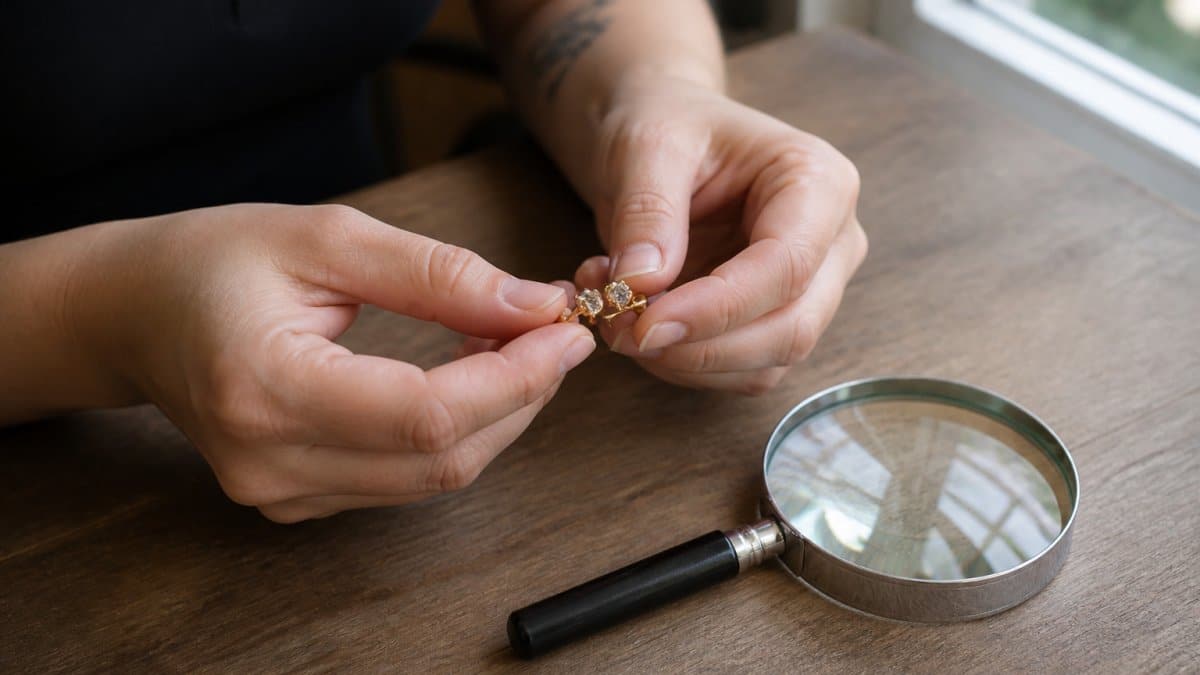
1. Read the materials disclosure, not the marketing words
“Hypoallergenic” has no legal definition in the U.S. jewelry market. It can mean anything the seller wants it to mean, including “most people do not react.” Treat it as a marketing term, not a guarantee.
“Nickel free” is stronger but still only as good as the seller behind it. Look for a specific written statement, such as “nickel-free white gold alloy” or “titanium posts, nickel-free,” rather than a badge on a product page.
What you want on the label or listing:
- The specific metal of the post and back, listed separately from the decorative front
- The alloy for gold pieces, not just the karat
- Whether the piece is solid or plated, and what the base metal is if plated
- For steel, the grade (more on that below)
If the listing only says “gold tone,” “gold finish,” or “fashion jewelry,” assume there is a base metal you cannot see.
2. Ask about the parts that touch your skin
The front of an earring is mostly decoration. The post, the back, and any solder at the joint are what sit against your piercing. A gold-front earring with a steel post is a steel earring as far as your earlobe is concerned.
Ask directly: “What are the post and back made of, and is there nickel in either?” A seller who handles sensitive-ear customers will have the answer ready. A seller who does not is a risk.
3. Know which steels are safer and which are not
“Surgical steel” and “stainless steel” are broad categories, and some grades contain nickel. 316L is the grade most often used for piercing jewelry and releases less nickel than cheaper grades, but it is not nickel free. Titanium in grades like 6AL4V-ELI is nickel free and is the more conservative pick for a confirmed allergy. Niobium is also nickel free.
A magnet is not a nickel test. Nickel is only weakly magnetic, and many nickel-containing alloys will not respond to a magnet at all. Do not use the magnet trick to clear a pair of earrings.
4. Use a nickel spot test where it makes sense
Nickel spot test kits use a chemical reagent (commonly dimethylglyoxime, or DMG) that turns pink when it contacts nickel. They are sold for home use and are useful for checking a suspicious pair you already own.
A few practical notes:
- Test the post and back, not just the front.
- Follow the kit instructions and test on a discreet spot, since the reagent can leave a mark.
- A negative result on a plated piece only tells you about the surface. Once the plating wears, the answer can change.
- Spot tests are a screening tool, not a medical diagnosis.
5. Get a patch test if you want certainty about your own skin
A dermatologist can patch test you with nickel sulfate to confirm the allergy and gauge how reactive you are (the American Academy of Dermatology). That is the only way to know your personal threshold. It also gives you a documented answer to bring to jewelers.
6. When in doubt, walk away
If the materials are unclear, the seller cannot name the alloy, or the price is too good for solid gold, skip the pair. The cost of a reaction, in discomfort and in lost earrings, is higher than the cost of choosing something you can verify.
Best Earrings for Nickel Allergy: Materials That Are Usually Safer
Several materials are often chosen by people with sensitive ears:
- Solid gold (14k or higher), when the alloy is confirmed nickel free
- Titanium, which is light and rarely causes reactions
- Surgical stainless steel, which is common for piercings but can contain some nickel
- Niobium, a hypoallergenic metal used in many piercing posts
Each option has trade-offs. Titanium is very comfortable but can cost more. Surgical stainless steel is affordable but still contains some nickel. Solid gold is attractive and durable, but only the right alloy works for a nickel allergy.
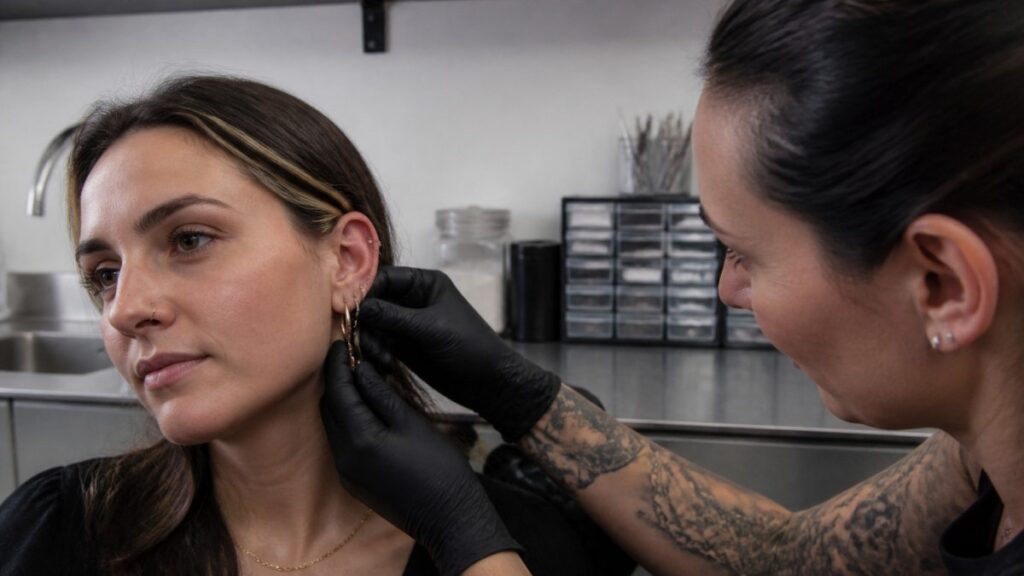
Our team at Sideshow Tattoo and Piercing uses high-quality jewelry for piercing services.
What to Do If Your Ears React to Gold Earrings
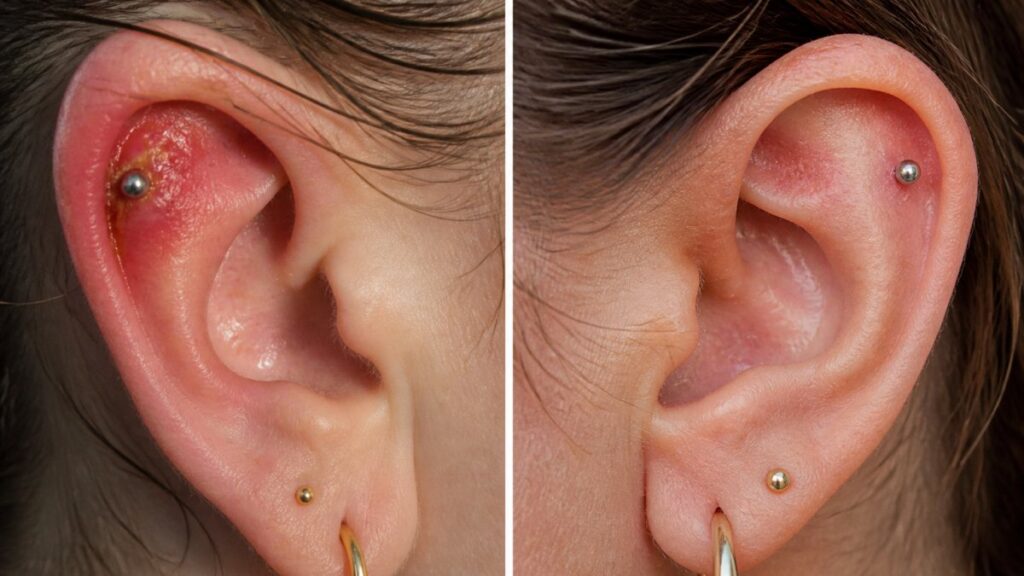
If you notice itching, redness, swelling, a rash or small bumps where the earring touches your skin, take these steps:
- Remove the earring right away.
- Clean the area gently with mild soap and water.
- Avoid wearing that pair again until you know what caused the reaction.
- Contact a healthcare provider if symptoms are severe, spread, or do not fade (NHS 111 Wales).
Do not keep wearing a pair that continues to irritate your ears. Practical care steps for sensitive ears and earrings can help you clean and manage them safely. A reaction can get worse over time, and repeated exposure can make a nickel allergy stronger.
Choosing Your Next Pair: Getting Earrings You Can Wear Without Irritation
Before buying, decide what matters most: comfort, budget or style. Then check the alloy, the post and the back. Ask whether the piece is solid or plated, and whether it has been tested for nickel release.
A simple rule helps: if you cannot confirm the materials touching your skin, choose another pair. Learn what makes high-quality piercing jewelry so you know what to look for when you shop.
Frequently Asked Questions
Can you wear gold earrings if you have a nickel allergy?
Sometimes. Gold earrings can be nickel-free, but the answer depends on the alloy used and on every part that touches your skin, including the post, the clutch and any plating. A solid gold earring alloyed with nickel can still trigger a reaction, while a piece made with a verified nickel-free white gold alloy or a nickel-free post may be tolerated well. Check the metal specification before you wear a new pair, and if you have had a reaction, ask a dermatologist or allergist for patch testing to confirm which metals affect you.
Does 14-karat gold contain nickel?
It can. 14-karat gold is 58.3 percent pure gold, and the remaining 41.7 percent is other metals, which may include copper, silver, zinc or nickel. Nickel is commonly used in white gold and in some yellow gold alloys because it adds strength and helps produce a white color. Because the alloy is not standardized across manufacturers, asking the seller for the exact alloy composition, or choosing pieces stated to be nickel-free, is the most reliable way to reduce risk.
Can gold-plated earrings cause a nickel allergy reaction?
Yes. Gold plating is a thin layer, often only a few microns thick, over a base metal that may contain nickel. As the plating wears through from friction, moisture, sweat and cleaning, the base metal can contact your skin. This is one reason people with a nickel allergy sometimes react to gold-plated pieces that seemed fine at first. Plated jewelry is generally less suitable for a known nickel allergy than solid nickel-free metal.
What should you do if your ears react to gold earrings?
Remove the earrings and stop wearing that pair. Gently wash the area with mild soap and water, and avoid scratching. Redness, itching, swelling, or a rash that lasts more than a few days, or that spreads, warrants a visit to a doctor or dermatologist. Seek medical care promptly for signs of infection, such as warmth, pus, or fever. Keep the suspect earrings so a clinician can help you determine the cause.