Table of Contents
- What Makes an Earring Safe for a Fresh Piercing
- Flat-Back Earrings for New Piercings: Why They Work Best
- Best Metal for New Ear Piercings and How to Avoid Irritation
- Frequently Asked Questions
Last Updated: October 21, 2026
What Makes an Earring Safe for a Fresh Piercing
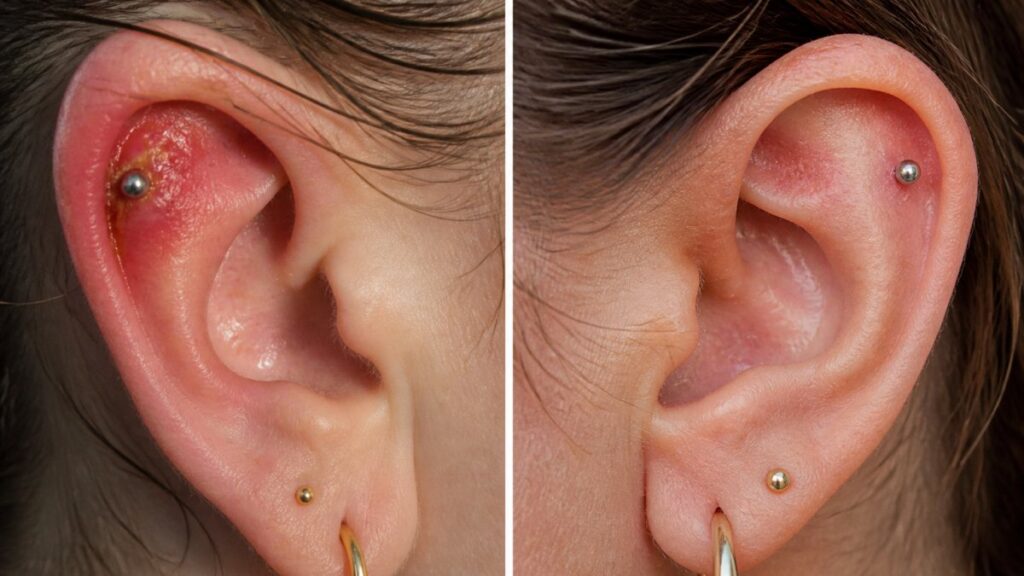
Your new piercing is an open wound, and the wrong earring can cause irritation, infection, or delayed healing.
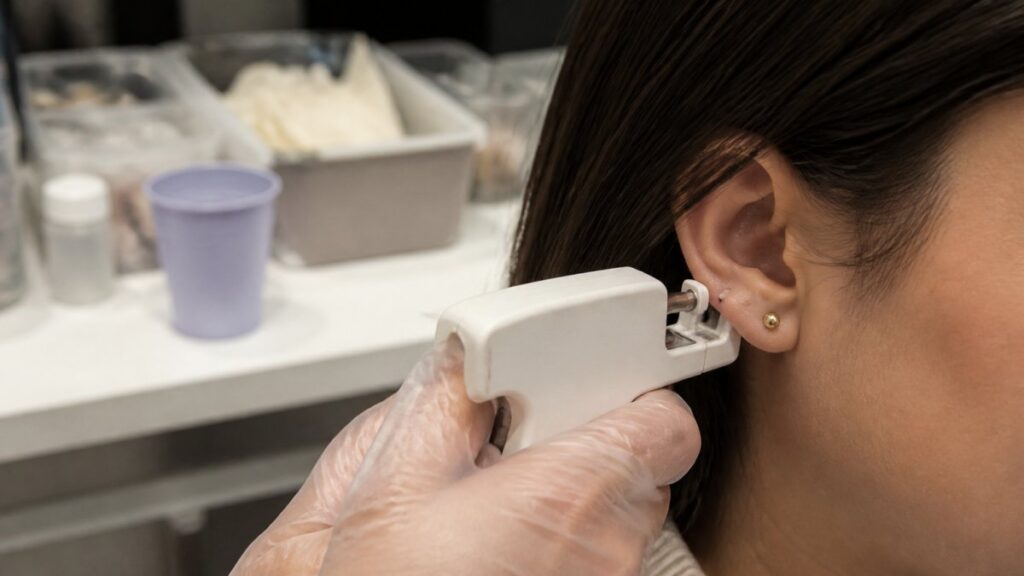
At Sideshow Tattoo and Piercing, safety comes first. The best earring styles for newly pierced ears share three qualities: body-safe materials, a secure fit that won’t snag, and room for swelling.
What makes an earring “safe” for a fresh piercing? A safe earring is made from implant-grade titanium, solid 14K or 18K gold, or surgical stainless steel, with a secure backing and a low profile that won’t irritate the piercing channel.
Material directly affects healing. Even small amounts of nickel can trigger allergic reactions, swelling, and infection; hypoallergenic materials eliminate that risk.
Avoid costume jewelry, plated metals, and anything with nickel content. These materials shed particles into your fresh piercing and cause inflammation that delays healing by weeks.
Flat-Back Earrings for New Piercings: Why They Work Best
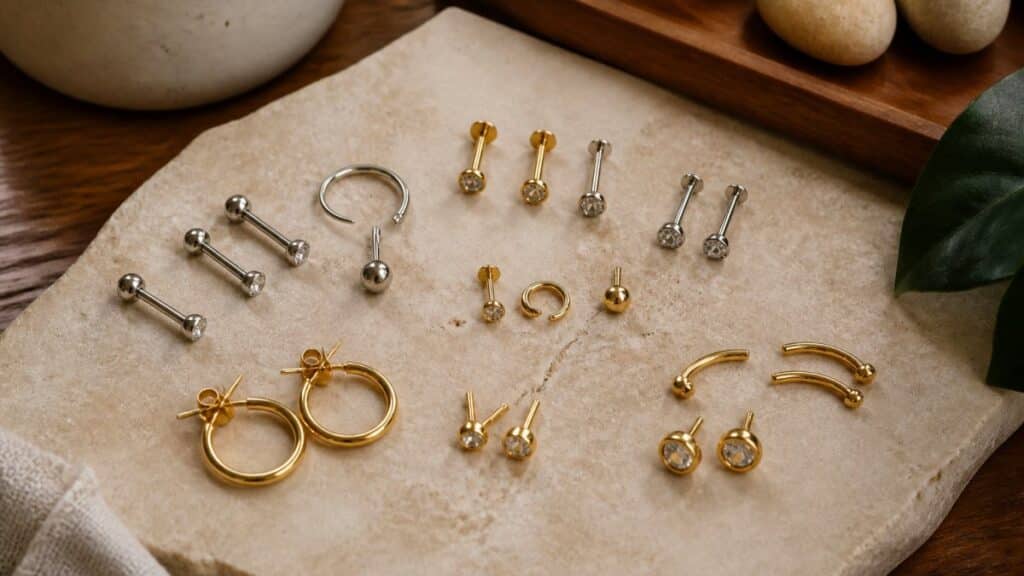
Flat-back earrings represent the best earring styles for newly pierced ears: their smooth, flat surface sits flush against your earlobe, reducing snagging and irritation during healing.
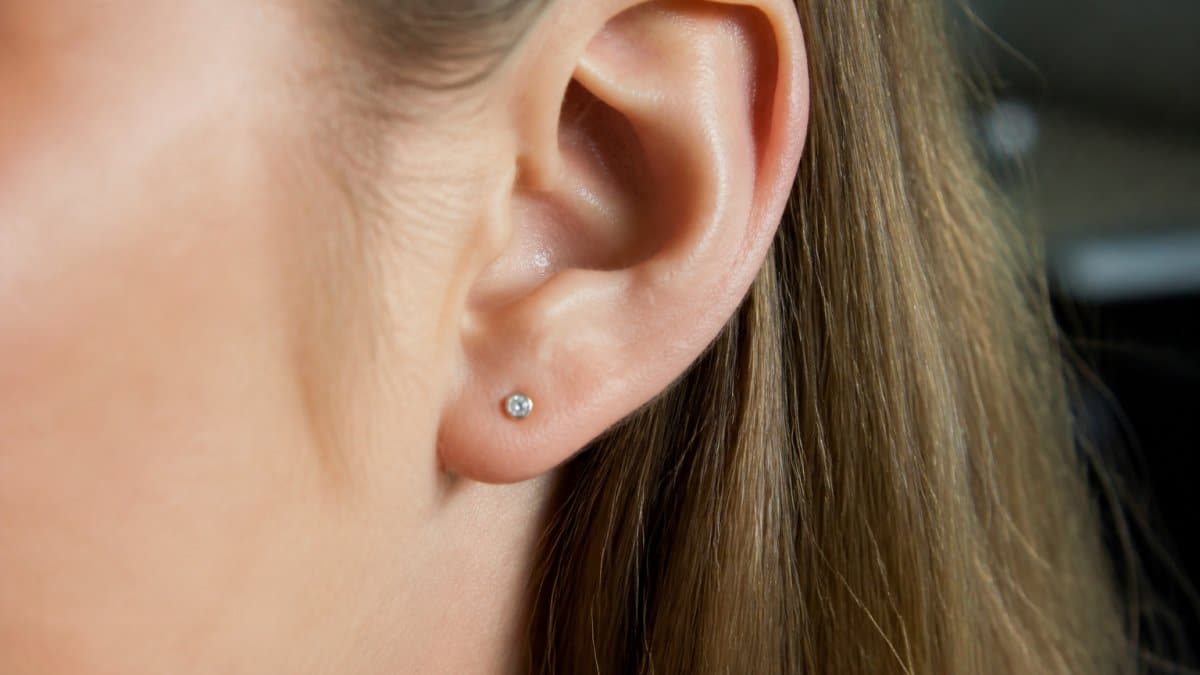
Why flat-back earrings work so well for new piercings:
- They sit snug against your ear, reducing movement and friction
- The flat post doesn’t catch on pillows, hair, or clothing
- Threadless and screw-back versions stay secure during sleep
Threadless flat-backs are especially popular: the post pushes into the backing for a secure fit without threads.
Post length matters too: your piercer should leave room for swelling, too tight irritates, too loose delays healing.
Sleep on your back or the opposite side during the first two weeks. This prevents pressure on your new piercing and reduces swelling faster.
Best Metal for New Ear Piercings and How to Avoid Irritation
The metal you choose determines whether your piercing heals smoothly; some metals trigger reactions that feel like infection but are allergic responses.
Implant-grade titanium is the top choice: hypoallergenic, nickel-free, and meeting the ASTM F-136 standard for body jewelry.
Solid 14K or 18K gold works well if genuinely solid, plated or gold-filled jewelry wears away and exposes base metals.
Surgical stainless steel is affordable and durable but sometimes contains nickel; if you have sensitive skin, choose titanium instead.
Avoid nickel alloys, plated metals, costume jewelry, and sterling silver, which can oxidize and irritate fresh piercings.
Irritation causes swelling, redness, and discharge and can lead to infection; the right metal prevents these problems entirely.
Flat-back earrings made from implant-grade titanium or solid gold give your new piercing the best chance to heal cleanly. At Sideshow Tattoo and Piercing, we use only high-quality jewelry, and our team can help you select earrings that match your style while protecting your healing piercing. Contact us to schedule your piercing and choose jewelry that works for you.
Frequently Asked Questions
What earrings are best for newly pierced ears?
Flat-back studs and labret earrings with secure screw-back or threadless designs are ideal for newly pierced ears. These styles sit flush against the earlobe, reducing snagging and irritation during the healing period. Pair them with hypoallergenic metals like implant-grade titanium or solid 14K gold to minimize allergic reactions and support healthy healing.
Can you sleep in earrings after piercing?
During the initial healing period, it’s best to keep earrings in at all times, including while sleeping. However, ensure the backing is secure so the earring doesn’t shift or cause pressure on your ear. Avoid sleeping directly on the pierced ear if possible. Once fully healed, you can remove earrings at night, but secure backings prevent accidental loss or damage.
How long should you keep starter earrings in after getting your ears pierced?
Most earlobe piercings require 6 to 8 weeks of continuous wear before you can safely change jewelry. Cartilage piercings take longer, typically 3 to 6 months or more. Your piercer will advise you on the specific healing timeline for your piercing location. Changing earrings too early risks infection and irritation, so patience is essential during the healing process.