
Last Updated: November 2, 2026
Quick Summary
A tragus piercing passes through the small flap of cartilage covering your ear canal opening, using a hollow single-use needle rather than a gun. Expect brief sharp pain, months of cartilage healing, and aftercare built on sterile saline spray and leaving the jewelry alone.
- The tragus is thicker and denser than the soft lobe, so placement must be measured, not guessed.
- A hollow needle removes a tiny circle of tissue, letting jewelry sit cleanly and heal with less trauma.
- Clear or white crust is dried lymph, not pus, so clean it gently with saline and gauze.
- Spray sterile saline on the front and back once or twice a day, then pat dry.
- Use over-ear headphones during the first few weeks instead of standard earbuds.
Table of Contents
- What a Tragus Piercing Is and Where It Sits
- How a Professional Tragus Piercing Is Done, Step by Step
- Pain Level and What the Procedure Feels Like
- Tragus Piercing Healing Time: What to Expect Week by Week
- Tragus Piercing Aftercare: Cleaning and Daily Habits
- Tragus Piercing Jewelry: Materials, Sizing, and Safe Changes
- Tragus Piercing With Earbuds: How to Manage Headphones
- Signs of Infection, Irritation, and When to Seek Medical Care
- Frequently Asked Questions
What a Tragus Piercing Is and Where It Sits
A tragus piercing passes through the small flap of cartilage that covers the opening of your ear canal. That flap is the tragus, and it sits right in front of the ear canal, which is why this placement looks bold but stays subtle from the front.
The tragus is thicker and denser than the soft lobe. That changes everything about how the piercing is done, how long it takes to heal, and what jewelry works. It also means placement has to be measured, not guessed.
The Ear Anatomy Behind the Placement
The tragus is part of the outer ear, not the middle ear. A needle passes through skin and cartilage only, never near the eardrum. That distinction matters: a properly done tragus piercing does not go into the ear canal or affect hearing. If you want the full breakdown of placement, healing, and jewelry basics, our guide to tragus ear piercings covers it in detail.
How a Professional Tragus Piercing Is Done, Step by Step
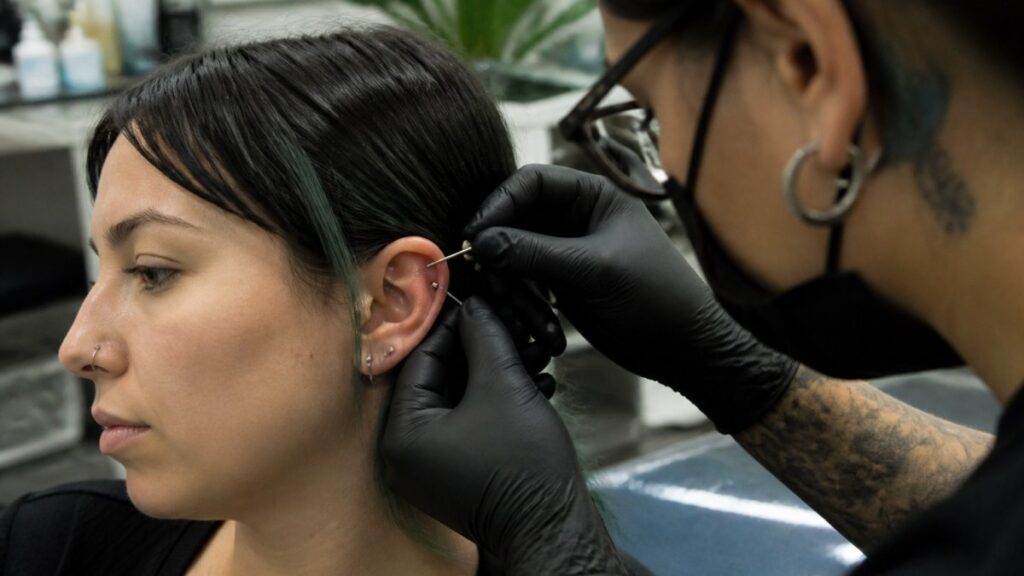
A professional tragus piercing is quick, and the needle itself is over in seconds. Here is how the process generally works:
- Consultation and ID check. We confirm age requirements, talk through placement, and answer questions.
- Anatomy check. The piercer examines the tragus shape and thickness to pick a spot that will heal well.
- Cleaning. The area is cleaned with a sterile solution.
- Marking. A single-use surgical pen marks the entry and exit points. You approve the mark before anything else happens.
- Needle. A hollow, single-use piercing needle passes through in one quick motion. Jewelry goes in immediately.
- Check and clean. We inspect the angle, secure the jewelry, and give you written aftercare instructions.
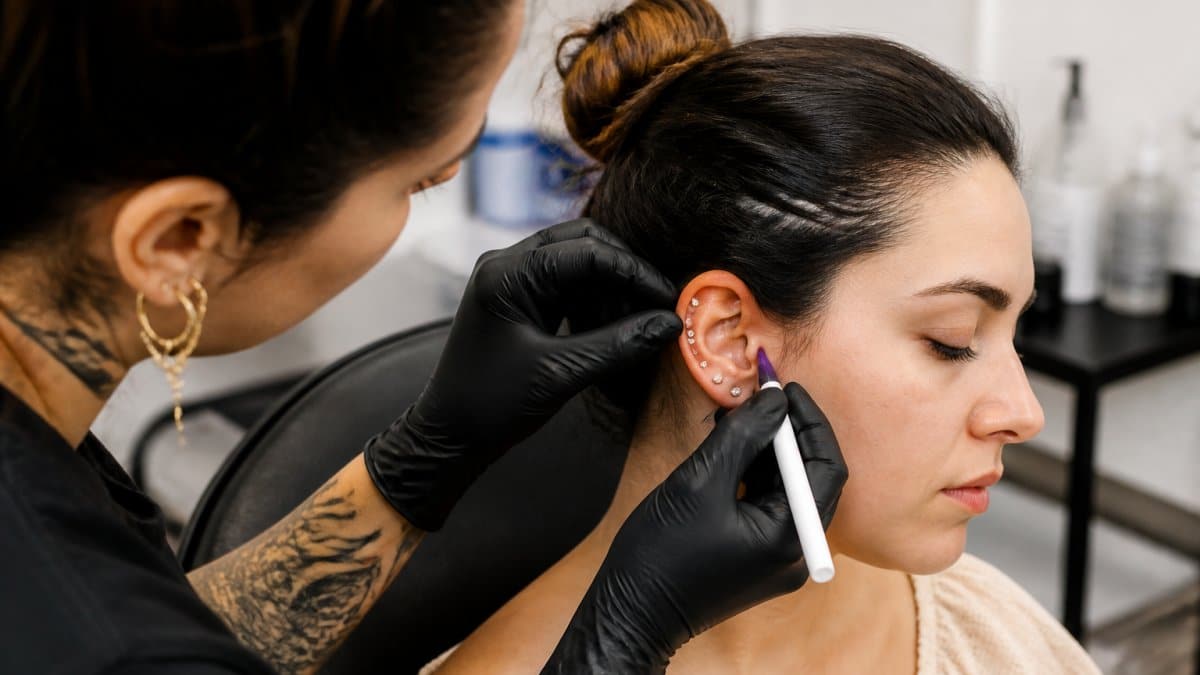
Needle vs. Gun: Why It Matters for Cartilage
A piercing gun forces blunt jewelry through cartilage. A hollow needle removes a tiny circle of tissue, which lets the jewelry sit cleanly and heal with less trauma.
Pain Level and What the Procedure Feels Like
Pain varies from person to person, and the sharp part is usually brief. The clamp and the needle are the two moments you will notice.
Cartilage generally hurts more than a lobe. The tragus is also close to the ear canal, so the pressure feels different from a helix piercing. Taking slow breaths and eating beforehand can help, and it is wise to tell your piercer if you feel lightheaded.
Tragus Piercing Healing Time: What to Expect Week by Week
Healing estimates for tragus piercings vary across sources, because they often describe different stages of healing.
Cartilage heals slowly because it has no direct blood supply (The Basic Science of Articular Cartilage: Structure, Composition, and Function).
Here is a realistic staging guide. Treat the timeframes as ranges, not deadlines.
| Stage | Typical timeframe | What you’ll notice | What to do |
|---|---|---|---|
| Acute phase | Days 1-7 | Swelling, warmth, tenderness, light bleeding or crusting | Saline spray, no touching, sleep on the opposite side |
| Early healing | Weeks 2-6 | Swelling drops, crusting continues, jewelry may feel loose | Keep cleaning twice daily, avoid pressure |
| Stabilization | Weeks 6-12 | Crusting fades, tenderness mostly gone, piercing looks settled | Continue aftercare, resist changing jewelry |
| Maturation | Months 3-6 | Fistula strengthens, irritation episodes become less frequent | Piercer can assess downsizing if swelling is gone |
| Full healing | Months 6-12+ | Fistula mature, jewelry changes are safer | Confirm with a piercer before switching styles |
A few practical notes on reading your own progress:
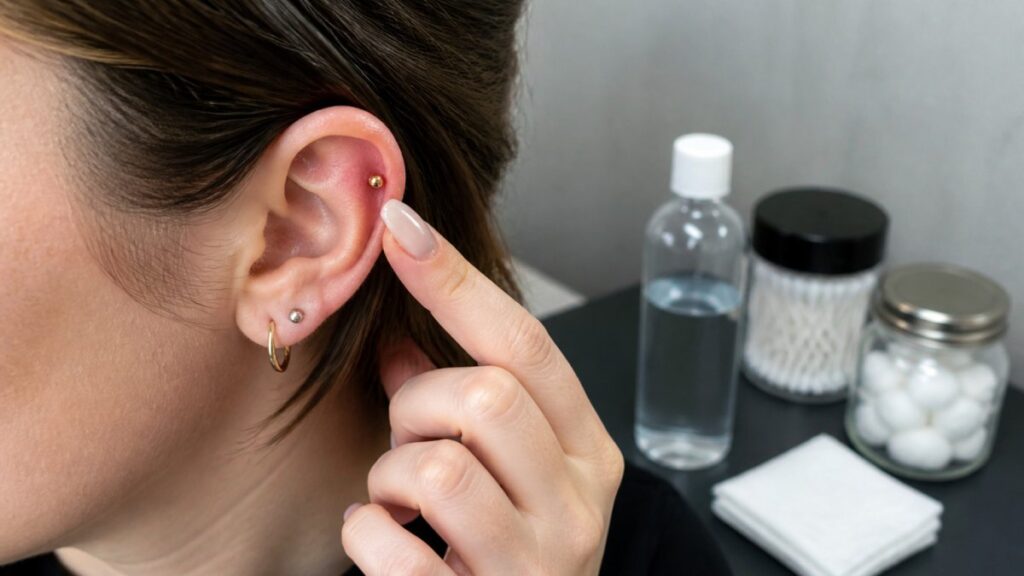
- Clear or white crust is normal. It is dried lymph, not pus. Remove it gently with saline and gauze, never by picking.
- A little blood in the first week is common. Ongoing bleeding after week two is worth a professional look.
- The piercing may look crooked while swollen. Do not judge placement until swelling has fully settled.
Take a photo of the piercing once a week in the same lighting. It is the easiest way to tell whether redness and swelling are actually improving, rather than judging from memory.
If the piercing is still crusting heavily or tender to the touch after three months, that does not automatically mean something is wrong, but it is a good reason to have a piercer look at the angle, jewelry fit, and your aftercare routine. A too-long post that shifts constantly is a common reason cartilage stays irritated well past the expected window.
One more caution: do not use healing time as a countdown to changing jewelry.
Tragus Piercing Aftercare: Cleaning and Daily Habits
Tragus piercing aftercare comes down to two things: keep it clean and leave it alone. Spray sterile saline solution on the front and back once or twice a day, then pat dry with clean gauze. Minimizing unnecessary contact with your jewelry helps maintain the integrity of the surrounding tissue, much like the habits required to prevent earlobe fatigue.
Daily habits matter as much as cleaning:
- Sleep on the opposite side or use a travel pillow with your ear in the hole
- Keep hairspray, perfume, and lotion away from the piercing
- Skip swimming pools, hot tubs, and lakes until healing is well along
If your piercing stays irritated despite good habits, our guide on how to calm an irritated ear piercing walks through what to adjust first.
Tragus Piercing Jewelry: Materials, Sizing, and Safe Changes
Jewelry choice is where a lot of tragus piercings go wrong, and it usually happens for one of two reasons: the metal is not body-safe, or the fit is wrong for the healing stage. Getting both right from day one makes the rest of the healing process much calmer.
Materials worth putting in a fresh piercing
For a new tragus piercing, the safest choices are:
- Implant-grade titanium (often labeled Ti-6Al-4V ELI or ASTM F136). Lightweight, highly biocompatible, and the standard most professional piercers reach for first.
- Niobium. Body-safe and available in dark colors without plating.
- Solid 14k or 18k gold. Safe if it is truly solid and nickel-free; avoid gold-plated or gold-filled pieces, because the plating can flake and trap bacteria.
Avoid plated jewelry, sterling silver in a fresh piercing, and anything with a rough or porous finish. Silver can tarnish and stain tissue, and plating wears away inside a healing piercing.
Sizing and fit: what actually matters
A fresh tragus is usually pierced with a straight barbell, a curved barbell, or a flat-back labret stud. The initial post needs extra length to accommodate swelling, typically a millimeter or two beyond the resting fit.
This is why downsizing matters. Once swelling has settled, a shorter post that sits closer to the skin is often used. Downsizing is not cosmetic.
Never downsize on your own schedule. A post that is too short during a swelling episode can embed in the tissue, which is a medical issue, not a jewelry tweak.
Hoops, clickers, and when to switch
Hoops and clickers are popular for the tragus because they frame the flap nicely, but they are a poor choice for a fresh piercing. A ring rotates through the piercing channel, dragging bacteria and crust into the wound. Rings are generally not placed in a healing tragus until the fistula is mature.
When you are ready to change styles, the safe sequence is:
- Have a piercer confirm the piercing is fully healed.
- Choose a piece in a body-safe material with a smooth finish.
- Let the piercer measure and fit it rather than guessing a gauge or diameter.
- Keep the original jewelry clean and stored in case you need to switch back during a flare.
Questions to ask before you buy jewelry
- What material is this, exactly, and can you show me the mill certificate or grade?
- What gauge and length is appropriate for my anatomy right now?
- Is this piece suitable for a healing piercing, or is it for healed ears only?
- Will you check the fit again in a few weeks?
A piercer who can answer those questions clearly is a better signal than any display case. If you want to go deeper on what separates safe jewelry from cheap jewelry, read our guide to what makes high quality piercing jewelry.
Tragus Piercing With Earbuds: How to Manage Headphones
Tragus piercing with earbuds is possible, but timing matters. During the first few weeks, standard earbuds press right against the fresh piercing and push bacteria into it.
Once initial swelling settles, many people switch back to earbuds with a smaller tip. Clean the earbuds before each use. If the piercing feels sore after wearing them, give it a break for a few days.
Signs of Infection, Irritation, and When to Seek Medical Care
Irritation is common and usually mild: a little redness, crust, or soreness that eases with better habits. Infection is different. Watch for spreading redness, heat, throbbing pain, yellow or green discharge, or fever.
A jewelry allergy can look similar to infection, but it often shows as itching and a rash around the metal rather than pus. Our guide on infection vs jewelry allergy explains how to tell them apart and when to get care.
Frequently Asked Questions
How long does a tragus piercing take to heal?
Cartilage heals more slowly than earlobes. Expect the initial healing phase to run several months, and the piercing may keep settling for up to a year. During that window the channel is still fragile, so keep the initial jewelry in and avoid sleeping on that side. Healing speed varies with your anatomy, aftercare consistency, and whether the piercing gets bumped. If redness, swelling, or soreness worsens instead of easing, have a professional piercer look at it rather than waiting it out.
Can you wear earbuds with a new tragus piercing?
A fresh tragus piercing sits right where earbuds rest, so pressing one in can irritate the site and transfer bacteria. Many piercers suggest holding off on that ear for the first stretch of healing and using over-ear headphones or the opposite ear instead. Once the piercing is fully healed, most people can wear earbuds again, though snug fits may still feel uncomfortable. Clean your earbuds regularly and stop using them if the piercing becomes sore or swollen.
What jewelry should you choose for a tragus piercing?
Start with a simple stud or a small labret-style piece in a body-safe material such as solid gold or implant-grade titanium. The initial jewelry needs a little extra length to allow for swelling, and a professional piercer will downsize it once the swelling settles. Avoid hoops, clickers, and heavy gemstone pieces until healing is complete, since they catch on hair and clothing. Ask about the material and sizing before the needle comes out so you know exactly what is going in your ear.
What are the signs of infection after a tragus piercing?
Watch for spreading redness, warmth, thick yellow or green discharge, increasing pain, and swelling that gets worse after the first week instead of better. A low-grade irritation bump is common and usually settles with better aftercare, but fever or streaking redness warrants medical attention. Clean the piercing with saline solution as directed, avoid touching it, and contact a healthcare provider if symptoms escalate. A professional piercer can help you tell irritation apart from infection.
A tragus piercing rewards patience: a careful placement, quality jewelry, and steady aftercare make the difference between a piercing that settles and one that fights you for months. At Sideshow Tattoo and Piercing, our hand-picked artists use single-use needles and only high-quality jewelry, and we take the time to match placement to your anatomy. Get started with Sideshow Tattoo and Piercing and book a consultation for a tragus piercing done right the first time.