Last Updated: November 1, 2026
Quick Summary
The best unscented lotions for a new tattoo are fragrance-free, water-based moisturizers with short ingredient lists, such as CeraVe Daily Moisturizing Lotion, Aveeno Daily Moisturizing Lotion, Vanicream Moisturizing Lotion, Cetaphil Moisturizing Lotion and La Roche-Posay Toleriane Double Repair. Look for fragrance-free on the label, since unscented products can contain masking fragrances.
- Ointment comes first in the earliest healing days, then switch to lotion once flaking begins.
- Moisturize a new tattoo two to three times a day with a thin layer each time.
- A pea-sized amount is usually enough for a palm-sized area of tattoo.
- Patch test new lotion on your inner forearm for 24 hours before using it on the tattoo.
- Avoid lotion on a tattoo that is weeping, angry, or hot to the touch.
Table of Contents
- What to Look for in Unscented Lotions for Tattoo Aftercare
- Five Unscented Lotions for New Tattoo Healing, Ranked
- Can You Use Eucerin on a Tattoo?
- Lotion or Ointment for a New Tattoo: Which Comes First?
- How Often to Moisturize a New Tattoo
- Is Hemp Lotion for Tattoos Worth Trying?
- Patch Testing and Signs of Irritation to Watch For
- Ask Your Artist Before You Moisturize
- Frequently Asked Questions
What to Look for in Unscented Lotions for Tattoo Aftercare
Unscented lotion is a moisturizer formulated without fragrance, and it is the safest everyday option for healing tattoo skin because fragrance is one of the most common causes of contact irritation. The simpler the ingredient list, the better your chances of a smooth heal.
Here is what actually matters when you shop:
- Fragrance-free, not just “unscented.” Unscented products can contain masking fragrances. Look for the words “fragrance-free” on the label.
- Water-based and lightweight. Heavy occlusive products can trap bacteria and feel suffocating on fresh ink.
- Short ingredient lists. Fewer ingredients means fewer chances for a reaction.
- No alcohol, no dyes, no essential oils. These sting on open skin and slow the skin barrier’s recovery.
- Non-comedogenic. You want hydration without pore clogging around the tattoo.
The American Academy of Dermatology’s guidance on tattoo aftercare echoes this: gentle cleansing and plain moisturizer beat elaborate routines. Skip anything with a strong scent, and patch test before you commit.
Five Unscented Lotions for New Tattoo Healing, Ranked
Below are five fragrance-free moisturizers that many people use during tattoo healing. They can be assessed on whether the label says fragrance-free (not just unscented), how short the ingredient list is, how the texture behaves on healing skin, and how easy the product is to find. Prices vary by retailer and size, so check current listings before you buy.
A quick note on labels: “unscented” can mean a masking fragrance was added to cover a smell, while “fragrance-free” means no fragrance was added at all. For a healing tattoo, fragrance-free is the safer bet.
| Product | Texture | Key Ingredients | Best For | Watch-Out |
|---|---|---|---|---|
| CeraVe Daily Moisturizing Lotion | Lightweight | Ceramides, hyaluronic acid | All-around daily use | Can feel too light on very dry patches |
| Aveeno Daily Moisturizing Lotion | Medium | Colloidal oatmeal | Sensitive, itchy skin | Thicker texture; apply sparingly |
| Vanicream Moisturizing Lotion | Light | Minimal ingredient list | Highly reactive skin | Harder to find in some stores |
| Cetaphil Moisturizing Lotion | Light | Glycerin, emollients | Budget-friendly basics | Thin; some find it underwhelming |
| La Roche-Posay Toleriane Double Repair | Medium | Ceramides, niacinamide | Barrier support | Pricier than drugstore options |
1. CeraVe Daily Moisturizing Lotion
CeraVe is a widely available option. Its formula pairs ceramides with hyaluronic acid, and it is generally described as lightweight and fast-absorbing. It is fragrance-free and widely available at drugstores.
Pros: Affordable, easy to find, absorbs fast, fragrance-free.
Cons: Some people find it slightly too light for very dry patches.
2. Aveeno Daily Moisturizing Lotion
Aveeno’s colloidal oatmeal formula is a solid choice if your healing tattoo feels itchy or tight. Oatmeal is a commonly used skin soother.
Pros: Calms itchiness, gentle formula, easy to find.
Cons: Texture is heavier; apply sparingly.
3. Vanicream Moisturizing Lotion
Some people with reactive skin look for products with short ingredient lists and no dyes or fragrance.
Pros: Minimal ingredients, excellent for sensitive skin, fragrance-free.
Cons: Harder to find in some stores; plainer texture.
4. Cetaphil Moisturizing Lotion
Pros: Inexpensive, gentle, widely stocked.
Cons: Nothing special about the formula; some find it thin.
5. La Roche-Posay Toleriane Double Repair Moisturizer
Pros: Strong barrier support, fragrance-free, comfortable texture.
Cons: Pricier than the drugstore options.
Match the product to the healing stage. In the first few days, a thin layer of plain ointment is often used. Once the surface has closed and flaking starts, switch to one of these lotions for daily hydration. If a product stings, smells like anything, or leaves the skin tacky, stop and reassess.
How we picked these five
We did not rank on brand popularity. Each product earned its spot because it passed a simple screen: fragrance-free labeling, no alcohol or dyes, a short and readable ingredient list, and a texture that works on healing skin rather than sitting on top of it. We also weighed availability, because a recommendation you cannot buy locally is not much help.
Can You Use Eucerin on a Tattoo?
Some people use fragrance-free Eucerin products on healing tattoos, but check with your artist first. The catch is texture: heavy creams can feel greasy on fresh ink, so apply a thin layer and let it absorb. Avoid any Eucerin product with added fragrance, and skip thick ointments in the first days when the skin needs to breathe. Maintaining a consistent routine of fragrance-free skin repair helps balance hydration levels without clogging pores or trapping moisture during the critical recovery phase.
Lotion or Ointment for a New Tattoo: Which Comes First?
Ointment comes first, then lotion. In the earliest days of healing, a thin layer of plain ointment protects the fresh wound and keeps it from drying out. Once the surface has closed and flaking begins, switch to an unscented lotion for daily hydration. Ointment is occlusive and can trap moisture and bacteria if overused, so it is a short-term tool, not a permanent step. Lotion is lighter, breathable, and better suited to the long stretch of healing that follows.
How Often to Moisturize a New Tattoo
Moisturize a new tattoo two to three times a day, using a thin layer each time. More product does not mean faster healing. Over-moisturizing can clog pores, soften scabs prematurely, and create a breeding ground for irritation.
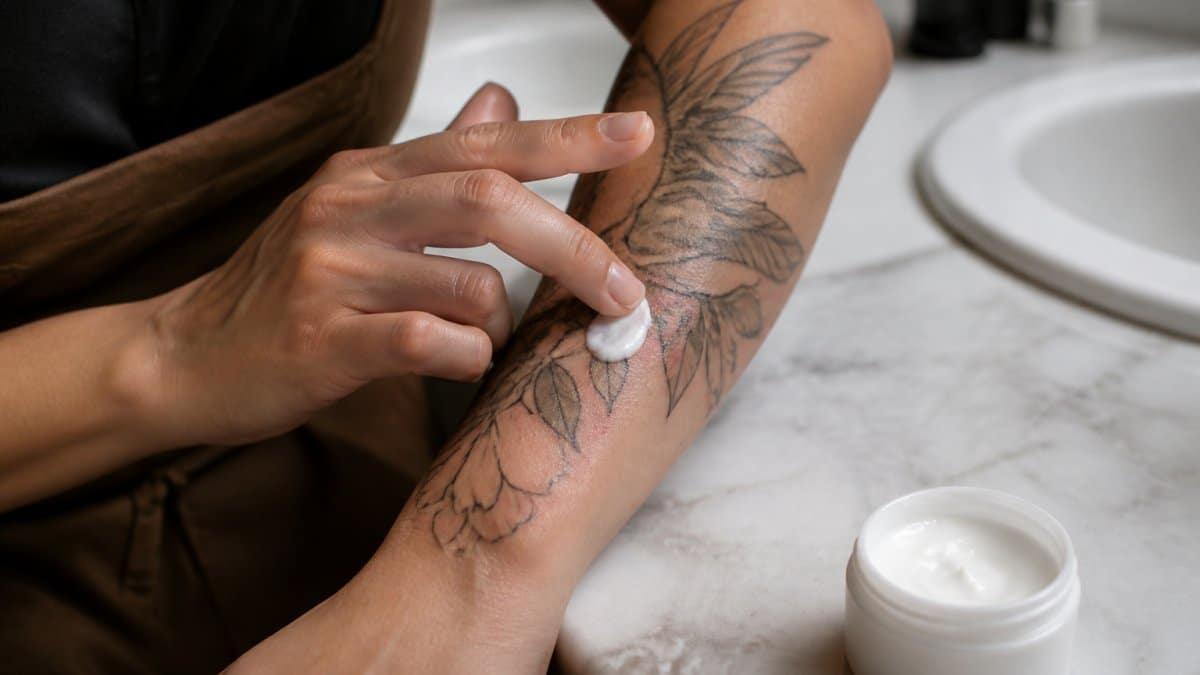
Wash your hands before you touch the tattoo, pat the skin dry after cleansing, and then apply. If the skin looks shiny or feels tacky afterward, you used too much.
How much is a thin layer, really?
A thin layer means you can still see the skin through the product after you rub it in. A pea-sized amount is usually enough for a palm-sized area of tattoo. Dot the lotion across the tattoo in small amounts, then spread it with a clean fingertip until it disappears. If you can still see a white film or the surface feels slippery, you applied too much. Blot the excess with a clean paper towel rather than rubbing it in harder.
A simple daily rhythm
A workable pattern can look like this:
- Morning: Wash with lukewarm water and a fragrance-free cleanser, pat dry, apply a thin layer of lotion.
- Midday or after work: If the skin feels tight or dry, apply another thin layer. Skip it if the skin still feels moist from the morning application.
- Evening: Cleanse gently, pat dry, and apply a thin layer before bed.
Adjust the count to your skin, not the clock. Oily skin may only need two applications; very dry skin may need three. The goal is comfortable, supple skin, not a constant coating of product.
Signs you are over-moisturizing
Watch for these and back off if they show up:
- The tattoo stays shiny or wet-looking long after application.
- Scabs or flakes turn soft, mushy, or come off earlier than they should.
- Small bumps or clogged pores appear around the tattoo.
- The skin feels irritated rather than soothed after applying.
If any of these happen, cut back to once or twice a day and use less product per application. If irritation persists or worsens, stop using the product and check with your artist or a clinician.
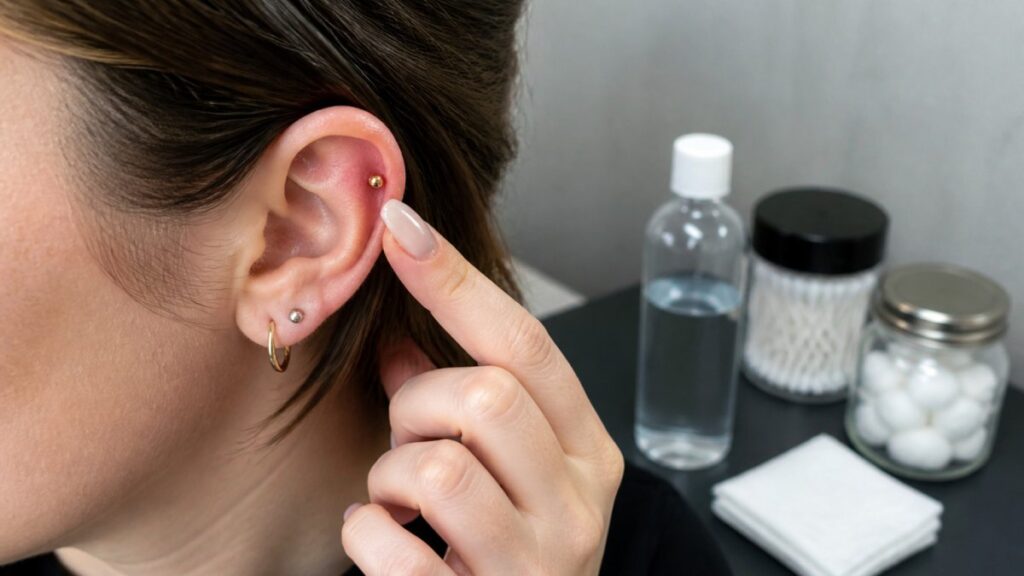
Do not apply lotion to a tattoo that is still weeping, looks angry, or feels hot to the touch. Those can be signs of infection rather than routine healing, and adding product can make things worse. Contact your artist or a clinician before continuing.
When to switch from ointment to lotion
Ointment comes first, then lotion. In the earliest days of healing, a thin layer of plain ointment protects the fresh wound and keeps it from drying out. Once the surface has closed and flaking begins, switch to an unscented lotion for daily hydration. Ointment is occlusive and can trap moisture and bacteria if overused, so it is a short-term tool, not a permanent step. Lotion is lighter, breathable, and better suited to the long stretch of healing that follows.
Is Hemp Lotion for Tattoos Worth Trying?
Hemp lotion for tattoos can be worth trying if the formula is fragrance-free and free of essential oils, but it is not automatically better than a plain moisturizer. Hemp seed oil is moisturizing, yet many hemp products include added fragrance or botanical oils that irritate healing skin. Read the label the same way you would any other lotion: short ingredient list, no fragrance, no dyes. If a hemp product passes that test and your skin tolerates it, it can work fine.
Patch Testing and Signs of Irritation to Watch For
Patch test any new lotion on a small area of normal skin before using it on your tattoo. Apply a dime-sized amount to your inner forearm, wait 24 hours, and check for redness, itching, or bumps.
Watch out for these signs of irritation, and stop using the product if you see them:
- Spreading redness or warmth around the tattoo
- Increasing pain instead of gradual improvement
- Bumps, blisters, or a rash
- Pus or a foul odor
Those symptoms can point to infection rather than a simple reaction, and they warrant a call to a clinician. It also helps to know what to look for in a sterile tattoo studio before your next appointment.
Ask Your Artist Before You Moisturize
Your artist knows your specific tattoo, your skin, and how the piece is healing, so ask before you introduce any new product. If you do not have an artist yet, our guide to finding a reputable tattoo artist walks through the vetting process. A quick question at your appointment or a photo sent during healing can save you a week of guesswork. First-timers can also read our tattoo shop guide for first timers to know what to expect from the studio itself.
Frequently Asked Questions
Can you use Eucerin on a tattoo?
Some people use fragrance-free Eucerin products on tattoos once the skin has closed over, but check with your artist before applying any product. Skip anything with fragrance or added botanical extracts, and stop using it if you notice redness, itching, or bumps. Patch test on healthy skin first.
How often should you moisturize a new tattoo?
Most artists suggest applying a thin layer of unscented lotion two to three times a day once the tattoo has stopped weeping and your artist gives the go-ahead. More important than frequency is quantity: a light film that absorbs within a minute is enough. If the skin looks shiny or feels greasy, you used too much. Wash your hands first, dab rather than rub, and let the lotion absorb before dressing.
Is hemp lotion for tattoos good for healing?
Hemp lotion for tattoos can be a reasonable choice if it is fragrance-free and free of added essential oils, since hemp seed oil is a moisturizing ingredient that supports skin comfort. The catch is that many hemp products include fragrance or botanical additives that can irritate fresh ink. Read the label, patch test on healthy skin, and confirm with your artist before applying anything hemp-based to a healing tattoo.
Should you use lotion or ointment on a new tattoo?
Many artists suggest ointment first, lotion later. In the first few days, a thin layer of plain ointment can help keep the area protected while it is still open. Once the surface has closed and flaking begins, switch to an unscented, water-based lotion so the skin can breathe. Using heavy ointment too long can trap moisture and clog pores, so follow your artist’s timeline rather than guessing.
Healing a new tattoo well comes down to simple habits: clean hands, gentle cleansing, and a fragrance-free moisturizer applied in thin layers. If you want aftercare guidance tailored to your specific piece, the team at Sideshow Tattoo and Piercing is here to help. Our hand-picked artists walk every client through aftercare, and we prioritize a clean, comfortable environment from consultation to final wrap. Get started with Sideshow Tattoo and Piercing and heal your new ink with confidence.