Last Updated: October 29, 2026
Quick Summary
A custom tattoo design is original artwork built around your story, anatomy, and jewelry rather than pre-drawn flash. Bring the jewelry you wear most to your consultation so your artist can check how the piece sits beside the proposed placement. Keep metal off a healing tattoo for the first two to three weeks.
- Flash is pre-drawn art offered to many clients; custom work is drawn for one person from a design brief.
- Finger tattoos fade fastest because rings rub directly over the ink line.
- Ask for a slightly heavier outer contour with finer interior detail so jewelry-style pieces hold their shape.
- Chain links need visible gaps; if gaps are narrower than the line weight, they merge into a solid band.
- Eat a real meal beforehand and skip alcohol for 24 hours before your appointment.
Table of Contents
- Why Custom Tattoo Design Beats Flash for Personal Expression
- Finding Custom Tattoo Design Ideas That Tell Your Story
- Your Tattoo Placement Guide for Jewelry Compatibility
- Tattoo Design Consultation Questions to Ask Your Artist
- First Tattoo Preparation for a Smooth Appointment
- How to Make Sure Your Design Ages Well
- Book Your Custom Tattoo Consultation at Sideshow
- Frequently Asked Questions
Why Custom Tattoo Design Beats Flash for Personal Expression
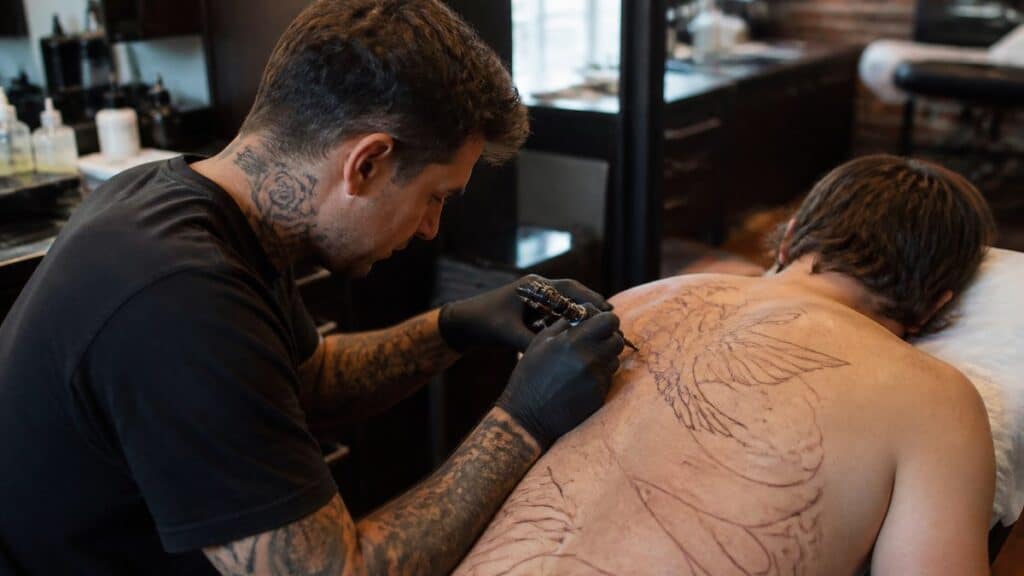
Walk into any shop and you’ll see two paths on the wall: a binder of ready-made flash and a blank sheet of paper waiting for your story. The best personalized tattoo designs tailored to individual preferences for safe jewelry selection start on that blank sheet, because a custom piece is built around your body, your jewelry, and the way you actually live. The difference between a custom piece and a ready-made one tends to show up years later, not on day one.
Custom tattoo design is the practice of commissioning original artwork built around one client’s story, anatomy, and styling rather than adapting a pre-drawn sheet. It takes longer and costs more thought upfront. It also produces work that fits you specifically.
Flash vs. Custom: What’s the Difference?
Flash is pre-drawn artwork an artist offers to multiple clients, often with set sizing and placement. Custom work is drawn for one person, from a design brief you build together. Flash wins on speed and spontaneity.
A common mistake is treating flash as the “cheap” option and custom as the “expensive” one. The real difference is control. With flash, the artist controls the composition.
Finding Custom Tattoo Design Ideas That Tell Your Story
Start with what you already wear, not with Pinterest. Your jewelry, your wardrobe, and the objects you reach for daily are better raw material than a trending hashtag, and they keep the design coherent when you add pieces later. If you want to see how the full process unfolds, our custom tattoo design process explained step by step walks through it from first sketch to final session.
Building Individualized Symbolism
Individualized symbolism works best when it’s specific enough to be yours and simple enough to read at a glance. A birth flower, a family tool, a coastline, a song lyric fragment: each carries meaning without needing a paragraph of explanation tattooed beside it.
Try this exercise before your consultation:
- List five objects, places, or memories you’d keep if you lost everything else.
- Circle the two that can be drawn in a single clear silhouette.
- Note the colors you wear most often, since your ink will sit beside them.
- Bring photos of jewelry you wear weekly, not just special occasions.
- Write one sentence describing what you want the piece to say about you.
What most guides miss is that symbolism you have to explain constantly gets exhausting. Pick images that feel personal to you and legible to everyone else.
Your Tattoo Placement Guide for Jewelry Compatibility
Placement decides more about jewelry compatibility than the design itself, and the reason is mechanical, not aesthetic. Jewelry moves against skin all day: rings rotate, bracelets slide, chains swing, earrings catch on hair.
Matching Ink to Necklaces, Rings, and Earrings
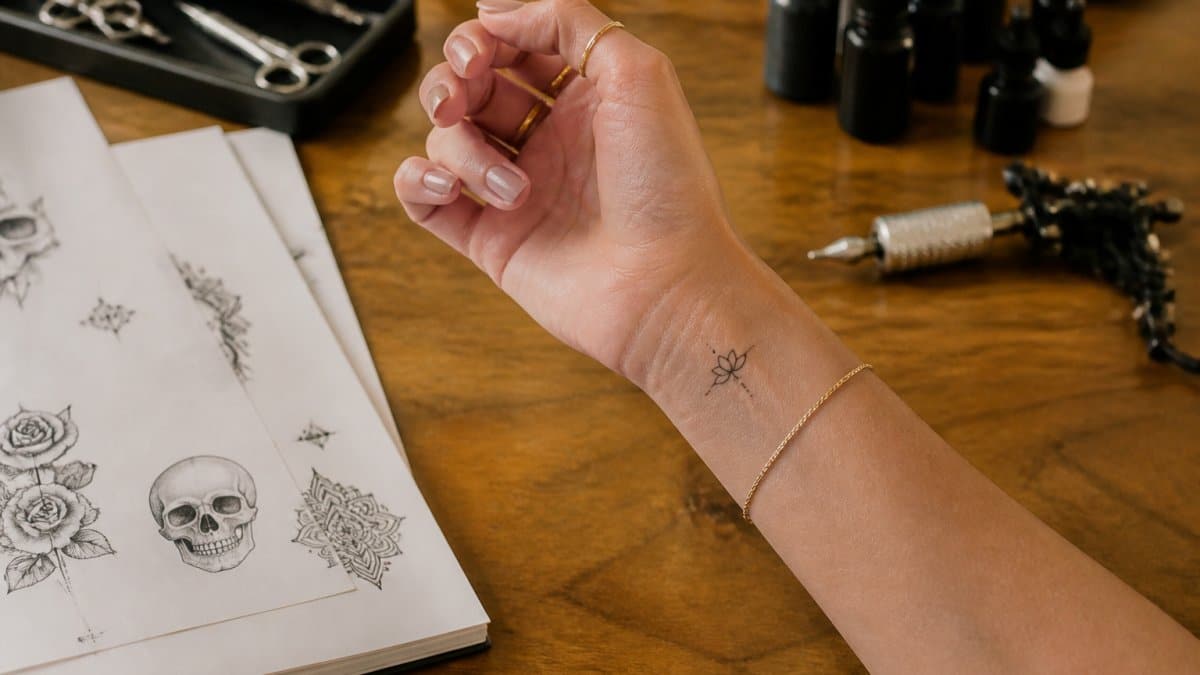
Fine-line and delicate aesthetics pair naturally with lightweight jewelry because neither competes for visual space. Bold ornamental work holds its own beside statement pieces. The goal is aesthetic cohesion: your ink and your jewelry should read as one intentional look, not two separate decisions.
A few placement realities worth knowing:
- Finger tattoos fade fastest because hands see constant friction, sun, and washing, and rings rub directly over the ink line every time you flex.
- Inner wrist and forearm stay visible beside bracelets but can catch on watch clasps during healing; keep the band loose for the first two weeks.
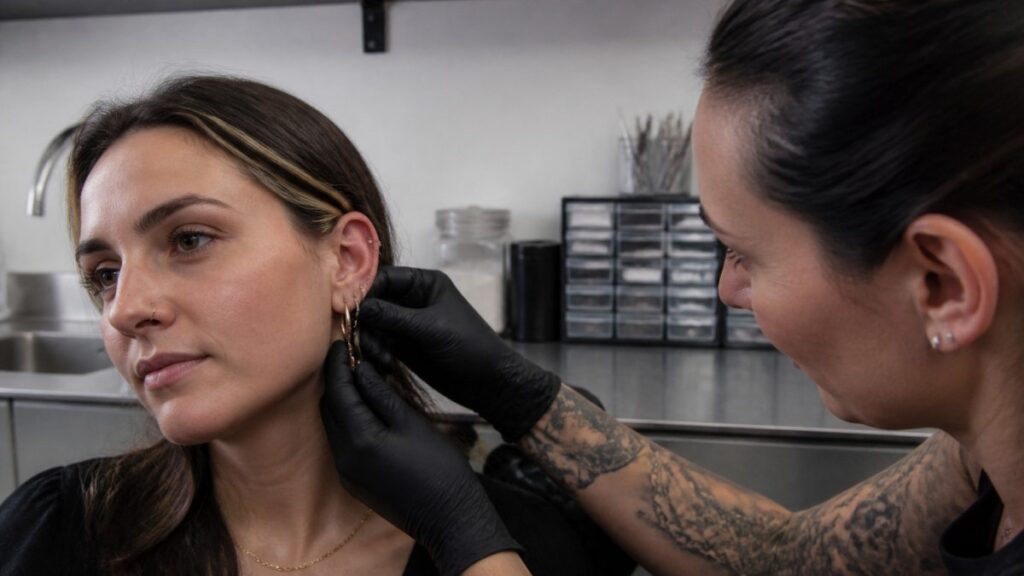
- Behind the ear works with earrings but is easy to irritate with hair products, glasses arms, and mask straps.
The Safety Side: Metal, Skin, and Healing Ink
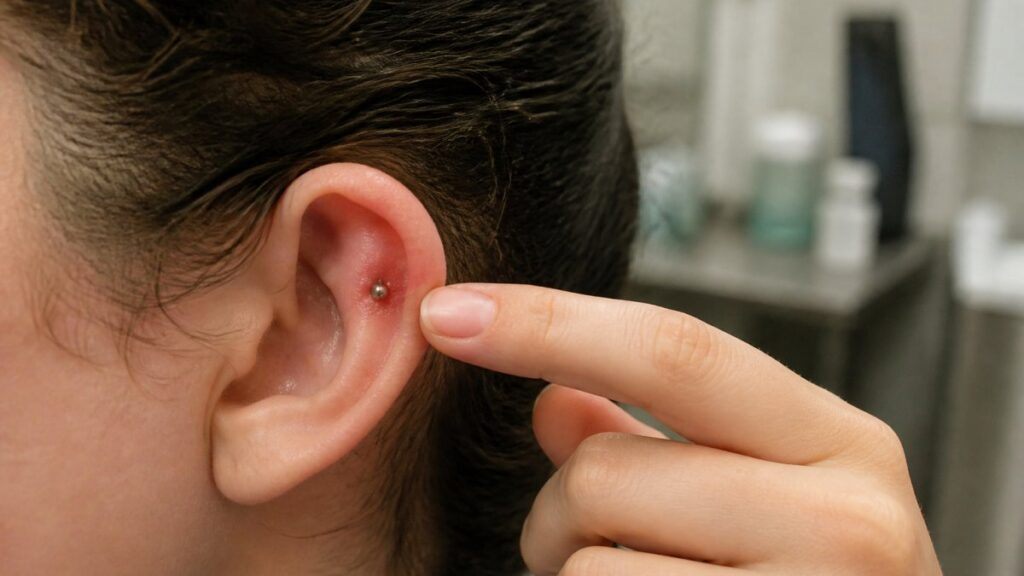
This is the part most guides skip. Nickel is a common cause of contact dermatitis, and it can appear in inexpensive jewelry (the American Academy of Dermatology). The FDA’s guidance on tattoo inks and pigments covers ink safety questions, and the American Academy of Dermatology’s tattoo advice covers healing and skin care expectations.
Practical rules that keep ink and metal from fighting each other:
-
Keep jewelry off a healing tattoo for the first two to three weeks, or move it to the opposite side of the body.
-
Avoid tight bands over fresh ink, a ring or bracelet that presses on the site traps moisture and lint against the wound.
-
Watch for visual clutter, not just irritation: a busy tattoo under a stack of bangles reads as noise from a few feet away.
Skin anatomy matters here too. For a deeper look at choosing a spot, our tattoo placement guide covers the trade-offs body part by body part. If you have sensitive skin and wear jewelry daily, this guide to jewelry for sensitive ears is worth reading before you commit to a placement that sits under a clasp.
Bring the jewelry you wear most to your consultation. Your artist can hold it against the proposed placement to see how the piece will sit beside the design.
Here is how common placements behave around the jewelry you wear every day.
| Placement | Jewelry interaction | Note |
|---|---|---|
| Finger | Rings rub directly over the ink line | Fades fastest from friction, sun, washing |
| Inner wrist and forearm | Visible beside bracelets | Can catch on watch clasps; keep band loose two weeks |
| Behind the ear | Works with earrings | Easy to irritate with hair products and glasses |
| Ankle | Rubs against socks and shoe straps | Plan healing around your footwear |
| Neck and collarbone | Sits under chains | A pendant drags across fresh ink constantly |
Tattoo Design Consultation Questions to Ask Your Artist
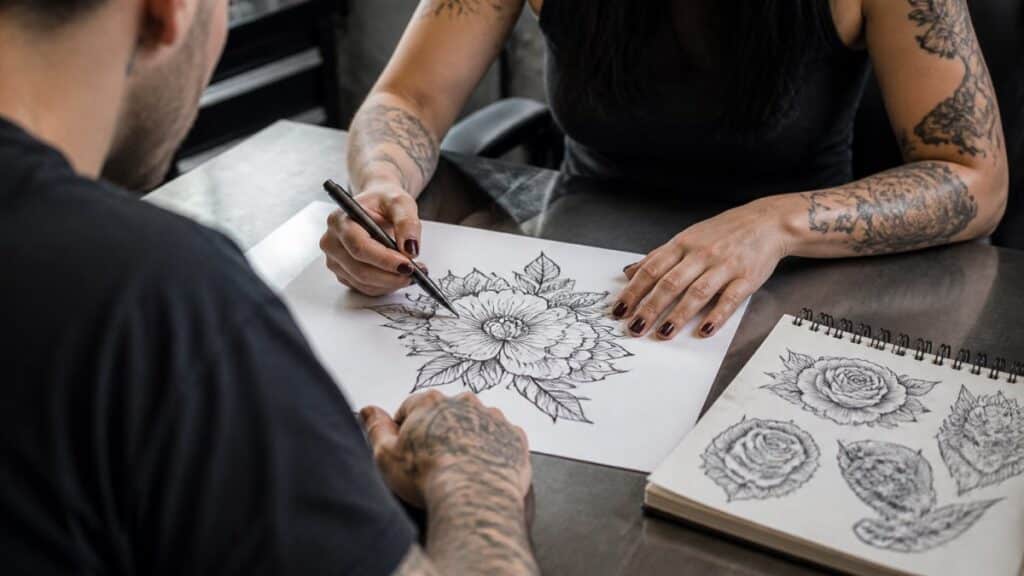
A consultation is a working session, not a sales pitch. The right tattoo design consultation questions get you from “I think I want something” to a sketch you trust.
Questions worth bringing:
- Can you show me healed photos of this style, not just fresh work?
- How will this design hold up in the placement I’m considering?
- What line weight and detail level survive ten years in this spot?
If you’re worried an artist won’t “get” a hybrid vision, say so directly at the consultation. A good artist will either show you relevant work or tell you honestly that a colleague is the better match.
First Tattoo Preparation for a Smooth Appointment
First tattoo preparation comes down to three things: sleep, food, and honesty about your nerves. Eat a real meal beforehand, skip alcohol for 24 hours, wear clothing that gives easy access to the placement, and tell your artist if you’re anxious. Anxiety is common, and it helps when the artist knows about it.
Practical checklist for the days before:
- Confirm your design and placement in writing
- Moisturize the area, but skip lotions the morning of
- Bring a photo ID and a water bottle
First-timers often want a fuller walkthrough, and our guide for first-time tattoo clients covers what to expect from arrival to aftercare. Watch out: showing up dehydrated or on an empty stomach is the most common reason people feel lightheaded mid-session, and it’s entirely avoidable.
How to Make Sure Your Design Ages Well
Tattoo longevity is a design decision, not just an aftercare one. Fine detail blurs, tight line clusters merge, and light washes soften as ink settles into skin over years. Designs built with clear spacing, strong contrast, and moderate detail age far better than intricate micro-realism packed into a small area.
Ask your artist to design for the ten-year version of your skin, not the fresh-photo version. That means:
- Leaving breathing room between elements
- Choosing contrast over subtle gradients for small pieces
- Avoiding text smaller than what reads clearly at arm’s length
Technical Specs for Jewelry-Style Tattoos
If the design is meant to look like jewelry, a chain, a ring band, a filigree cuff, a pendant silhouette, the specs matter more than the sketch. Jewelry reads as jewelry because of clean edges and consistent weight, and both degrade first in skin.
What to ask your artist about before the stencil goes on:
- Line weight: single-needle fine lines look stunning fresh and soften fastest. A slightly heavier outer contour (roughly 3RL to 5RL territory) with finer interior detail holds the shape longer.
- Spacing: links in a chain tattoo need visible gaps. If the gaps are narrower than the line weight, they’ll merge into a solid band within a few years.
- Contrast: a jewelry-style piece depends on negative space to read. Packing black too densely removes the highlights that make metal look like metal.
Designing Ink That Complements Your Jewelry Collection
The other half of longevity is styling. A tattoo that duplicates the jewelry you already wear tends to look redundant; one that echoes it looks intentional. If you wear a thin gold chain daily, a delicate line piece along the collarbone reads as part of the same look.
A few integration rules that hold up over time:
- Match weight, not subject. A fine-line tattoo pairs with fine jewelry; a heavy blackwork piece pairs with statement metal.
- Leave room for the collection to grow. Stacked rings and layered necklaces change; a tattoo placed with margin still works when your taste shifts.
- Think about color temperature. Warm gold jewelry flatters warmer ink palettes; cool silver sits more naturally beside black-and-grey work.
The FDA’s guidance on tattoo inks and pigments is a useful reference on ink safety questions, and the American Academy of Dermatology’s tattoo advice covers healing and skin care expectations.
A jewelry-style tattoo ages well when the outer shape stays crisp and the negative space stays open. Ask for a heavier contour, real gaps between elements, and a size that lets the detail breathe, then let your jewelry do the rest.
Book Your Custom Tattoo Consultation at Sideshow
The design you’ll still love in a decade starts with one conversation. Bring your ideas, your jewelry, and your questions, and we’ll match you with an artist whose style fits what’s in your head. Our team of hand-picked artists works across a range of styles, and we use high-quality jewelry for all piercing services. Ready to start? Book a custom tattoo consultation and we’ll take it from there.
Frequently Asked Questions
How do I choose a custom tattoo design that feels personal?
Start with a story, memory, or symbol that matters to you rather than a trend. Gather reference images, colors, and textures you like, then bring them to a consultation. A good artist will ask about your reasons and translate those into a custom sketch. This process of individualized symbolism is what separates a custom tattoo design from a piece of flash art anyone can wear.
How can I tell if a tattoo idea will age well?
Ask your artist how the design will look in ten years. Fine details and tight linework can blur over time, especially on hands and feet. Larger shapes, strong contrast, and open spacing hold up better. Your artist can adjust scale and line weight during the design commission so the piece keeps its structure as your skin changes with age.
What should I bring to a custom tattoo consultation?
Bring reference images, a rough sketch if you have one, and notes on placement and size. Mention any jewelry you wear daily so the artist can plan around it. Be ready to discuss your budget and timeline. Photos of tattoos you dislike are just as useful as ones you love, since they help the artist understand your stylistic preference and avoid designs that miss the mark.
How do I combine several ideas into one cohesive tattoo?
Write down each idea and rank them by importance. Your artist can unify them through a shared style, color palette, or composition. For example, a geometric frame can tie together floral and script elements. Visual balance matters more than cramming everything in. Your artist can sketch a few options so you can see how the pieces fit together before any ink goes on.
How do I prepare for my first tattoo appointment?
Sleep well, eat a full meal, and hydrate before you arrive. Wear clothing that gives easy access to the placement area, and skip alcohol for 24 hours beforehand. Bring a photo ID. First tattoo preparation also means asking about aftercare in advance so you know how to clean and protect the piece during the healing process.
Your skin is permanent, but the planning doesn’t have to be stressful. Sideshow Tattoo and Piercing pairs you with an artist matched to your vision, builds the design around your anatomy and jewelry, and uses quality jewelry for piercings so the whole look holds up. Get started with Sideshow Tattoo and Piercing and walk out with a piece that’s unmistakably yours.