
Last Updated: November 16, 2026
Quick Summary
For a first tattoo, black and gray work usually holds its contrast better than a color tattoo, because the shading comes from a single ink family. Color tattoos can be very striking but fade faster, especially lighter pigments and sun-exposed areas, so they often need more maintenance. Your choice depends on whether you want vibrancy or lower upkeep.
- Black and gray tattoos generally keep their contrast well over time.
- Hands, fingers, feet, wrists, and ankles fade fastest on any tattoo.
- Yellows, whites, and light pastels can soften faster than deep reds, blues, and greens.
- Daily sunscreen on exposed tattoos is the most effective way to delay touch-ups.
- Ask your artist what follow-up looks like and whether touch-ups are included.
Table of Contents
- How Black Ink and Color Tattoos Differ
- How Each Option Looks Over Time
- How Often Color Tattoos Need Touch-Ups
- How Tattoo Color Shows on Different Skin Tones
- Pros and Cons of Color and Black and Gray for Beginners
- A Decision Framework for Choosing Your First Tattoo
- Booking Your First Consultation at Sideshow Tattoo and Piercing
- Frequently Asked Questions
How Black Ink and Color Tattoos Differ
Black ink and color ink are different pigments, and that difference shapes how each piece looks, heals, and ages. Black and gray work uses a single pigment family to build depth through shading, while color work relies on a palette of pigments to create vibrancy and contrast. For a first tattoo, that distinction matters more than most people expect.
Many shops, including ours, start the first conversation with a simple question: what do you want the piece to look like in ten years? That question shapes everything from the design to the placement.
Black and gray tattoos rely on value, meaning the range from light gray to deep black. If you are weighing black ink for a first piece, browse minimalist designs that rely on simple line work. They tend to hold their structure well because the shading is built from one ink family. Color tattoos depend on saturated pigments, and some colors, especially yellows, whites, and light pastels, can be harder to keep bright over time.
Watch out: a design that looks crisp on a clean stencil can look muddy once it settles into the skin. Ask your artist how the colors will sit on your specific skin before you commit.
How Each Option Looks Over Time
Tattoos change as the body renews skin cells and as sunlight breaks down pigment. Both styles age, but they age differently, and the differences affect which option suits a first-time client.
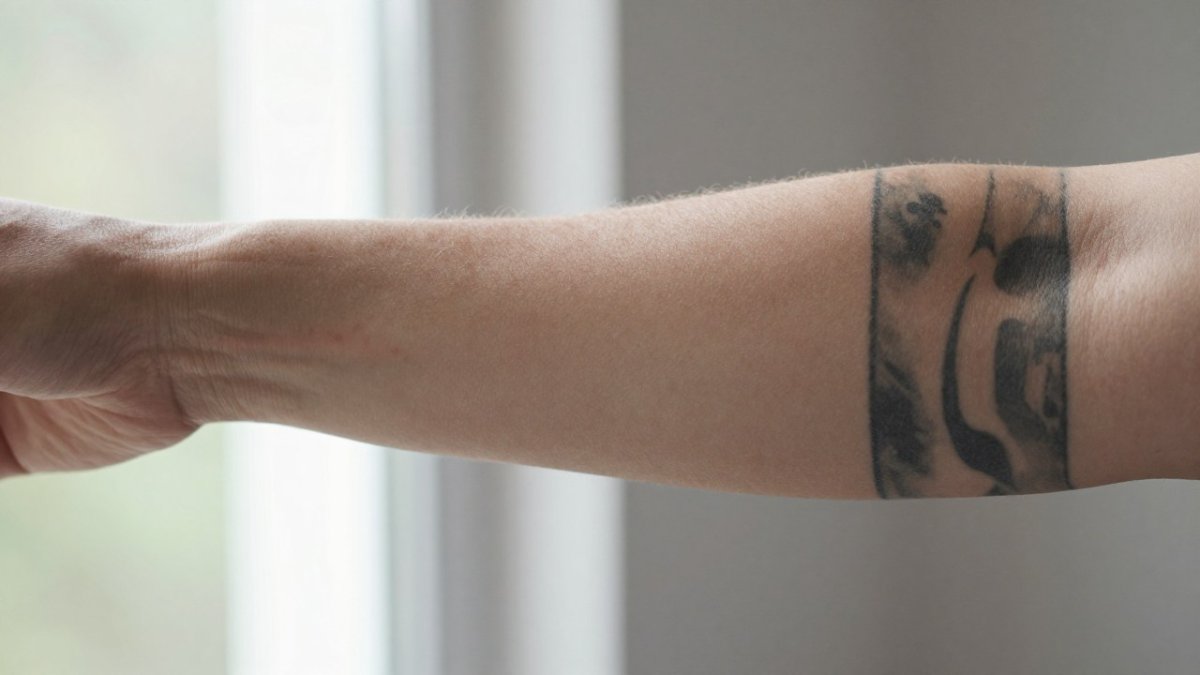
A healed tattoo settles over several weeks, and the final look becomes clear only after the skin has fully recovered (Micro-pigmentation (medical tattooing): aftercare advice). Plan for that settling period when you judge the design.
Color Tattoo Longevity and Fading
Color tattoos are more sensitive to fading than black and gray work. Brighter pigments can soften faster, and the edges of color fields may blur over time, especially without sun protection. Keeping sunscreen on the piece during outdoor time is one of the simplest ways to protect it (the NHS).
Some colors hold up better than others. Deep reds, blues, and greens generally keep their saturation longer than light yellows or pastels, so talk through color choices with your artist before you commit.
Black and Gray Longevity
Black and gray tattoos generally keep their contrast well because the shading is built from a single ink family. Fine linework can soften over the years, though, so a design with very small details may need a refresh sooner than a bolder piece. Sun exposure affects black and gray work too, so the same sunscreen habits apply.
How Often Color Tattoos Need Touch-Ups
Touch-up timing is driven by four things: placement, pigment choice, how your skin heals, and sun exposure. A beginner can plan around all four.
Placement sets the baseline. Hands, fingers, feet, wrists, and ankles fade fastest because skin turns over quickly and rubs against clothing and surfaces. Back, thigh, and upper-arm pieces typically hold longer. A color piece on a high-friction spot may want a look after the first year; a bold piece on the back may go several years before it needs attention.
Pigment choice changes the schedule. Deep reds, blues, and greens generally hold saturation longer than yellows, whites, and light pastels, which can soften within the first year or two. A piece built mostly from light colors will usually want a refresh sooner than one anchored by dark outlines and saturated mid-tones.
Healing is the first checkpoint. Healing checks and touch-ups are common in the industry, and the schedule depends on the design and how the skin heals. Ask your artist what follow-up looks like for your piece.
Sun exposure is the variable you control (the NHS). Ultraviolet light breaks down pigment over time, and color is more vulnerable than black. Daily sunscreen on exposed tattoos during outdoor time is the single most effective way to push the next touch-up further out.
Watch out: assuming a touch-up is included (Medical Tattooing). Policies vary widely across shops, so ask before you book what follow-up is offered and what it costs.
A short list of questions to bring to your consultation: How often do pieces like mine typically need a touch-up? Which colors in this design are most likely to need refreshing first? And what aftercare habits will keep the color looking its best between visits?
How Tattoo Color Shows on Different Skin Tones
Skin tone affects how ink reads because tattoo pigment sits in the dermis, below the epidermis, and the melanin in your skin acts like a filter over that pigment. This is general tattoo science rather than a feature of any one shop.
A few practical patterns many tattoo artists observe:
- High-contrast pigments read most reliably across skin tones. Black, deep navy, forest green, and rich red tend to stay legible because they sit far enough from most skin undertones to keep a visible edge. Yellows, pale pinks, and whites are the first to disappear, especially on deeper skin, because they sit close to the skin’s own value.
- Undertone matters as much as depth. Cool undertones can push blues and greens toward gray, while warm undertones can make reds and oranges feel richer. Olive undertones sometimes mute certain greens. None of this is absolute, but it is why healed photos on similar skin beat any color chart.
- Contrast comes from value, not just hue. A color piece with strong dark-to-light range holds up better than a piece built from mid-tone colors only, regardless of skin tone. This is why artists often outline color work in black or a dark pigment: the outline anchors the shape as the color settles.
- Fine detail has a floor. Very small color details blur faster on all skin, and on deeper skin the margin for error is smaller because the pigment has less contrast to work with. Simple, bold shapes age more gracefully than tiny gradients.
Watch out: a color that looks vivid on a fresh stencil can settle several shades darker or duller once healed, so judge the design from healed photos on skin like yours, not from the artist’s fresh work.
Before you commit, ask your artist three specific questions: Can you show me healed color work on skin similar to mine? Which of these colors tend to hold on my undertone, and which should we swap? And how will the outline and shading keep this readable as it settles? Bring two or three reference images in the style you want so the artist can explain what will translate and what will not.
Pros and Cons of Color and Black and Gray for Beginners
Each style suits a different kind of first-time client. Here is a quick comparison to help you weigh them:
| Factor | Color Tattoo | Black and Gray Tattoo |
|---|---|---|
| Visual impact | Bold, vibrant, eye-catching | Subtle, dramatic, timeless |
| Fading over time | Faster on some colors | Generally holds contrast well |
| Touch-up needs | Often more frequent | Usually less frequent |
| Sun sensitivity | High; sunscreen is essential | Moderate; sunscreen still helps |
| Design flexibility | Strong for illustrative work | Strong for realism and shading |
Color pros: Vibrant, expressive, and works well for bold designs.
Color cons: More fading and maintenance over time.
Black and gray pros: Holds structure well and suits detailed, timeless designs.
Black and gray cons: Less colorful and may feel limiting for some designs.
A Decision Framework for Choosing Your First Tattoo
Start with the design you love, then test it against three questions. If you are still narrowing down a design, read our guide to planning a personal, safe custom piece. Will you be happy with it in ten years? Does it suit the placement you have in mind? Are you comfortable with the maintenance it may need?
If you want maximum vibrancy and don’t mind protecting the piece from sun, color may be the right call. If you want a subtle, long-lasting piece with lower upkeep, black and gray is often the safer first choice. Small first tattoos can work well in either style, but simple linework and bold shapes tend to age more gracefully than very fine detail.
Booking Your First Consultation at Sideshow Tattoo and Piercing
A consultation is the best place to make this decision with confidence. At Sideshow Tattoo and Piercing, our hand-picked professional artists are matched to client needs. Bring reference images and ask how the design will hold up on your skin.
Come prepared with a few questions: how will this color look on my skin tone, what does healing involve, and how often should I expect touch-ups? Book your consultation with Sideshow Tattoo and Piercing to start planning your first piece.
Frequently Asked Questions
Is black ink or color better for a first tattoo?
Black and gray is often the easier first choice because it uses fewer pigments, tends to hold its contrast over time, and usually needs fewer touch-ups. Color tattoos can look striking, but their brightest shades may soften faster, especially in areas exposed to sun. A beginner who wants a low-maintenance piece with a clear, bold look often starts with black and gray. Someone set on color can still do well by choosing a simple design, a sun-protected placement and a reputable artist who will talk through the plan during consultation.
Do color tattoos fade faster than black tattoos?
Many color tattoos do lose vibrancy faster than black tattoos, particularly yellows, light blues and greens. Black ink is generally more stable because its pigment is more dense and less affected by the body’s processing over time. Fading varies widely with placement, skin type, sun exposure and aftercare, so two people with the same design can see very different results. Keeping the tattoo out of direct sun and using sunscreen once healed helps slow fading in both styles.
How often do color tattoos need touch-ups?
Many people schedule a touch-up for a color tattoo within the first year, once the piece has fully healed, to refresh any patchy areas. After that, touch-ups are usually considered as needed, often every few years, depending on how the tattoo looks. Bright colors and tattoos in high-friction or sun-exposed areas may need more frequent attention. Your artist can assess the healed tattoo and recommend a timeline that fits your design and lifestyle.
Does tattoo color show differently on different skin tones?
Yes. Skin tone affects how colors appear, and the same pigment can look brighter on lighter skin and more muted or shifted on deeper skin tones. Some colors, such as pastels and yellows, may be harder to see on certain skin tones, while bold blacks and dark tones tend to stand out on a wider range of skin. Before booking, ask your artist how your skin tone is likely to affect the color palette you have chosen.