Last Updated: November 3, 2026
Quick Summary
Tattoo pricing is the total you pay for a piece, built from the artist’s hourly rate, the hours the work takes, and the shop’s policies on deposits and minimums. Because skill, location, overhead, demand, and design complexity all feed into the rate, two studios a mile apart can quote very different numbers for the same design.
- Time is the biggest driver of cost, since complex work takes longer to complete.
- A portfolio showing healed work tells you more about skill than a rate ever will.
- A small simple piece often hits a shop minimum, so its price barely moves with size.
- Choose hourly for open-ended designs and flat rate when the design is fixed.
- Compare total estimated cost across artists, not just the hourly rate alone.
Table of Contents
- Why Tattoo Pricing Varies So Much From Shop to Shop
- The 7 Factors That Set Every Artist’s Hourly Rate
- Tattoo Prices With Examples: How Size and Detail Change the Estimate
- Hourly Rate vs Flat Rate Tattoo: Which Pricing Method Fits Your Project
- What the Quoted Rate Actually Includes (and What It Doesn’t)
- Questions to Ask About a Tattoo Quote Before You Commit
- How to Use a Tattoo Cost Calculator to Build a Realistic Budget
- Planning Sessions and Comparing Estimates Fairly
- Frequently Asked Questions
Why Tattoo Pricing Varies So Much From Shop to Shop
The answer is not one thing. It is a stack of them.
- Time is the biggest driver. Complex work takes longer.
- Skill sets the rate. Experienced artists charge more per hour.
- Overhead sets the floor. Rent, supplies, and insurance all get baked in.
- Demand sets the ceiling. A booked-out artist can charge more.
Most guides skip the part that matters most. A low quote often means less time spent on your piece, cheaper supplies, or a newer artist still building a portfolio.
Keep reading, because we will show you how to read a quote properly and compare estimates without getting fooled by a low number.
The 7 Factors That Set Every Artist’s Hourly Rate
An artist’s hourly rate is the price for one hour of their working time, and it reflects skill, location, overhead, demand, and the complexity of your design. No single factor decides it.
Experience, Skill Level, and Portfolio Strength
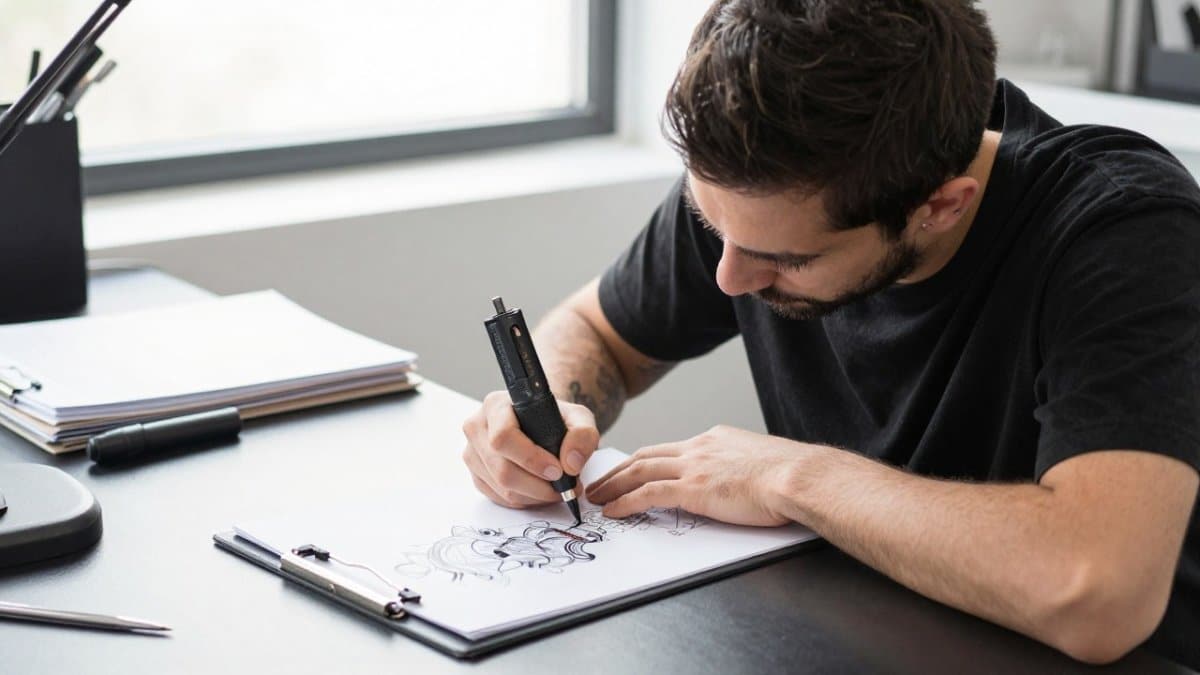
Skill is the first thing to look at. A newer artist building a book usually charges less than someone with a decade of steady work behind them.
A portfolio tells you more than a rate ever will. Look for healed work, not just fresh photos. Healed pieces show how lines settle and how color holds up.
If you want a deeper walkthrough on vetting an artist’s skill before you commit, our guide on how to find a reputable tattoo artist covers the portfolio review step by step.
Location, Shop Overhead, and Studio Costs
Where a shop sits changes what it must charge. Rent, insurance, licensing, and supplies all come out of the same pot. A studio in a high-traffic neighborhood carries higher fixed costs than one in a cheaper part of town.
This is why the same design can quote differently across a metro area. It is also why a very low rate deserves a second look. Something has to give, whether that is supplies, space, or time per client.
Size, Style, and Design Complexity
Bigger does not always mean more expensive, and small does not always mean cheap. A palm-sized piece with dense detail can take longer than a larger piece with open space.
Style matters just as much. Fine linework, color blending, and tight geometric patterns all demand more precision. That precision is paid for in hours.
Tattoo Prices With Examples: How Size and Detail Change the Estimate
Tattoo prices with examples come down to one formula: rate multiplied by hours, plus any shop minimum or setup fee. Size sets the baseline. Detail sets the real number.
Here is how the same rough size can swing based on complexity:
| Size | Typical Time Range | What Drives the Estimate |
|---|---|---|
| Small, simple | Under an hour | Shop minimum usually applies |
| Small, detailed | 1-2 hours | Fine linework, tight spacing |
| Medium | 2-4 hours | Shading, color, placement |
| Large | Multiple sessions | Total hours across sessions |
A small simple piece often hits a shop minimum, so its price barely moves with size. A medium piece with heavy shading can cost more than a large piece with clean open space. That surprises people, but it makes sense once you think in hours.
Hourly Rate vs Flat Rate Tattoo: Which Pricing Method Fits Your Project
The hourly rate vs flat rate tattoo decision comes down to predictability. An hourly rate charges for time worked.
Here is when each one makes sense:
- Choose hourly when the design is open-ended or likely to evolve.
- Choose flat rate when the design is fixed and you want a firm number.
- Ask which method applies before any needle touches skin.
Flat rate protects you if the piece runs long. Hourly protects the artist if your design grows mid-session. Neither is unfair. They just shift risk.
The trap is assuming a flat quote is always cheaper. Sometimes it is. Sometimes it just hides extra hours baked into the total.
What the Quoted Rate Actually Includes (and What It Doesn’t)
A quoted rate usually covers the artist’s time and standard supplies, but it rarely covers everything. Knowing the difference prevents surprise charges at the counter.
Most quotes include:
- Artist time for the session
- Standard needles, ink, and setup
- Basic aftercare instructions
Most quotes do not include:
- The deposit, which is usually separate and applied to the total
- Additional sessions if the piece runs long
- Touch-up policies, which vary by shop
- Tips, which are customary but not required
Ask about the deposit policy up front. A deposit is normal. What matters is whether it applies to your final total and whether it is refundable if plans change.
Confirm the deposit and any minimum before you book.
Questions to Ask About a Tattoo Quote Before You Commit
Questions to ask about a tattoo quote should cover rate, time, deposit, and touch-ups. Get answers in writing before you pay anything.
Run through this checklist:
- Is this an hourly rate or a flat rate?
- What is the shop minimum?
- How much is the deposit, and does it apply to the total?
- How many hours do you estimate for this design?
- What happens if the session runs longer than estimated?
- Is there a touch-up policy, and does it cost extra?
- What does the quote include and exclude?
If an artist cannot answer these clearly, that is your signal to keep looking.
For a quote built around your design, contact Sideshow Tattoo and Piercing directly for current pricing.
How to Use a Tattoo Cost Calculator to Build a Realistic Budget
A tattoo cost calculator is a simple tool that multiplies an artist’s rate by estimated hours, then adds the deposit and a buffer. It will not give you an exact number, but it keeps your budget honest.
Here is how we would build one:
- Get the artist’s hourly rate.
- Ask for an hour estimate on your design.
- Multiply rate by hours for a base number.
- Add the deposit if it is separate.
- Add a buffer for extra time or a second session.
That buffer matters. Designs often take longer than planned, especially on first sessions. Budget for the higher end and you will not get caught short.
A Worked Estimate, Start to Finish
Say you want a medium piece on your forearm with shading and some color. The artist quotes an hourly rate and estimates three hours.
Here is how the math generally works:
- Base estimate: hourly rate multiplied by estimated hours.
- Shop minimum check: if the base estimate falls below a shop’s minimum, the minimum may apply.
- Deposit: confirm with the shop whether it is applied to the total.
- Buffer: many people budget extra time for a session that runs long or a follow-up sitting.
The final number is rarely the base estimate. It is the base estimate plus the buffer, minus the deposit already paid.
Watch out: a calculator that ignores the shop minimum will underquote small pieces, because a simple design that takes forty minutes still gets billed at the minimum.
Why the Calculator Helps You Compare Artists
A calculator also helps you compare artists fairly. Two artists with different rates might land at similar totals once hours are factored in. A faster artist at a higher rate can cost less than a slower artist at a lower rate on the same design.
To see how a quote is built around your design, contact Sideshow Tattoo and Piercing directly.
Planning Sessions and Comparing Estimates Fairly
Planning sessions and comparing estimates fairly means comparing total cost, not hourly rate alone. A lower rate with more hours can cost more than a higher rate with fewer. For a large project, the session plan matters as much as the rate, because how the work is split across sittings changes both the timeline and the final bill.
Use this approach:
- Compare total estimated cost, not just the rate.
- Ask each artist for an hour estimate on the same design.
- Check what each quote includes.
- Weigh portfolio quality against the number.
A cheaper quote from an artist whose work you love is a great deal. A cheaper quote from someone whose portfolio does not match your style is a false saving.
How Session Length Changes the Budget
Large pieces rarely finish in one sitting. Artists typically cap sessions at a few hours, partly because client comfort drops and partly because quality holds up better over shorter stretches.
This is where budgets quietly grow. A back piece estimated at twelve total hours might be booked as four three-hour sessions.
Session length also affects healing. Most artists want a few weeks between sessions so the skin can recover before the next round of work.
A Fair-Comparison Checklist
When you have two or three estimates in hand, line them up against the same questions:
- Is the quote hourly or flat rate, and does it apply per session or per project?
- How many sessions does the artist expect, and how long is each one?
- Does each session carry a minimum or setup fee?
- What is the deposit, and is it applied to the total?
- What is the touch-up policy, and does it cost extra?
- How much healing time is built between sessions?
If an artist cannot answer these clearly, that is your signal to keep looking.
Watch out: a quote that lists a low hourly rate but assumes many short sessions can end up costing more than a higher rate booked in fewer, longer sittings.
Our hand-picked professional artists are matched to client needs, so you can discuss your design with us before you commit.
Frequently Asked Questions
Is $200 an hour a lot for a tattoo artist?
It depends on the artist’s experience, demand, and the local market. Rates at the top of the range usually reflect a strong portfolio, a specialty style, and long booking waits. Before deciding whether a rate is high, ask what it includes: custom design time, setup, and aftercare guidance can make a higher rate a better value than a low one with hidden extras. Compare several quotes for the same design rather than judging the number alone.
Is it better to pay by the hour or by the piece?
Hourly pricing tends to suit custom work where session length is hard to predict, while flat or per-piece pricing gives you a fixed number for a defined design. For a small, simple tattoo, a flat rate is often easier to budget. For a large custom piece, hourly pricing with a clear estimated time and a session plan is common. Ask each artist which method they use and how they handle a session that runs long.
How can I estimate how long a tattoo will take?
Ask the artist during a consultation. They can break the design into linework, shading, and color passes and give an estimated time per stage. Size, placement, detail level, and how well your skin takes ink all affect session length. For larger projects, artists often plan multiple sessions and quote time per session, which makes the total easier to track and compare across quotes.
What should I ask before accepting a tattoo quote?
Ask what the quote covers, whether it is hourly or flat rate, how the deposit is applied, and what happens if the design changes. Confirm the estimated session length, whether touch-ups are included, and how payment and tips are handled. Also ask to see healed photos of similar work, not just fresh tattoos. Getting these answers in writing makes it much easier to compare estimates fairly.