Quick Summary
The best earring backings for sensitive skin are usually flat backs, which spread pressure across a wider disc, and backs made from the same hypoallergenic metal as the post, such as implant-grade titanium or 316L stainless steel. Match the back’s diameter and post length to your earring so it grips firmly without forcing, and treat “hypoallergenic” on a label as a starting point rather than a guarantee.
- Implant-grade titanium contains very little nickel and is a common choice for sensitive ears.
- Flat backs spread pressure over a larger area, often feeling more comfortable on sensitive lobes.
- Locking backs hold most securely, making them a good choice for heavier studs or active days.
- Check that the back and post are the same material, since mixed metals often cause irritation.
- A back that slides on with no resistance is too loose, and one that must be forced is too tight.
Table of Contents
- Why Earring Backings Matter as Much as the Earring Itself
- Materials That Suit Sensitive Skin: Titanium, Surgical Stainless Steel and Sterling Silver
- Hypoallergenic Earrings for Sensitive Ears: What the Label Does and Doesn’t Mean
- Comparing Backing Styles Side by Side: Butterfly, Locking, Flat and Silicone
- Flat Back Earrings for Sensitive Ears: When They Help and When They Don’t
- Matching a Backing to Your Earring Post and Troubleshooting Irritation
- Booking a Fitting at Sideshow Tattoo and Piercing
- Frequently Asked Questions
Why Earring Backings Matter as Much as the Earring Itself
Last Updated: November 4, 2026
Most people spend time choosing the earring and almost none choosing the back. That is often where irritation starts. For someone with sensitive ears, the backing sits against the skin all day, so it matters as much as the front of the piece. A poor-fitting or wrong-material backing can turn a nice pair of studs into something you want to take out by lunch.
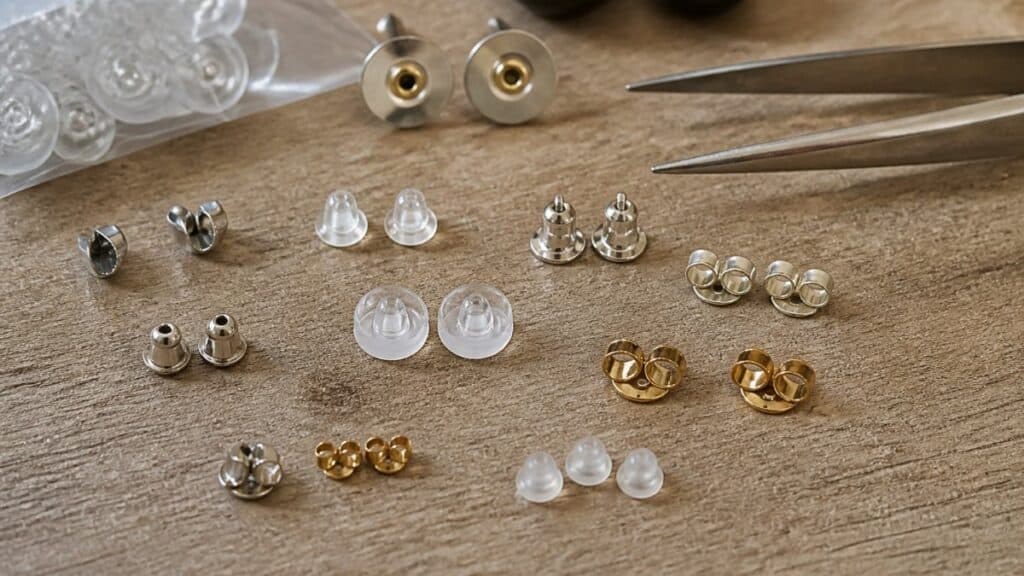
Earring backings, sometimes called earring backs, are the small component that holds a stud or hoop in place. They come in several styles and materials, and each one balances comfort, grip, and ease of handling differently. Choosing the right one depends on your skin, your post, and how you wear your earrings.
This guide compares backings and materials commonly considered for sensitive skin. It also covers trade-offs, common mistakes, and how to troubleshoot irritation.
Materials That Suit Sensitive Skin: Titanium, Surgical Stainless Steel and Sterling Silver
Material is the first thing to check. Titanium is often chosen for sensitive ears because it contains very little nickel, the metal most often linked to contact reactions. Implant-grade titanium is light, strong, and resists corrosion.
Surgical stainless steel is a common, lower-cost option. Look for grades such as 316L, which is the grade usually specified for body jewelry. It is durable, but it still contains nickel, so people with a known nickel sensitivity may react to it.
Sterling silver is softer and tarnishes over time. The copper alloyed into it can cause irritation for some wearers.
Watch out: A piece labeled “surgical steel” is not automatically nickel free. Ask for the grade and the nickel content before you buy if you have a known reaction.
Hypoallergenic Earrings for Sensitive Ears: What the Label Does and Doesn’t Mean
“Hypoallergenic” is one of the most common words in earring listings, but it is not a regulated term in the way many shoppers assume (the FDA). A seller can use it without a specific test or certification behind it. Treat it as a starting point, then check the actual material listed.
A better approach is to look for named materials and their grades, such as implant-grade titanium or 316L stainless steel, and to check whether the back is made of the same material as the post. You can also learn how to tell if jewelry is nickel free before you buy. Mixed metals are a frequent cause of irritation, because a sensitive wearer may react to the part of the earring that touches the skin, even if the front looks safe.
Comparing Backing Styles Side by Side: Butterfly, Locking, Flat and Silicone
Backing styles differ in how they grip the post, how much surface area they press against the lobe, and how easy they are to fasten and remove. These differences matter alongside the metal touching the lobe, so compare backing comfort with the choices involved in gold jewelry for sensitive skin.
| Backing style | How it grips the post | Security | Comfort on sensitive lobes | Ease of handling | Best for |
|---|---|---|---|---|---|
| Butterfly (friction back) | Two curved metal wings pinch the post; holds by friction | Moderate; loosens with repeated on/off and can slide down a thin post | Good on standard studs; small contact area can concentrate pressure | Easy to pinch and slide on; hardest to manage with long nails or limited dexterity | Everyday studs, budget-friendly replacements, ears that are not slept on |
| Locking (screw or threaded) | Threads on the post engage a threaded back or a small screw | High; resists falling out during activity | Good when the metal is hypoallergenic; the back sits close to the lobe | Fiddly; threading a tiny screw takes practice and steady hands | Heavier studs, active days, jewelry you want to leave in |
| Flat back (labret-style) | A flat disc sits against the lobe, secured by a threaded or push-fit post | Moderate to high when matched to the post; low if the post is long or the disc is undersized | Often the most comfortable; spreads pressure across a wider disc | Moderate; push-fit versions are easier than threaded ones | Sensitive lobes, sleeping in studs, flat-backed posts |
| Silicone or rubber | Soft material grips the post by friction and conforms to it | Moderate; grips well but can stretch or tear over time | Gentle on skin, but traps moisture and oils against the lobe | Easy to push on; can be hard to see on the post | Sensitive skin, people who want a softer feel, temporary wear |
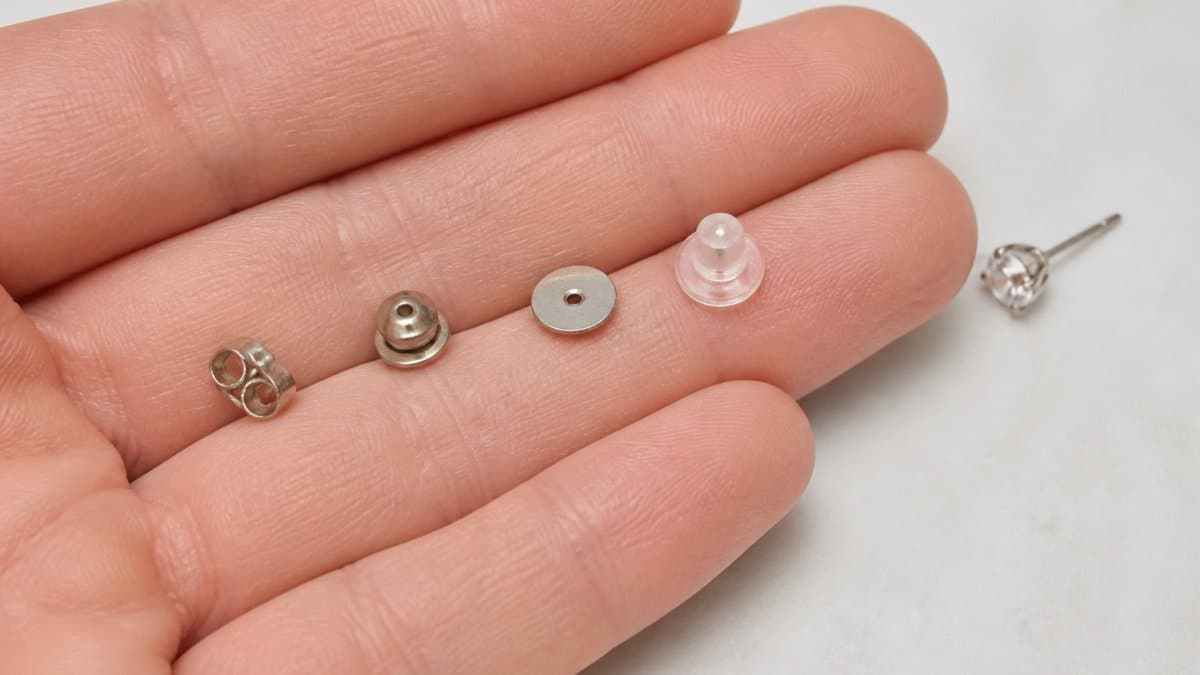
Butterfly backs are the most common and the easiest to replace, which is why they are the default on most studs. Their weakness is friction: every time you take the earring off and put it back on, the wings bend slightly, and over months they grip less tightly.
Locking backs trade convenience for security. A threaded post and back will not work loose the way a friction back does, which makes them a good choice for heavier studs or for jewelry you plan to leave in for weeks.
Flat backs are the style most often recommended for sensitive lobes because the disc spreads pressure over a larger area instead of pinching a small spot.
Silicone backs are soft and grip well, but silicone does not breathe. Moisture and oils collect between the back and the lobe, so they need to be removed and cleaned more often than metal backs. They also stretch and tear over time, so treat them as a replaceable part rather than a permanent one.
Watch out: A backing that feels secure on the counter can still be wrong for your ear. Check that the back grips the post firmly without forcing it, and that the back does not press into the lobe when the earring is in place.
Flat Back Earrings for Sensitive Ears: When They Help and When They Don’t
Flat backs are designed to lie flat against the back of the earlobe. Because the pressure is spread across a larger area, they often feel more comfortable than a small butterfly back on a sensitive lobe. They are also a good choice for people who sleep in their studs.
They do not suit every earring, though. Flat backs work best with flat-backed studs and flat-backed posts. If the post is long or the earring is heavy, a flat back may not hold the piece securely, and it can slide. Check that the back matches your post before you assume it will work.
Matching a Backing to Your Earring Post and Troubleshooting Irritation
Most backing problems start with a mismatch between the back and the post, not with the metal. Before you buy a replacement, check three things: post diameter, post length, and post material.
Post diameter is the thickness of the post. Replacement backs are sized to fit a specific gauge, and a back made for a thicker post will not grip a thinner one. If the back slides on with no resistance, it is too loose and the earring will wobble, which rubs the piercing channel.
Post length matters too. A flat back or locking back designed for a short post will not sit correctly on a long post, and a long post with a small back can catch on hair and clothing. Compare the listed post size on the replacement back with the earring you already own before ordering.
Post material should match the back. Mixed metals are a common cause of irritation because the part touching the skin may not be the part you checked. If the front is implant-grade titanium but the back is a nickel-containing alloy, a sensitive wearer can still react.
When irritation shows up, work through the likely causes in order rather than assuming it is an allergy:
- Metal allergy: Redness, itching, and small bumps that appear where the metal touches the skin, often within hours to a day of wearing (the American Academy of Dermatology). Switch to implant-grade titanium or a back you know is nickel-free and see whether the reaction settles.
- Pressure: A dull ache, a dent in the lobe, or soreness that builds over the day. This usually means the back is too tight or the earring is too heavy for the backing style. Loosen the back or switch to a flat back that spreads pressure.
- Friction: Chafing or raw skin along the post, often from a loose back that lets the earring move. A back that grips the post firmly usually solves it.
- Moisture: Soft, pale, or macerated skin behind the lobe, common with silicone backs or with earrings worn in the shower. Remove the earring, dry the area, and clean the back more often.
- Hygiene: Crusting, odor, or discharge that improves with cleaning. Clean the post and back with saline or mild fragrance-free soap, and replace worn or rough backings that trap debris.
A practical test is to change one variable at a time. Switch the backing material first, keep the same earring and cleaning routine for a week, and note whether the irritation changes. If it does not, try a different backing style or a shorter post.
Watch out: Persistent redness, swelling, discharge, or pain is not something to wait out. Stop wearing the earring and see a healthcare provider, especially if the reaction spreads beyond the piercing site. For steps to calm an irritated piercing that won’t heal, read how to calm an irritated ear piercing that won’t heal.
Booking a Fitting at Sideshow Tattoo and Piercing
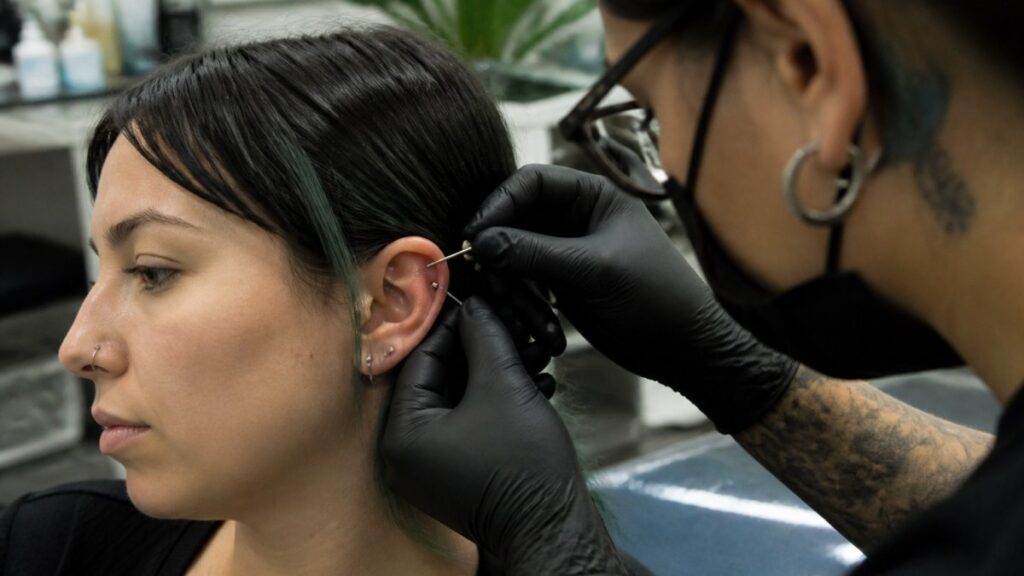
If you are unsure which material or backing suits your ears, a professional fitting can save time and frustration. Our team uses high-quality jewelry for all piercing services. You can book an appointment at Sideshow Tattoo and Piercing to ask about jewelry and backings.
Frequently Asked Questions
What material is best for earrings that irritate sensitive ears?
Implant-grade titanium and 316L surgical stainless steel are the materials most often recommended for sensitive ears because they contain little nickel. Titanium is generally the lower-risk choice for people with a known metal allergy. Pure gold of 14 karat or higher is another option, though lower karats contain more alloy metals that can cause reactions. Check the metal stamp on both the post and the back, since the backing is often the part that touches skin for the longest time.
Are flat-back earrings better for sensitive ears?
Flat backs can reduce pressure and friction behind the ear, which helps people who find standard disc or butterfly backs uncomfortable. They sit closer to the skin and are less likely to snag or press into the lobe. Flat backs do not grip as firmly, so they work best with posts that have a secure design. Many people with sensitive ears pair a flat back with a locking post for a balance of comfort and security.
Is sterling silver or stainless steel better for sensitive ears?
Stainless steel rated as surgical grade is usually the safer choice for sensitive ears because it is more resistant to tarnish and contains a controlled nickel level. Sterling silver is 92.5 percent silver and is generally well tolerated, but it can tarnish and may cause reactions in people sensitive to the copper alloyed into it. Silver also needs regular cleaning. If you have a confirmed nickel sensitivity, stainless steel or titanium is the more predictable option.
Can earring backs cause irritation even if the earrings are hypoallergenic?
Yes. The post and the back are often made from different metals, and the backing can be plated with a metal that irritates your skin even when the earring itself is labeled hypoallergenic. Plastic and rubber backs can also trap moisture and cause redness. If irritation continues after switching to a new earring, test the backing alone by swapping it onto a different post.