Last Updated: October 30, 2026
Quick Summary
An irritated ear piercing is usually skin reacting to pressure, friction, or a product, not an infection, and it often flares months after healing seemed done. Start by thinking back to what changed, such as new jewelry, hair products, or sleeping on that side. Then follow a gentle saline routine and watch for infection signs.
- Sleeping on the piercing and hair products are common triggers that appear later.
- Clean once daily with saline labeled for piercing aftercare and dry gently afterward.
- Do not rotate or twist the jewelry, and avoid rubbing alcohol.
- Nickel is a common allergen, so check that jewelry is implant-grade or nickel-free.
- Seek medical care promptly for spreading redness, warmth, thick discharge, fever, or worsening pain.
Table of Contents
- Why an Ear Piercing Can Stay Irritated Long After It Should Have Healed
- Infected vs Irritated Ear Piercing: How to Tell the Difference
- Ear Piercing Irritation Months Later: Causes That Surface Over Time
- How to Clean an Irritated Ear Piercing Step by Step
- Ear Piercing Allergy to Jewelry: Metals, Fit, and Pressure
- Troubleshooting by Piercing Location and Age
- When to Stop, Remove the Jewelry, and Get Professional Help
- Booking a Piercing Check or Re-Pierce at Sideshow Tattoo and Piercing
- Frequently Asked Questions
Why an Ear Piercing Can Stay Irritated Long After It Should Have Healed
Why does a piercing still feel sore months after the date it should have settled down? The honest answer is that a piercing can look closed on the outside while the tissue underneath is still working through healing. Many people assume the process takes a few weeks, but healing times vary by location, jewelry, and how the body responds.
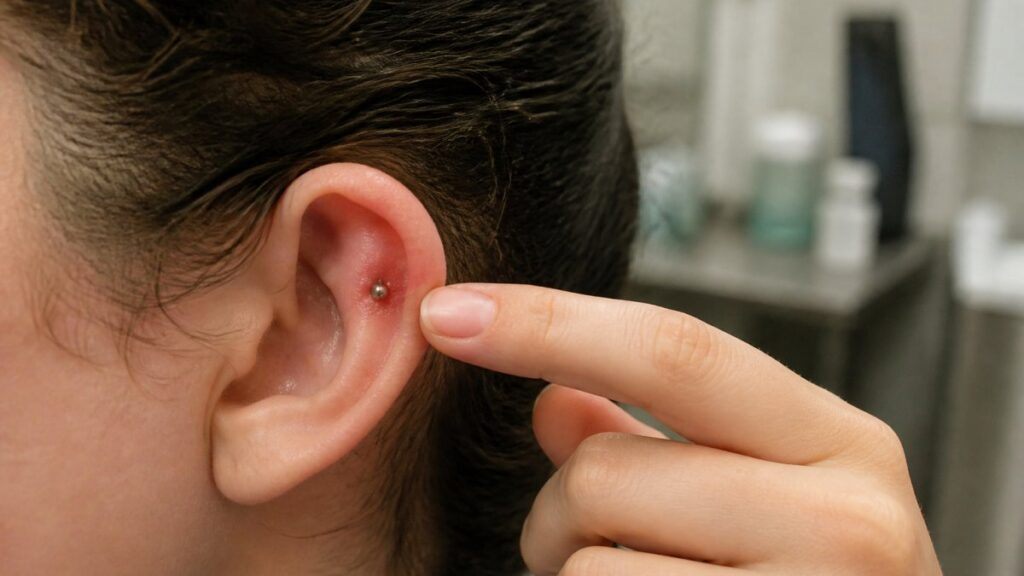
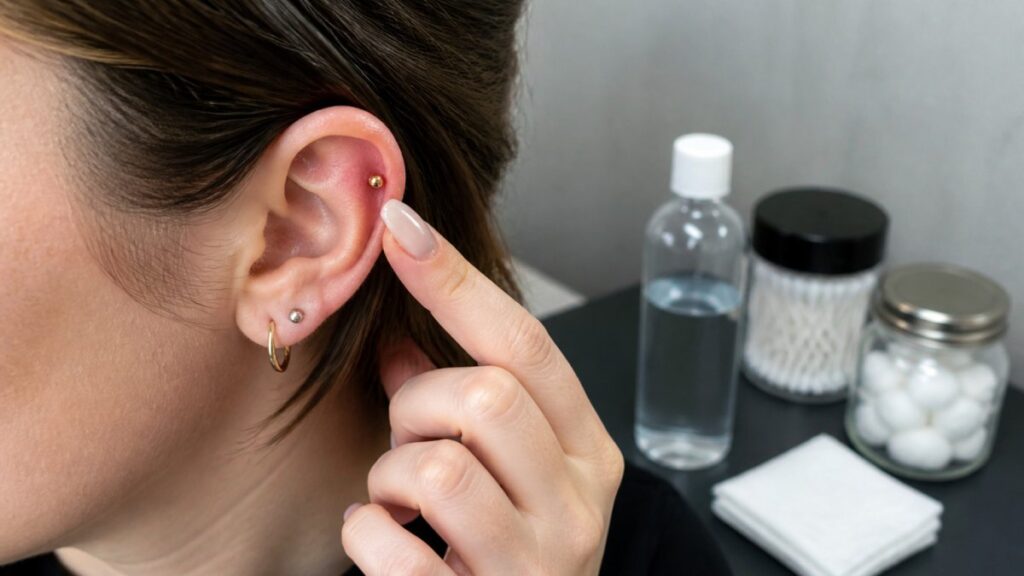
Irritation is not the same as infection. Irritation usually means the skin is reacting to something, such as pressure, friction, or a product that does not agree with it.
Common signs of ongoing irritation include:
- Mild tenderness when touched
- Slight redness around the hole
- Itching, especially at night
- Crusting or small amounts of clear fluid
- Tightness or discomfort when the jewelry moves
If these signs keep showing up, it helps to look at what the piercing is touching and how it is being cared for. The sections below walk through each likely cause, a safe cleaning routine, and when to stop and get help.
Infected vs Irritated Ear Piercing: How to Tell the Difference
Irritation and infection can look almost identical on day one, which is why so many people wait too long or treat the wrong problem. Compare the symptoms, timelines, and warning signs in one focused guide to sort out which one you are dealing with. The useful question is not “which one is this?” but “which direction is this heading?”
Use this symptom-based decision guide to sort out what you are most likely dealing with.
| Signal | Points to irritation | Points to infection |
|---|---|---|
| Onset | Gradual, often tied to a change | Sudden or steadily worsening |
| Redness | Mild, close to the hole | Spreading outward, darker |
| Swelling | Slight, comes and goes | Firm, increasing, may feel hot |
| Discharge | Clear or pale, dries to a light crust | Thick yellow, green, gray, or foul-smelling |
| Pain | Sore when bumped, eases at rest | Throbbing, worse over time, wakes you up |
| Skin around it | Dry, itchy, flaky | Tight, shiny, warm |
| Whole-body signs | None | Fever, chills, fatigue, feeling unwell |
Where the two overlap. A piercing can be irritated and infected at the same time. Friction or a nickel reaction can break down the skin surface, and bacteria can move into that opening. That is why a piercing that has been mildly irritated for weeks can suddenly turn warm and start producing thick discharge. If you see any infection signal in the table above, treat it as the priority regardless of how long the irritation has been going on.
A one-week check. Look at the piercing once a day for seven days and note three things: redness size, discharge color, and whether pain is better or worse than the day before.
Do not wait to “see if it passes” when you notice spreading redness, warmth, thick or foul-smelling discharge, fever, or pain that is getting worse. Contact a medical professional promptly. These are the signs that separate a wait-and-watch situation from one that needs care now.
Why the distinction matters. When in doubt, get a professional opinion rather than guessing.
Ear Piercing Irritation Months Later: Causes That Surface Over Time
Some irritation does not start right away. It can show up months after a piercing has been healing well, often because something changed.
Common triggers that appear later include:
- Sleeping on the piercing. Pressure from a pillow can build up over weeks.
- Hair products, lotions, or sprays that reach the earlobe during styling.
- New jewelry with a different metal or closure.
- Snagging on clothing, hats, phone cases, or hair ties.
- Changes in activity, such as sweating more during exercise.
A useful habit is to think back to what changed around the time the soreness returned. Did you start using a new shampoo? Switch earrings? Begin wearing a headset? Pinning down the trigger often makes the fix much clearer. Frequent reactions to metal components suggest that switching to hypoallergenic earrings may be the most effective way to eliminate the source of your ongoing discomfort.
How to Clean an Irritated Ear Piercing Step by Step
Cleaning an irritated piercing is less about doing more and more about doing the same gentle thing consistently. Harsh products, frequent handling, and twisting the jewelry all add friction to tissue that is already reacting. The routine below is a two-week irritation reset you can run at home, with clear checkpoints for when to stop and get help.
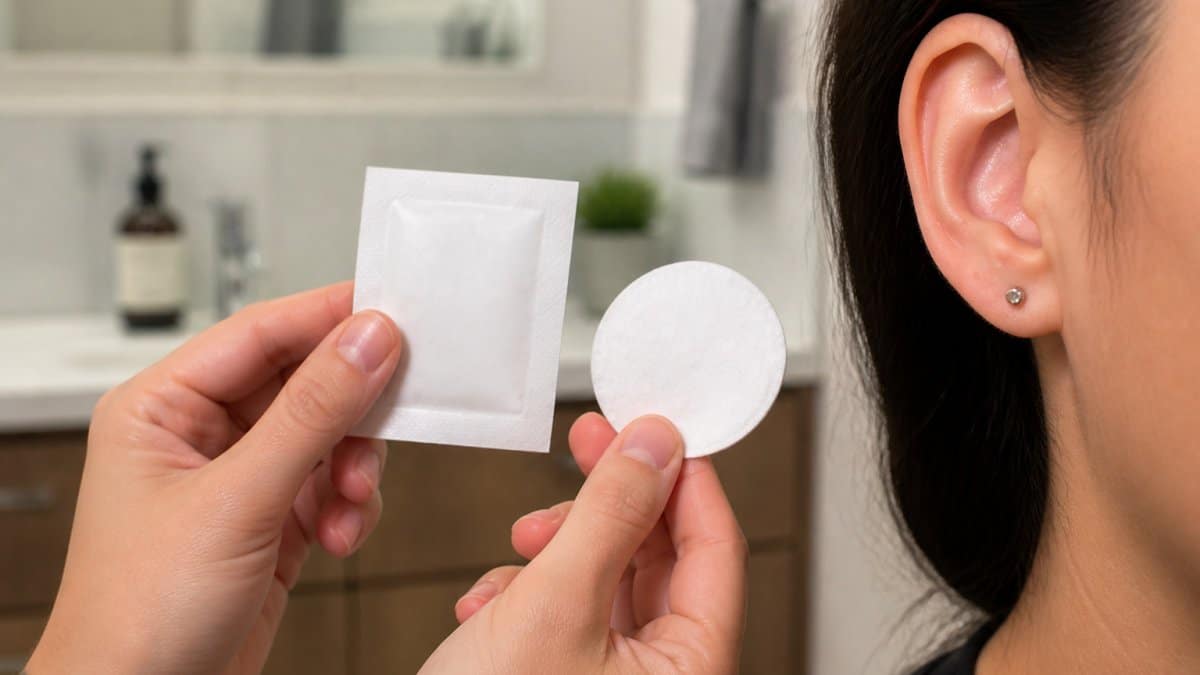
The daily routine:
- Wash your hands with soap and warm water before touching anything near the piercing.
- Spray or soak with sterile saline labeled for piercing aftercare. A fine mist is enough; you do not need to flood the area.
- Let crust soften for a minute or two, then wipe it away gently with a clean gauze pad. Do not pick at it with fingernails or a cotton swab, which can leave fibers behind.
- Do not rotate or twist the jewelry. Let the saline do the work.
- Pat dry with a clean paper towel. Moisture trapped around the jewelry invites problems, so dry gently and thoroughly.
- Leave the jewelry in place and repeat tomorrow. Hands off between cleanings.
What to stop using. Skip harsh products such as rubbing alcohol. Avoid antibiotic ointments unless a medical professional tells you otherwise.
Protect the piercing between cleanings. Keep hair products, perfume, and lotions away from the area. Sleep with the piercing off the pillow, or use a travel pillow with your ear in the hole.
A simple rule: if a product stings, burns, or dries the skin, it does not belong on a healing piercing.
The two-week checkpoint. Run the routine for 14 days and track three things: redness, discharge, and pain when touched. If the piercing is not better, or is worse, at the two-week mark, look harder at jewelry fit and material, and get a professional opinion.
Escalate to a medical professional sooner, without waiting out the two weeks, if you see spreading redness, warmth, thick or foul-smelling discharge, fever, or pain that is getting worse. Those signs point to infection, not simple irritation.
Ear Piercing Allergy to Jewelry: Metals, Fit, and Pressure
Sometimes the jewelry itself is the problem. Nickel is a common metal allergen, and a reaction can appear even after a piercing seems healed (the American Academy of Dermatology).
When you check your jewelry, look for:
- Materials: Implant-grade titanium and high-karat gold are commonly chosen for sensitive ears.
- Fit: Posts that are too long can press into the skin. Backs that are too tight can trap pressure.
- Closures: A back that is hard to tighten or loosens over time can shift and rub.
Jewelry fit and material checklist:
- Is the metal listed as implant-grade or nickel-free?
- Does the post length sit flat against the lobe without pressing?
- Can the back move freely without pinching?
- Does the piece stay put without wobbling?
Troubleshooting by Piercing Location and Age
Where a piercing sits and how old you are both affect healing. Earlobe piercings often settle faster than cartilage piercings.
Age matters too.
When to Stop, Remove the Jewelry, and Get Professional Help
Some situations call for stopping cleaning and getting help. If irritation is not improving after a few weeks of consistent care, pause and reassess.
Consider removing the jewelry and seeing a professional if you notice:
- Signs of infection listed above
- Pain that is getting worse rather than better
- The piercing seems to be shifting, thinning, or moving closer to the surface
- A reaction that persists after changing to a different metal
- Bleeding, pus, or a bad smell
Taking the jewelry out may cause the hole to close, so seek advice before doing it yourself if you want to keep the piercing. A medical professional can tell you what is happening and what to do next. Learn how to tell rejection from irritation and exactly when to act.
Booking a Piercing Check or Re-Pierce at Sideshow Tattoo and Piercing
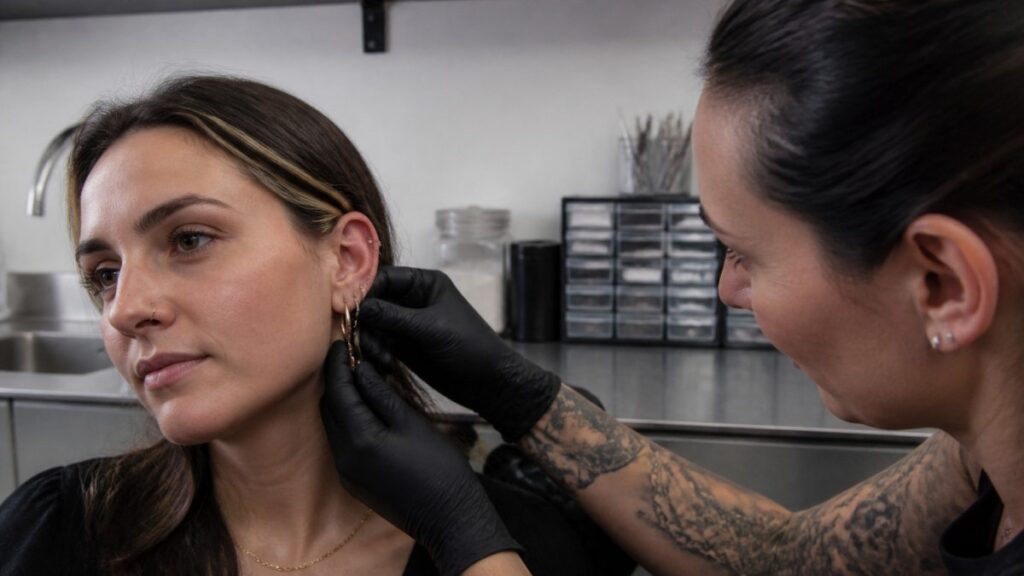
If the irritation keeps coming back, a professional look can clear things up. Find ear piercing services in San Diego and book a visit. At Sideshow Tattoo and Piercing, we use only quality jewelry for piercing services.
If you are unsure whether the piercing is irritated, infected, or rejecting, please reach out to a medical provider first if you have any signs of infection. For questions about jewelry choices and aftercare, contact Sideshow Tattoo and Piercing directly to talk through your options and book a visit.
Frequently Asked Questions
Why is my ear piercing still irritated after months?
A piercing can stay irritated for months because irritation has several possible sources, not just the initial wound. Ongoing pressure from tight or heavy jewelry, friction from sleeping on that side, snagging on hair or clothing, repeated touching, or a reaction to the metal can all keep the tissue inflamed. Healing time also varies by placement, and cartilage piercings typically take far longer to settle than lobe piercings. If redness, swelling, tenderness, or discharge persists, check the jewelry fit and material first, then consider a professional evaluation.
How can I tell if my ear piercing is infected or just irritated?
If you notice warmth, spreading redness, throbbing pain, thick discharge, or fever, or the area is getting worse after several days of careful aftercare, contact a healthcare provider.
Should I take out jewelry from an irritated ear piercing?
If you want to keep the hole, a professional should guide any removal or replacement. Seek medical advice before removing jewelry if you see signs of infection.
When should I see a doctor about an irritated ear piercing?
See a doctor or other healthcare provider if you have fever, spreading redness, heavy pus, severe pain, swelling that keeps growing, or irritation that does not improve after a couple of weeks of gentle care and removing suspect jewelry. A medical concern should be assessed by a clinician.