Table of Contents
- What to Eat Before a Tattoo to Keep Nerves Steady
- Tattoo Pain Management Tips for Your First Session
- How to Talk to Your Tattoo Artist About Anxiety
- Your First Tattoo Checklist
- Frequently Asked Questions
Last Updated: September 30, 2026
What to Eat Before a Tattoo to Keep Nerves Steady
First time tattoo anxiety tips almost always skip the plate. At Sideshow Tattoo and Piercing, we’ve watched calm clients go pale halfway through, usually an empty stomach.
Blood sugar is the quiet driver of tattoo anxiety. Low blood sugar mimics a panic attack: shakiness, sweating, dizziness, racing heart.
Eat a real meal 60 to 90 minutes before: protein and complex carbs, eggs and whole-grain toast, chicken or tofu with rice, or oatmeal with peanut butter. Skip alcohol the night before and morning of; it thins your blood, so you bleed more and take ink less evenly. Skip heavy caffeine too, one cup is fine if you’re a daily drinker. Hydrate starting the day before; well-hydrated skin takes ink more smoothly and wards off lightheadedness.
Bring a snack for longer sessions. A granola bar or a handful of nuts at the halfway mark keeps blood sugar from dipping right when the adrenaline wears off.
Tattoo Pain Management Tips for Your First Session
Pain is the fear most first-timers name first, and honest tattoo pain management tips start with reframing it. Most describe a hot scratch that keeps going, not the agony they imagined.
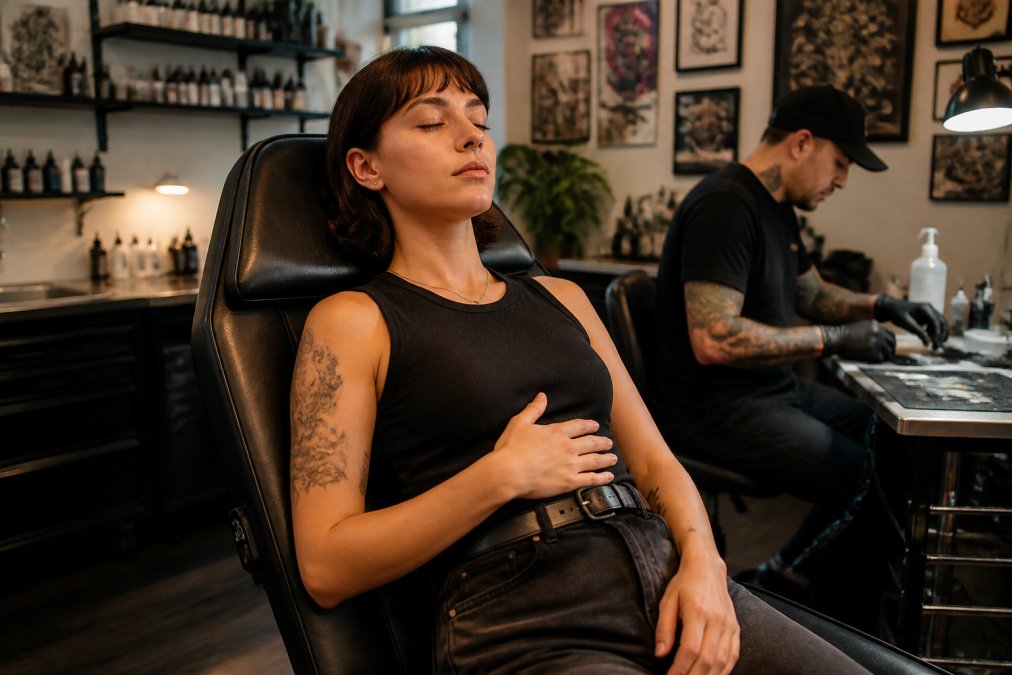
Adrenaline blunts early pain and endorphins build, so many clients find the second hour easier than the first. Fleshy areas like the upper arm, forearm, and thigh hurt less than the ribs, spine, elbow, or foot.
Deep breathing is the single most reliable tool: in through your nose for four counts, hold four, out through your mouth for six. Grounding techniques help when your mind spirals: press your feet flat, count the artist’s wipe-and-dab rhythm, squeeze a stress ball, and ask for a break before you think you need one. Communicate throughout, say “I need a minute” whenever you do; good artists pause without judgment.
Never sit for a session on no sleep and no food. That combination is the most common cause of fainting in the chair, and it turns a manageable appointment into a medical scare.
How to Talk to Your Tattoo Artist About Anxiety
Most people never say the word “anxious” out loud in the chair. Say it, learning how to talk to your tattoo artist about nerves changes how the session runs.
Tattoo anxiety is a normal physiological response, not a character flaw. Tell your artist at the consultation or in the first five minutes: “This is my first tattoo and I’m nervous. Can you walk me through what happens next?” That one line unlocks a lot: your artist can explain each step before it happens, warn you before a painful pass, and check in more often. At Sideshow Tattoo and Piercing, our hand-picked professional artists are matched to client needs.
Set boundaries while you’re at it. You’re allowed to ask for breaks, request a smaller first piece, bring a friend if the studio allows it, or reschedule if you’re genuinely unwell. A common mistake is staying silent to seem tough. Artists read bodies, not minds. If your breathing goes shallow or your face drains, they’ll stop anyway, and a planned pause is calmer than an emergency one.
The single most useful sentence before your first tattoo is telling your artist you’re nervous. It costs nothing and buys you a session built around your comfort.
Your First Tattoo Checklist
Preparation beats willpower. The day before and morning of: eat a solid meal 60-90 minutes ahead, drink water through the morning, skip alcohol and excess caffeine, sleep a full night, wear comfortable clothing that exposes the placement, pack a snack and water bottle, and arrange a ride home if you might feel wiped.
Some people feel a wave of letdown or “tattoo blues” a few days after the appointment, once the adrenaline fades.
| Concern | What Helps | Why It Works |
|---|---|---|
| Fainting or dizziness | Eat before, hydrate, breathe slowly | Steadies blood sugar and heart rate |
| Sharp pain spikes | Choose fleshy placement, ask for breaks | Less nerve-dense skin, controlled pacing |
| Panic or racing thoughts | Grounding techniques, tell your artist | Redirects attention, triggers support |
| Nausea mid-session | Snack, cool room, short pause | Restores blood sugar, resets the body |
Frequently Asked Questions
Is it normal to be nervous before getting a tattoo?
Yes, pre-appointment nerves are common, especially for a first tattoo. Anxiety often comes from the unknown: pain, permanence, and the studio environment. Knowing what to expect, eating a solid meal, and telling your artist you are nervous can lower that stress. Most first-timers find the anticipation is worse than the actual session, and a professional artist will guide you through every step.
How do I tell my tattoo artist I am nervous?
Say it plainly at the start of your appointment or during the consultation. A simple line like, “This is my first tattoo and I am a little anxious” gives your artist what they need to adjust pace, check in more often, and explain each step. Artists prefer knowing upfront so they can help you manage a vasovagal response, fainting, or dizziness before it happens.
What should I avoid before my first tattoo?
Skip alcohol and blood-thinning medications like aspirin for 24 hours unless a doctor directs otherwise, since they can increase bleeding and affect how the tattoo ink settles. Avoid going in on an empty stomach or on very little sleep. Caffeine can amplify nerves and jitters, so keep it light. Hydrate with water and eat a meal with protein and complex carbs about one to two hours before your session.
First-time nerves are normal, and they don’t have to define your appointment. Sideshow Tattoo and Piercing pairs every client with a hand-picked artist suited to their style and comfort level, uses only high-quality jewelry for piercings, and treats the whole visit, not just the ink, as the experience. If you’re ready to turn anxiety into anticipation, contact Sideshow Tattoo and Piercing to book a consultation and get matched with the right artist for your first piece.