
Table of Contents
- Why a Custom Tattoo Consultation Matters
- Tattoo Consultation Preparation Tips
- How to Explain Tattoo Ideas to Artists
- Average Tattoo Consultation Duration
- In-Person vs. Virtual Consultations
- Tattoo Deposit Policies Explained
- How to Book Your Custom Tattoo Consultation
- Frequently Asked Questions
Last Updated: September 24, 2026
Why a Custom Tattoo Consultation Matters
A custom tattoo consultation is a scheduled meeting between you and a tattoo artist to discuss your design idea, placement, size, and budget before any ink touches skin. It is the single most important step in getting body art you will wear for life.
At Sideshow Tattoo and Piercing, we treat that meeting as the foundation of the whole project. Skip it, and you risk a stencil that misses your vision, a session that runs long, or a design you settle for instead of one you love. The FDA’s overview of tattoo safety and ink regulation explains why choosing a reputable studio matters for your health, not just your aesthetics.
Most first-timers book a consultation expecting a five-minute chat. In practice, it is a working design session where your artist asks questions, takes measurements, and starts shaping original artwork around your idea.
Tattoo Consultation Preparation Tips
Preparation is what separates a productive design session from a wasted appointment. Most practitioners find that clients who arrive organized leave with a sketch timeline and a session date, while unprepared clients often need a second consultation. Use the checklist below to walk in ready.

The Consultation Preparation Checklist
Work through these items in the week before your appointment:
- Reference images: 5-10 saved to your phone or printed, sorted by what you like about each one.
- Placement photo: a well-lit photo of the exact spot, taken by someone else so the angle is natural.
- Size estimate: a rough range in inches, plus a hard maximum you will not exceed.
- Style shortlist: two or three style names you respond to, not ten.
- Budget range: an honest floor and ceiling for the whole project.
- Questions list: deposit terms, revision policy, healing timeline, artist availability.
- Calendar: your next two months of travel, work events, and sun exposure so you can schedule healing time.
Gather Reference Materials the Right Way
Pull together 5-10 images that show the style, mood, and detail level you want. Screenshots from artists you admire work well. So do photos of textures, architecture, or nature that capture the feeling you are after. Your artist will not copy another person’s tattoo, but references tell them what your eye responds to.
- Composition, how the piece is laid out and how it flows with the body.
- Style, line weight, shading, color palette, level of detail.
- Subject, the specific imagery or motif you want represented.
Know Your Placement and Size
Placement changes everything about a design. A detailed realism piece that works on a forearm may lose definition on a ribcage. Think about visibility at work, how the design flows with your body’s natural lines, and how much skin you are willing to commit.
Photograph the spot where you want the tattoo in natural light, then bring that photo to your consultation. Artists can judge available space and skin texture far faster from a real image than from a verbal description.
Prepare for the Practical Details
Preparation is not only creative. Plan for the logistics that affect your session:
- Eat and hydrate before you arrive; low blood sugar makes long sessions harder.
- Wear or bring clothing that exposes the placement area without stretching it.
- Skip alcohol and blood thinners for at least 24 hours unless a doctor says otherwise.
- Bring a support person if you expect a long session or you are nervous.
- Charge your phone and bring headphones for longer appointments.
How to Explain Tattoo Ideas to Artists
The clearest way to explain a tattoo idea is to describe the feeling and story behind it, then point to visual references that match. Artists translate emotion into line work far better than they translate vague adjectives.
Describe the Feeling, Not Just the Picture
“I want something that feels like calm water at dusk” gives your artist more to work with than “something blue and wavy.” Talk about the meaning, the memory, or the mood. Then let the artist propose imagery.
Reference Other Artists and Styles
Name the styles you like: realism, Japanese, geometric, neo-traditional, blackwork, fine line. If you have seen sleeve tattoos or large-scale work that stopped you mid-scroll, say so. Your artist can explain which approaches suit your idea and which will not hold up over time.
Never ask an artist to copy another tattoo exactly. Beyond the ethical problem, copied work often fits the original client’s body, not yours. Bring references for style, not for replication.
Average Tattoo Consultation Duration
A typical custom tattoo consultation runs 30 to 60 minutes. Complex projects, like full sleeves or large-scale back pieces, can take 90 minutes or more across multiple meetings.
| Consultation Type | Typical Duration | Best For |
|---|---|---|
| Quick walk-in chat | 10-20 minutes | Small, simple designs |
| Standard booked consultation | 30-60 minutes | Most custom pieces |
| Extended design session | 90+ minutes | Sleeves, large-scale work |
| Virtual consultation | 20-40 minutes | Out-of-town clients |
In-Person vs. Virtual Consultations
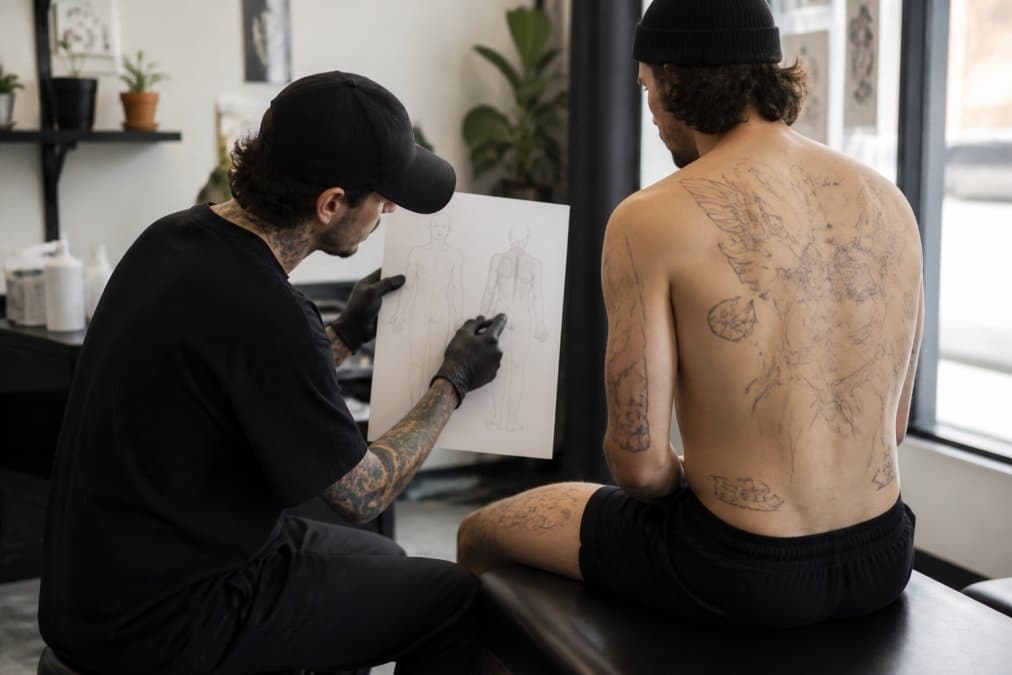
In-person consultations remain the better choice for most custom work. Your artist can take body measurements, trace the placement area, and assess how your skin takes a stencil. That physical information shapes the design in ways a video call cannot capture.
Tattoo Deposit Policies Explained
A deposit is a partial payment made when you book your appointment. It reserves your artist’s time and covers the design work they do before you sit in the chair. Understanding how deposits, design time, and session time are billed separately is the single biggest source of budget anxiety for first-time clients, so treat this section as your budgeting guide.
How Custom Tattoo Pricing Is Usually Structured
Most studios separate a custom project into three cost components:
| Component | What It Covers | When It Is Charged |
|---|---|---|
| Deposit | Holds your slot and funds initial design work | At booking |
| Design time | Sketches, revisions, and stencil prep | Often folded into the session rate, sometimes billed hourly |
| Session time | The actual tattooing, usually billed hourly or by the piece | Day of appointment |
What a Deposit Typically Covers
Most studios apply the deposit to your final session cost. If you cancel with enough notice, many shops will transfer the deposit to a rescheduled date. Cancel last minute or fail to show, and you typically forfeit it. That policy exists because your artist turned down other bookings to hold your slot.
Questions to Ask Before You Pay a Deposit
- Is the deposit applied to the final price or charged separately?
- How much notice do I need to reschedule without losing it?
- Does the deposit cover design revisions, or only the session time?
- Is design time billed hourly, folded into the session rate, or quoted flat?
- What happens to the deposit if the artist needs to reschedule?
Get the answers in writing, whether by email or text. Policies vary between studios, and knowing the terms upfront prevents surprises. For current deposit amounts and booking terms, check with the studio directly.
Budgeting for the Whole Project
A custom piece is rarely a single appointment. Build your budget around the full arc:
- Consultation, usually free, but confirm.
- Design and revisions, may be included or billed separately.
- First session, often the longest and most expensive.
- Follow-up sessions, for large pieces, color, or touch-ups.
- Aftercare, ointment, sunscreen, and possibly a touch-up visit.
Never pay a deposit without a written confirmation of the terms. A verbal agreement is hard to enforce if the studio’s policy differs from what you remember.
Before you pay, confirm three things in writing: what the deposit covers, how design time is billed, and how much notice you need to reschedule. Those three answers tell you whether the studio’s pricing model fits your budget.
How to Book Your Custom Tattoo Consultation
Booking a custom tattoo consultation takes three steps: choose your artist, submit a booking inquiry, and confirm your appointment.
- Review artist portfolios. Match your style to the artist who specializes in it. A realism specialist and a Japanese specialist will approach the same idea very differently.
- Send a booking inquiry. Include your idea, placement, approximate size, and reference images. The more detail you provide, the faster the studio can match you with the right artist.
- Confirm your slot. The studio will offer available times and outline any deposit requirement. Lock in your date and note the session duration.
The best consultations end with a clear next step: a sketch timeline, a session date, and a deposit on file. If you leave without those three things, follow up before your appointment slot fills.
Frequently Asked Questions
Do tattoo consultations cost anything?
Most custom tattoo consultations are free, though some artists charge a consultation fee that goes toward your deposit if you book. Ask when you schedule. The consultation itself is a working session where you discuss your vision, placement, and budget. Bring reference materials and questions. If you decide not to book, you lose nothing but time. Always confirm the fee policy before your appointment.
How far in advance should I book a custom tattoo consultation?
For custom work, book two to four weeks ahead. Popular artists may have longer waits. If you need a specific date, schedule early. Walk-ins are sometimes possible for simple designs, but custom consultations need dedicated time. Call the shop or check their website for current availability. Booking ahead ensures you get the artist whose style matches your vision.
What should I bring to a custom tattoo consultation?
Bring printed or digital reference images, a list of questions, and any sketches you have. Know your budget range and preferred placement. Wear clothing that allows easy access to the tattoo area. If you have a medical condition, bring a doctor’s note. Photos of tattoos you like and dislike help the artist understand your taste. Preparation makes the consultation smoother and more productive.
How long does a typical tattoo consultation last?
A typical consultation lasts 30 to 60 minutes. Complex designs or full sleeves may take longer. The artist will review your references, discuss placement, and sketch rough ideas. You will talk about size, color, and session duration. Come prepared with questions. If you feel rushed, ask for more time. A good consultation ensures both you and the artist are aligned before booking.