Table of Contents
- Is Professional Tattoo Numbing Cream Worth It?
- How to Apply Tattoo Numbing Cream Correctly
- Does Numbing Cream Affect Tattoo Ink Absorption?
- How Long Does Tattoo Numbing Cream Last?
- The Bottom Line
- Frequently Asked Questions
Last Updated: September 28, 2026
Is Professional Tattoo Numbing Cream Worth It?
A professional tattoo numbing cream can be worth it, with the right product, correct application, and realistic expectations.
How to Apply Tattoo Numbing Cream Correctly
Timing and thickness matter more than brand.
Most need 30 to 60 minutes under an occlusive dressing to reach the dermal layer; skip the wrap and you’ll numb only the surface.
The routine: wash and pat dry, apply a thick 1-2 mm layer, cover with plastic wrap or a medical occlusive dressing, wait the label’s full time, then wipe off before your artist starts.
A common mistake: applying it in the car on the way to the shop, 15 minutes of absorption at best.
Never wrap numbing cream and leave it on for hours to “get ahead” of the pain. Prolonged exposure under occlusion raises how much anesthetic reaches your bloodstream, and lidocaine toxicity is a real risk. Follow the label’s application time exactly.
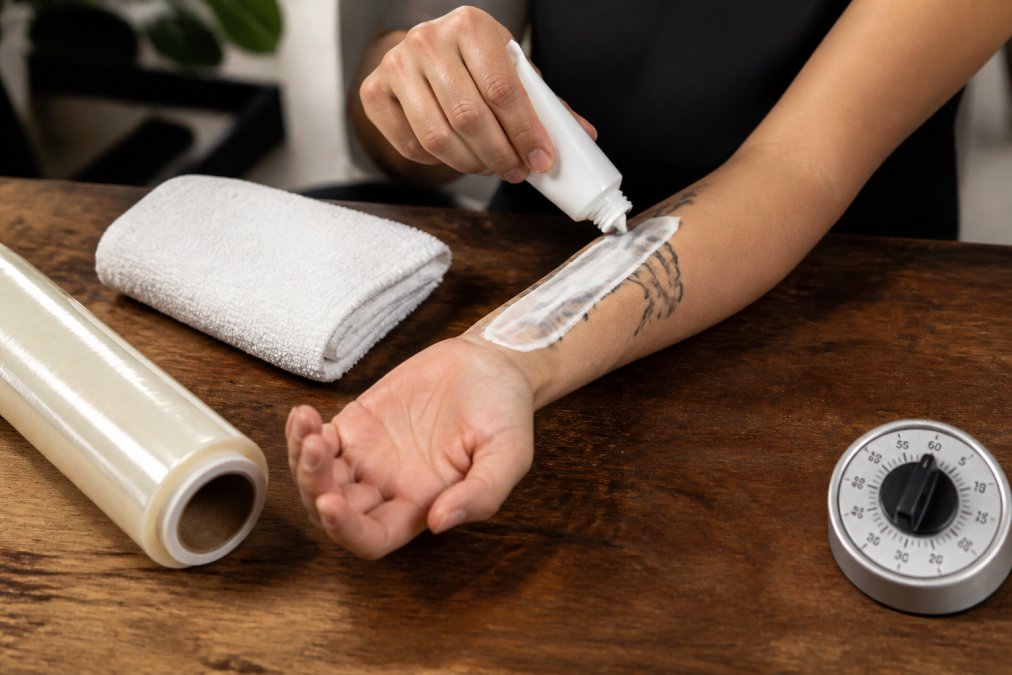
Proper application techniques ensure that the skin remains receptive to ink, a principle that remains equally vital when evaluating microblading cost considerations.
Does Numbing Cream Affect Tattoo Ink Absorption?
Yes, it can.
Numbing creams constrict surface blood vessels, which numbs you but makes skin firmer and less reactive, affecting how cleanly ink saturates the dermis.
The effect is usually temporary, but on a large piece a cream that wears off mid-session leaves your artist on skin that’s suddenly more sensitive and less predictable. Tell your artist you’re using one.
If you’re booking a long session, ask about a two-part approach: numbing cream for the outline, then a lidocaine-based spray or gel once the skin is open. Your artist can tell you what’s safe to layer and when.
How Long Does Tattoo Numbing Cream Last?
Expect 30 to 90 minutes of meaningful numbness per application, depending on product and skin.
Fine for a small tattoo, not a full sleeve. When it fades, pain often returns sharper, rebound pain, the biggest reason people say numbing cream wasn’t worth it.
| Factor | What It Means for You |
|---|---|
| Small tattoo, under 1 hour | Cream usually covers the whole session |
| Medium piece, 1-3 hours | Expect rebound pain partway through |
| Large piece, 3+ hours | Cream helps the start, not the finish |
| High pain placement | Cream helps most here; rebound still applies |
For a long session, you’re trading a hard first hour for a harder third hour.
The Bottom Line
Numbing cream isn’t a cheat code, it’s a tool with a narrow window and real trade-offs.
Use it for short sessions, follow the application time, and know rebound pain is possible. For anything longer, talk to your artist first.
If you’re in San Diego, our team at Sideshow Tattoo and Piercing will give you a straight answer on prep, aftercare, and what to expect from your first session.
Frequently Asked Questions
Does numbing cream affect the quality of a tattoo?
It can if applied incorrectly. Over-application or leaving it on too long can change skin texture and make ink absorption uneven. A professional tattoo numbing cream used at the right dose and timing usually has minimal impact. Always follow the product instructions and tell your tattoo artist you are using it.
How long does professional tattoo numbing cream last?
Most professional tattoo numbing creams last 2 to 4 hours, depending on the active ingredients and your metabolism. Lidocaine-based creams typically peak around 30 to 60 minutes after application. For longer tattoo sessions, you may need to reapply, but only if the product allows it and your artist agrees.
Do professional tattoo artists recommend using numbing cream?
Artists are split. Some welcome it for long or sensitive placements because it helps clients sit still. Others avoid it because it can change skin texture and make ink saturation less predictable. Talk to your artist before your appointment. At Sideshow Tattoo and Piercing, our artists will discuss your options and help you decide what works for your session.
Pain management is personal, and there’s no single right answer for every tattoo. If you want guidance from artists who’ve handled first-timers, large-scale pieces, and everything in between, reach out to Sideshow Tattoo and Piercing. We’ll help you plan your session, talk through numbing options, and pair you with a hand-picked artist who gets your vision. Get started with Sideshow Tattoo and Piercing and walk into your appointment knowing exactly what to expect.