Table of Contents
- How Tattoo Pricing Works: Size, Time, and Complexity
- Average Tattoo Hourly Rate and Shop Minimums
- Pricing by Size, Style, and Placement
- The Tattoo Consultation Process: Getting an Accurate Quote
- Deposits, Cancellations, and Touch-Up Fees
- San Diego Walk In Tattoo Shops: What to Know About Pricing
- Tips and Aftercare: The Costs Most People Forget
- Conclusion: Budgeting for Your Next Tattoo
- Frequently Asked Questions
Last Updated: September 25, 2026
How Tattoo Pricing Works: Size, Time, and Complexity
Tattoo pricing is the total a studio charges for a design, calculated from the artist’s time, the size and placement of the piece, and how much detail it requires. This guide from Sideshow Tattoo and Piercing breaks down every factor that shapes a san diego tattoo pricing guide.
Three variables drive almost every quote you will receive:
- Size: measured in square inches or by body area (palm, forearm, half sleeve)
- Time: how long the artist expects to sit with you, billed hourly or as a flat project rate
- Complexity: line work, shading, color saturation, and fine detail all add hours
A bold black line-work forearm piece moves fast; a neotraditional sleeve with layered color takes multiple sessions.
Square-Inch Pricing vs. Project-Based Pricing
Studios generally quote one of two ways. Square-inch pricing sets a rate per unit of skin, suiting small, simple pieces. Project-based pricing quotes the whole tattoo as one figure, standard for custom work where square inches make no sense.
Most experienced artists prefer project-based quotes above a few inches: you know the total before the needle touches skin, and the artist is not penalized for the time a detailed piece needs.
Ask which method a studio uses before you compare quotes. A “cheaper” square-inch rate can cost more than a project quote once complexity is factored in.
Average Tattoo Hourly Rate and Shop Minimums
The average tattoo hourly rate varies widely by artist experience and shop location, and studios often enforce a shop minimum, the lowest amount charged for any tattoo, because setup, sanitation, and materials cost the same whether the piece takes ten minutes or two hours.
What the Rate Ladder Actually Looks Like
Rates climb with portfolio quality, years of experience, and local demand.
| Artist Tier | Typical Billing Pattern | What You Are Paying For |
|---|---|---|
| Apprentice / junior | Lowest hourly tier, often limited to flash and simple line work | Supervised reps, slower pace, narrower style range |
| Mid-level artist | Middle hourly tier, project quotes on custom work | Consistent line work, a defined specialty, faster sessions |
| Senior / specialist | Highest hourly tier, day rates common on large pieces | Judgment on placement and aging, speed, complex styles (realism, neotraditional, fine-line) |
| Shop owner / guest artist | Premium tier, sometimes booked months out | Reputation, limited availability, travel or guest-spot surcharges |
You are paying for judgment, speed, and a result that still looks good in ten years. A senior artist who finishes in four hours can land cheaper than a junior who needs seven.
Regional Price Variance Inside the Metro
The same design can quote meaningfully differently depending on which side of the county you book it in. If your budget is tight, price the piece in two or three areas before you commit.
Why the Cheapest Hourly Rate Is a Trap
Chasing the lowest hourly rate in the city is a common mistake. A slow artist at a low rate can cost more than a fast artist at a higher one, and cheap work is expensive to cover up. Cover-up work is billed at the senior tier, and it usually costs more than the original piece did.
When you compare quotes, compare the projected total, not the hourly number. Ask each artist for an estimated session count and a total range in writing.
Pricing by Size, Style, and Placement
Size, style, and placement together determine both the price and the number of sessions. Placement matters more than most people expect: ribs, spine, and sternum are slower because the skin moves and the client flinches.
Here is how the main variables interact:
| Factor | What Raises the Price | Why |
|---|---|---|
| Size | Larger surface area | More hours under the needle |
| Style | Neotraditional, realism, color | Layered shading and saturation |
| Placement | Ribs, spine, hands, neck | Difficult skin, slower work |
| Detail | Fine line work, small text | Precision and rework risk |
| Sessions | Sleeve or back piece | Multiple appointments, multiple setups |
Small, simple designs on an arm or calf sit at the low end.
Flash vs. Custom Design Pricing
Flash designs are pre-drawn pieces an artist offers to multiple clients, ready to tattoo as-is. Flash is usually cheaper because the design time is already paid for.
Full-Day Session Rates vs. Hourly Billing
A full-day session rate is a flat fee for a block of the artist’s day, often cheaper per hour than paying hourly. Studios offer it for large pieces where stopping and restarting would waste setup time.
The Tattoo Consultation Process: Getting an Accurate Quote
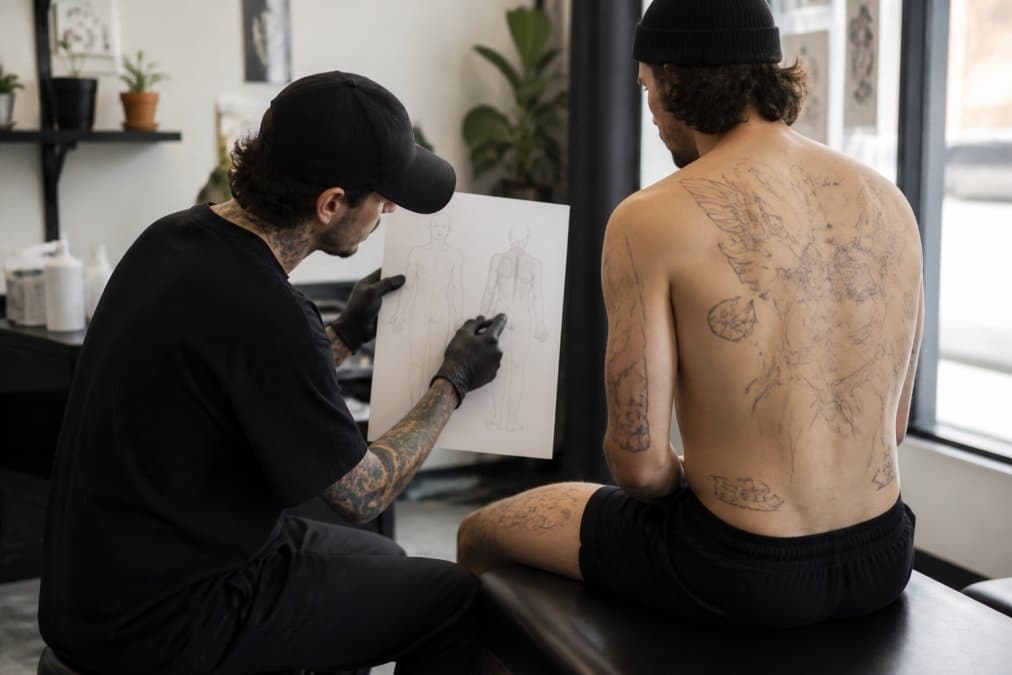
The tattoo consultation process is a short meeting, in person or by message, where you describe your idea, show reference images, and agree on placement and size so the artist can quote accurately.
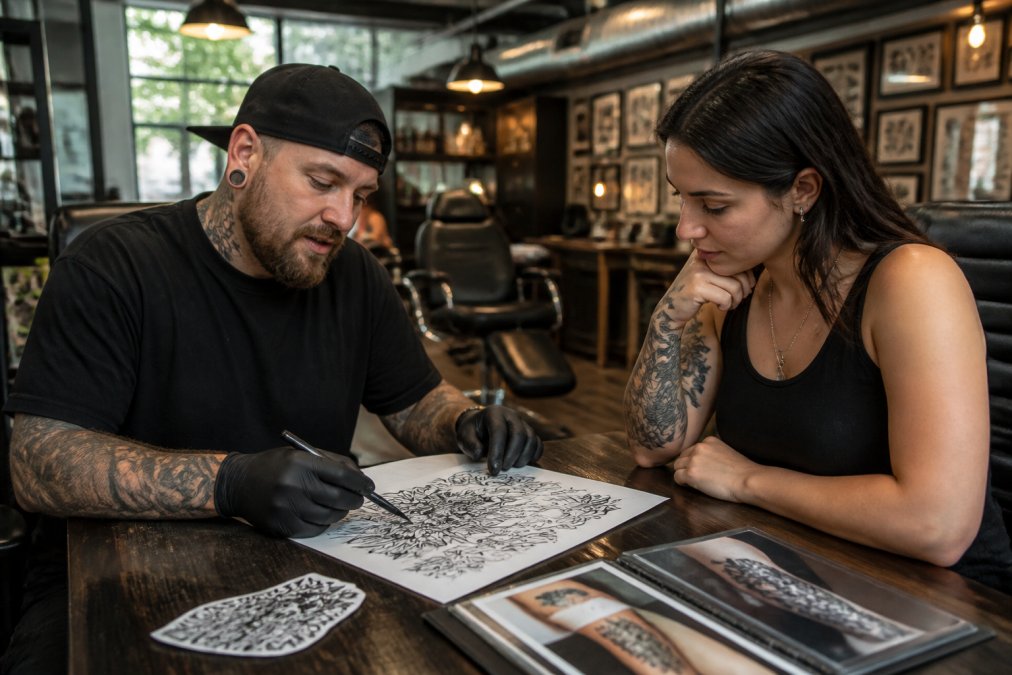
The consultation is where you control the price. Changing size, placement, or detail level at this stage is free. Changing it after the drawing is done is not.
Deposits, Cancellations, and Touch-Up Fees
A deposit is paid up front to hold your appointment and cover the artist’s drawing time, and it is normally applied to the final cost of the tattoo.
Photograph your healing tattoo weekly for the first month. If a touch-up is needed, that timeline proves you followed aftercare and keeps the service free.
San Diego Walk In Tattoo Shops: What to Know About Pricing
Walk-in tattoo shops take clients without an appointment, usually for smaller flash pieces on a first-come basis. The shop minimum applies, and anything above it is quoted on the spot by size and detail.
Tips and Aftercare: The Costs Most People Forget
The quoted price is not the full cost of a tattoo. Tipping, aftercare supplies, and deposit terms all add to the total.
Tipping Etiquette for Tattoo Artists
Tipping follows the same logic as tipping a hairstylist: 15 to 20 percent is common for good work, and more for a long session or a piece that exceeded expectations.
The Deposit Is Part of the Math, Not Separate From It
A deposit is paid up front to hold your appointment and cover the artist’s drawing time, and it is normally applied to the final cost of the tattoo. The deposit is not an extra fee, it is a prepayment, but the terms around it change your real exposure.
- Non-refundable is the norm. Studios often treat the deposit as non-refundable, which means a change of heart costs you the deposit rather than nothing.
- Reschedule windows vary. Many shops require notice within a set window to move a deposit to a new date. Inside that window, the deposit usually carries over. Outside it, it is often forfeited.
- No-shows forfeit. Ghosting an appointment typically burns the deposit entirely, and some shops require a new deposit to rebook.
- Multi-session pieces may require a deposit per session. On a large custom piece, ask whether the initial deposit covers the whole project or just the first sitting.
Medical-Grade Aftercare: The Hidden Line Item
Aftercare is where the “quoted price” quietly grows. The supplies are inexpensive individually, but a proper healing kit adds up:
- Medical-grade healing ointment or balm: fragrance-free, often sold in small tubes at the studio. Expect to buy more than one for a large piece.
- Fragrance-free antibacterial soap: for gentle twice-daily washing during the first two weeks.
- Paper towels: for patting dry, never rubbing. A dedicated roll keeps bathroom towels off the healing area.
- Second-skin style film bandages: some artists send clients home with a roll or sheet; replacements are a real cost on larger pieces.
- Loose clothing: to avoid friction on the healing area, especially for ribs, thighs, and back pieces.
- Sunscreen: once healed, to protect color saturation long term. This is a permanent ongoing cost, not a one-time purchase.
Skipping aftercare to save money is the most expensive mistake in tattooing. Poor healing damages line work and color, and a repair costs far more than a tube of balm. Touch-ups requested after the free window, or on work another artist did, are billed at the artist’s current rate.
Touch-Up Fees and the Free Window
Many artists touch up their own work free within a set period, provided you followed aftercare instructions. Ask which policy applies before you leave the chair, and photograph your healing tattoo weekly for the first month, that timeline proves you followed aftercare and keeps the service free.
Putting the Full Number Together
When you budget, add four things to the quoted price: the tip, the deposit terms, the aftercare kit, and a buffer for a possible touch-up outside the free window.
Conclusion: Budgeting for Your Next Tattoo
The hard part of tattoo pricing is not the number itself, it is knowing what drives it. Size, time, complexity, placement, deposits, and aftercare all feed into the final figure.
Frequently Asked Questions
What factors influence the final price of a tattoo?
The final price depends on size, complexity, placement, color saturation, and how much line work or shading is required. A small, simple design may take under an hour, while a detailed sleeve can span multiple full-day sessions. Your artist’s experience level and the shop’s minimum also play a role. Always ask for a written estimate during your consultation so there are no surprises on appointment day.
Do artists charge by the hour or by the piece?
Both models exist. Many artists use an hourly rate, especially for larger custom work, while others quote a flat project-based price for flash designs or smaller pieces. Square-inch pricing is common for straightforward walk-in tattoos. Ask upfront which method your artist uses, and confirm whether the shop minimum applies before you book.
Is it customary to tip your tattoo artist?
Yes, tipping is standard in the United States. Most clients tip 15 to 20 percent of the total cost, similar to restaurant or salon tipping. Cash is always appreciated, though many shops now accept digital tips as well.
How do I get an accurate price quote for a custom design?
Book a consultation with the artist whose portfolio matches your style. Bring reference images, discuss placement and size, and ask for a written estimate that covers the deposit, hourly rate or flat fee, and any touch-up policy. Getting the quote in writing protects both you and the artist and helps you budget accurately before your appointment.