Table of Contents
- Best Tattoo Styles for Beginners
- Easy Tattoo Ideas for Beginners
- Small Tattoo Ideas for First-Timers
- Tattoo Placement for Beginners
- How to Choose a Tattoo Artist
- Frequently Asked Questions
Last Updated: October 18, 2026
Best Tattoo Styles for Beginners
The best tattoo styles for beginners are fine line, minimalist, traditional, and simple script, because each relies on clean linework rather than dense shading or color blending. At Sideshow Tattoo and Piercing, we match first-timers to artists who work in exactly the style they want.
A style is only beginner-friendly if it still looks intentional five years from now. Fine line and minimalist work age gracefully; heavy realism and watercolor fade unevenly.
For guidance on skin preparation and healing, the American Academy of Dermatology’s tattoo safety guidance is a solid starting reference.
Easy Tattoo Ideas for Beginners
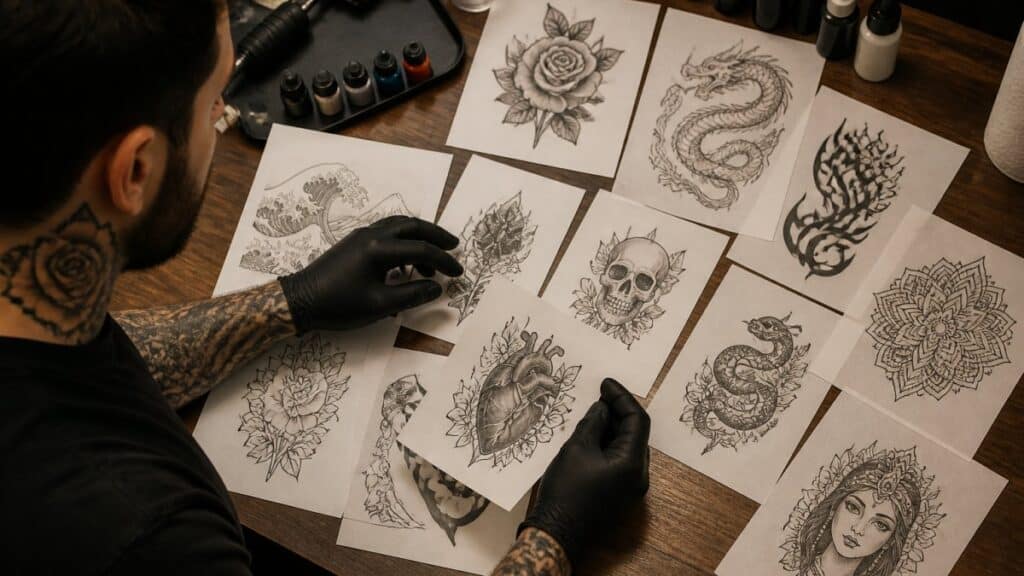
Easy tattoo ideas for beginners share three traits: bold outlines, limited color, and a shape that reads clearly at a glance. Think a single poppy, a small geometric shape, a short word in clean lettering, or a simple bird or arrow.
“Easy” is about the artist’s workflow, not just the design. A simple linework piece takes less session time, heals more predictably, and is easier to touch up. A common mistake is choosing an intricate design for a small placement, which forces the artist to compress detail until it blurs.
Bring three reference images in the same style, not ten in different styles. Artists read consistency as a clear vision, and you will get a sharper design proposal in return.
Small Tattoo Ideas for First-Timers
Small tattoo ideas for first-timers work best on the inner arm, above the elbow, the wrist, or the ankle, where skin is flat and easy to keep clean during healing. A small fine-line design, a single-line shape, or a short script piece fits these spots without crowding.
Placement matters more than size for a first tattoo. Bony, high-friction spots heal slower and hurt more, so a subtle design on the inner forearm is a gentler start than the same design on a rib or foot.
Tattoo Placement for Beginners
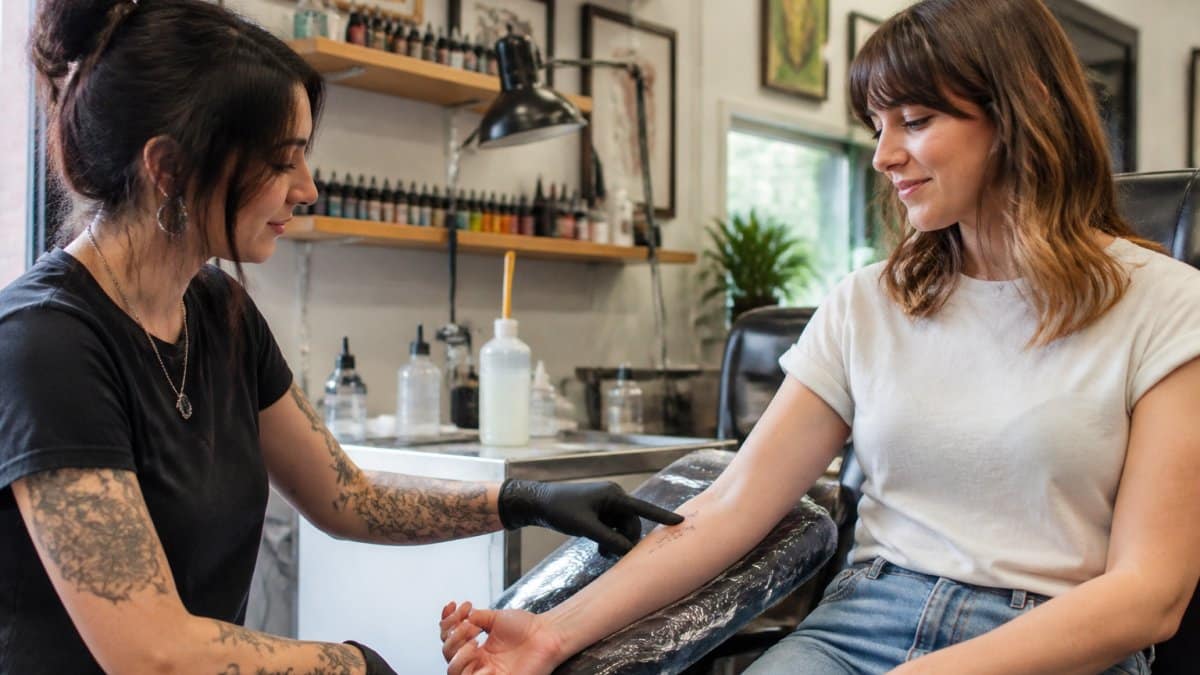
Tattoo placement for beginners comes down to three questions: how visible do you want it, how much discomfort can you handle, and how well will you care for it while it heals? The inner arm and above the elbow are the most forgiving first placements. The ribs, spine, and feet are the least.
| Placement | Discomfort | Healing Ease | Visibility |
|---|---|---|---|
| Inner arm | Low | Easy | Adjustable |
| Above elbow | Low | Easy | Often visible |
| Wrist | Moderate | Moderate | Visible |
| Ankle | Moderate | Moderate | Adjustable |
| Ribs | High | Harder | Hidden |
| Foot | High | Harder | Often visible |
How to Choose a Tattoo Artist
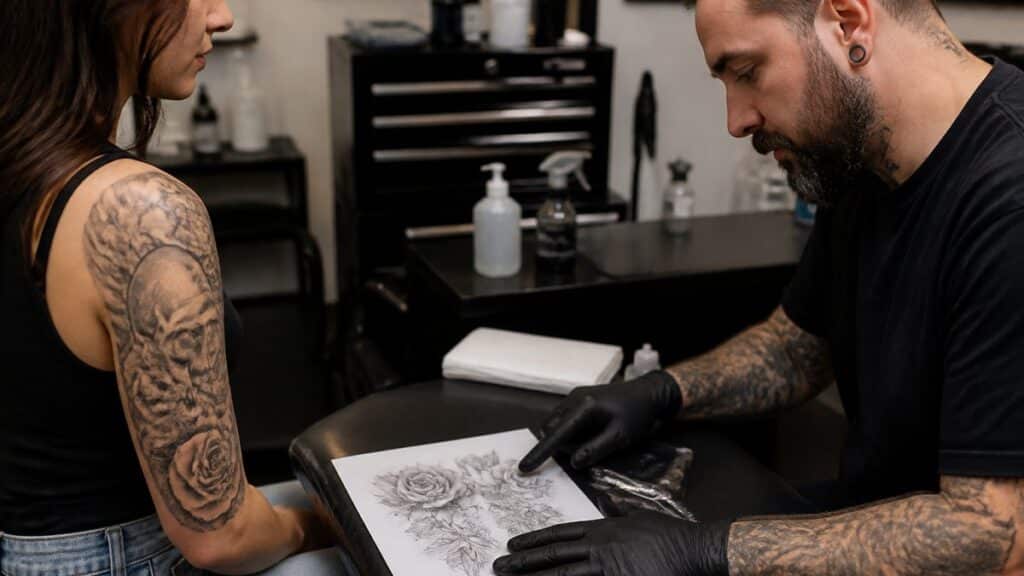
How to choose a tattoo artist starts with the portfolio, not the price. Look for healed photos in your chosen style, not just fresh tattoos under studio lighting. A reliable artist shows consistency across multiple pieces and can explain why a design will or will not work on your placement.
Ask two questions in the consultation: how long have you worked in this style, and how would you adapt this design for my skin and placement? Vague answers are a warning, as is an artist who won’t discuss aftercare or touch-up policy.
Frequently Asked Questions
What is the easiest tattoo style for a beginner to get?
Fine line, minimalist, and simple script are usually the easiest tattoo styles for a first-timer. They involve less shading, shorter sessions, and smaller designs, which means less discomfort and a simpler healing process. Traditional tattoos are also beginner-friendly because bold outlines and solid color age well. The key is choosing a style that matches your idea and an artist who specializes in it, so the result stays clean and sharp over time.
Are small tattoos a good choice for a first tattoo?
Yes, small tattoo ideas for first-timers are a smart starting point. They take less time under the needle, cost less, and are easier to cover or work around later. Small designs also let you test how your skin heals and how you feel about visible ink. Just remember that tiny details can blur over the years, so ask your artist to keep the design simple enough to hold up. Placement matters too: areas with less friction and sun exposure heal best.
How do I choose a tattoo style that suits me?
Start by collecting reference images and noticing which ones you keep coming back to. Think about whether you prefer bold lines, soft shading, or clean lettering, and consider how visible you want the tattoo to be. Then book a consultation with an artist whose portfolio matches that style. A good artist will discuss your idea, adjust the design to fit your body, and tell you honestly whether the style will age well in your chosen placement.