Table of Contents
- Gold Piercing Jewelry Materials: What Actually Goes in Your Body
- 14K Gold Body Jewelry: Why It Beats Plated Options
- Gold Piercing Jewelry Sizing: Getting the Fit Right
- Hoops, Barbells, and Closures: Matching the Style to the Piercing
- Care, Cleaning, and Long-Term Wear
- Frequently Asked Questions
Last Updated: October 15, 2026
Gold Piercing Jewelry Materials: What Actually Goes in Your Body
Gold piercing jewelry is body jewelry made from a gold alloy, and how it wears comes down to purity and what the gold is mixed with. At Sideshow Tattoo and Piercing, we go above and beyond to prioritize customer care and safety by utilizing only high-quality jewelry for all piercing services. The Association of Professional Piercers jewelry standards sets the benchmark most reputable studios follow.
| Material | Purity | Nickel risk | Best for |
|---|---|---|---|
| Solid 14K gold | 58.5% gold | Low (alloy dependent) | Healed and healing piercings |
| Solid 18K gold | 75% gold | Low | Healed piercings, daily wear |
| Gold-plated or gold-filled | Thin gold layer | Higher | Occasionally, short-term |
Solid gold means the whole piece is a gold alloy, not a coating over brass or steel. Gold-plated jewelry is a base metal with a thin gold layer that wears through.
Plated jewelry on a healing piercing can be a common cause of irritation: once the plating flakes, base metal touches unclosed tissue and can set healing back by weeks.
14K Gold Body Jewelry: Why It Beats Plated Options
14K gold is the sweet spot for 14K gold body jewelry: it holds up to daily wear, resists bending, and costs less than 18K or 24K while still counting as real gold. Pure 24K is too soft for a thread or hinge, the alloy gives it strength.
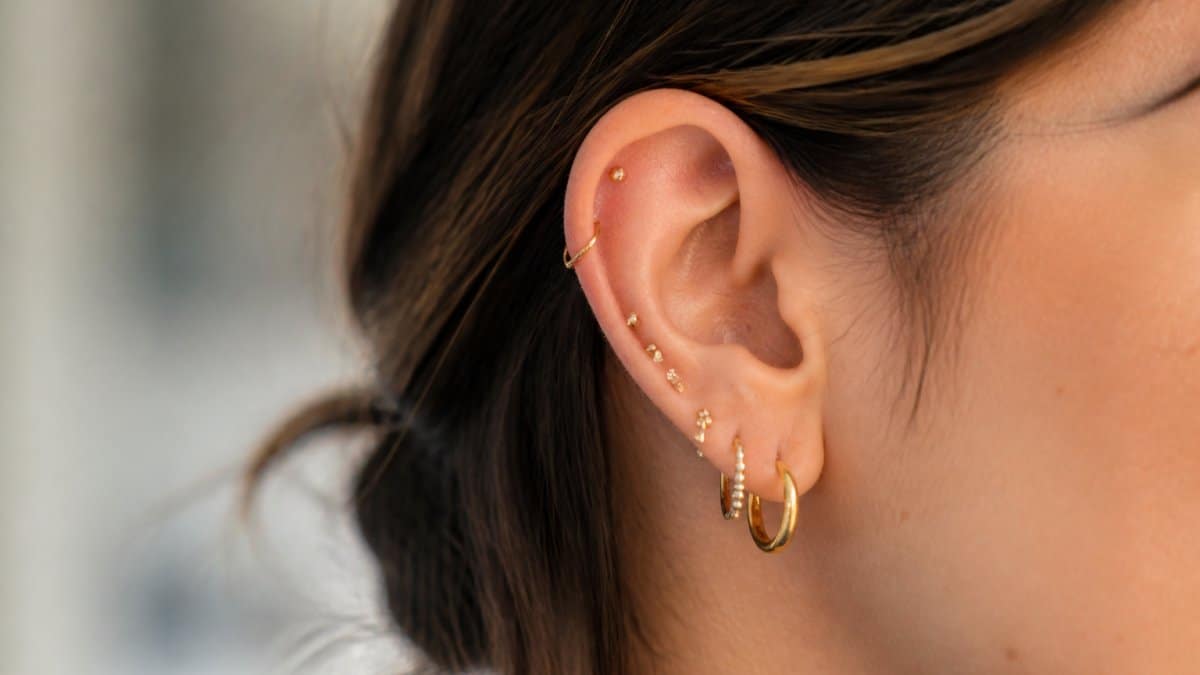
14K gold is roughly 58.5% gold, with the rest copper, silver, or palladium; yellow, white, and rose gold share that content with different alloy recipes. For sensitive piercings, asking what’s in the alloy, not just the karat, is important, nickel-free white gold (palladium-based) differs from standard white gold at the same stamp.
If a shop cannot tell you the alloy or its origin, that is your answer. Reputable studios often keep the mill certificate or supplier spec sheet on hand.
Gold Piercing Jewelry Sizing: Getting the Fit Right
Sizing is where most jewelry problems start: a ring too tight pinches and can migrate, one too loose catches on everything. Gold piercing jewelry sizing runs on two numbers: gauge (wire thickness) and diameter or wearable length. Match jewelry to the piercing stage, a new piercing needs extra length for swelling, a healed one wants a snug fit, and between sizes on a fresh piercing, go up, not down.
| Piercing style | Typical gauge | Typical wearable length |
|---|---|---|
| Nostril | 20G-18G | 6-8 mm |
| Septum | 16G-14G | 8-10 mm |
| Earlobe | 20G-18G | 6-10 mm |
These are starting points, not rules. Anatomy often decides the final fit, which is why we recommend getting measured in person.
Hoops, Barbells, and Closures: Matching the Style to the Piercing
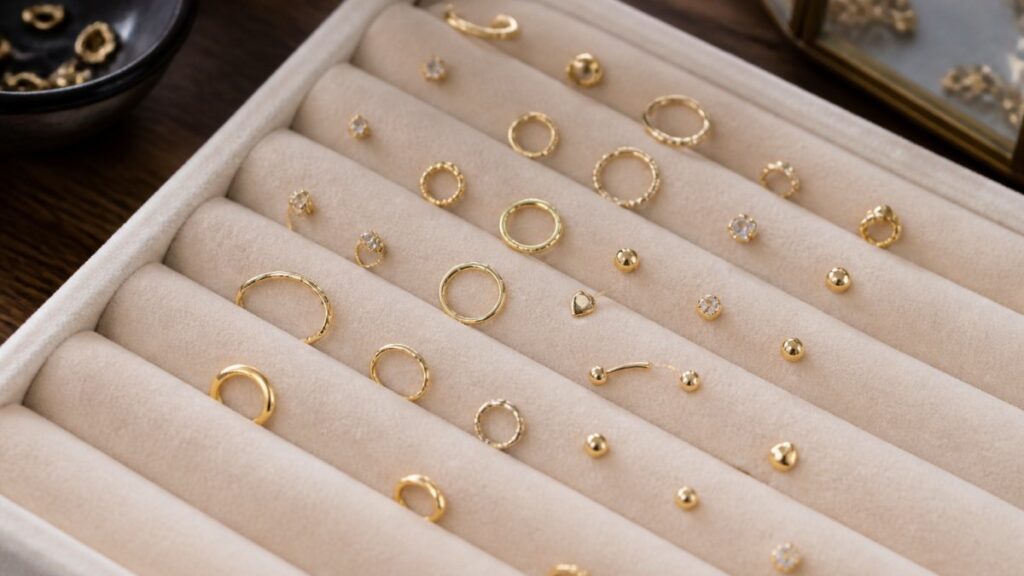
The closure is the part most buyers overlook, and the part that fails first. A hinged ring clicks shut; a seamless hoop has no visible seam and needs a tool; a captive ring holds a bead with tension. Curved barbells suit navel and eyebrow piercings; straight barbells suit cartilage and lobes.
For everyday wear, hinged rings and seamless hoops are easiest, they sit flush, don’t snag hair, and swap in seconds once healed. For a new piercing, a stud or simple barbell with a secure end moves less while the channel forms.
Care, Cleaning, and Long-Term Wear
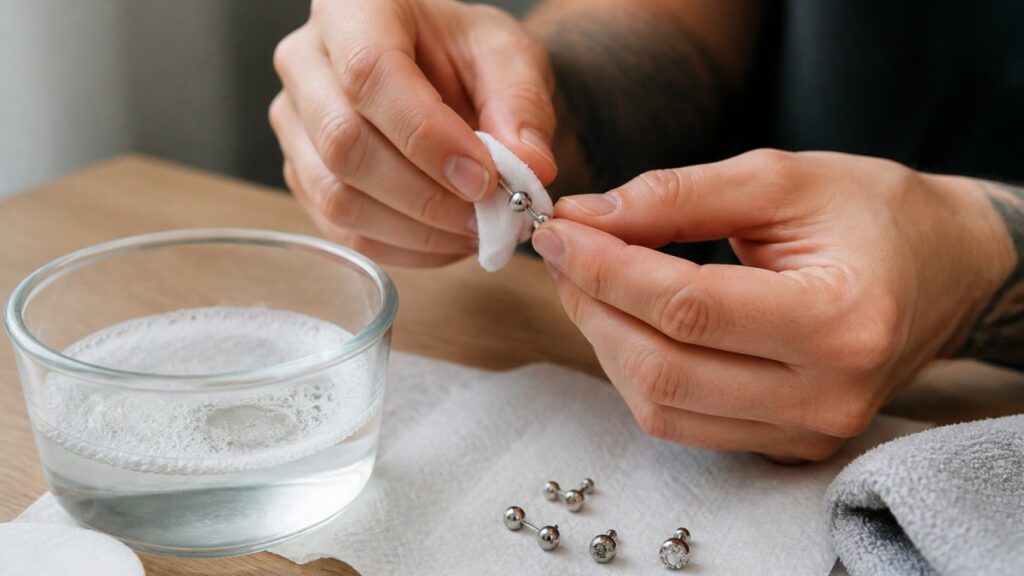
Gold is durable, but not indestructible. Chlorine, harsh cleaners, and knocks dull the finish and can loosen a threaded end, so remove jewelry before swimming in a chlorinated pool and clean with mild soap and warm water rather than abrasive polish.
For a healing piercing, follow your piercer’s aftercare and don’t swap jewelry until the channel has fully closed. For a healed piercing, a quick clean every week or two keeps gold looking new, and storing pieces separately prevents scratches.
Buy the right material and size once, and gold piercing jewelry lasts for years. Buy cheap plating in the wrong size, and you will pay for it twice.
Frequently Asked Questions
Is 14K gold safe for piercings?
14K gold is generally safe for healed piercings because it contains 58.3% pure gold mixed with alloys. The key is checking what those alloys are: nickel-free 14K gold is the safest choice for sensitive skin. If you have a new piercing, it’s often recommended to use materials suitable for initial healing, then switch to 14K gold body jewelry once your piercer confirms it’s fully healed.
How do you choose the right size gold piercing jewelry?
Sizing depends on the piercing type and its location. Nose rings, septum jewelry, cartilage hoops, and belly rings all use different gauges and diameters. It’s advisable to consult with a piercer for your wearable length and gauge before buying. A hoop that’s too tight can irritate the piercing, and one that’s too loose can catch on clothing. When in doubt, get measured in person rather than guessing online.
Can you wear gold jewelry in a new piercing?
Most piercers recommend waiting until a piercing is fully healed before switching to gold. Fresh piercings often do best with materials suitable for initial healing that won’t react with healing tissue. Once healed, 14K gold body jewelry is a solid choice for everyday wear. Healing times vary by piercing location, so check with your piercer before swapping styles.
Choosing jewelry for a fresh piercing is a decision about material and fit, not just looks, and getting it wrong is the fastest way to an irritated ear. Sideshow Tattoo and Piercing only pierces with quality jewelry, sizes every client in person, and offers a welcoming, family-friendly shop for first-timers and regulars alike. Contact us to book a piercing or ask what material and size suit your anatomy.