Table of Contents
- Sterling Silver in a New Piercing: Why It’s Risky
- Best Metals for New Piercings (and When Sterling Silver Earrings for Healed Piercings Make Sense)
- Conclusion
- Frequently Asked Questions
Last Updated: October 8, 2026
Sterling Silver in a New Piercing: Why It’s Risky
Can you wear sterling silver in piercings? Not in a fresh one. Sterling silver is a soft metal, and a healing piercing needs something stronger and more predictable against the skin.
Here’s the problem. Sterling silver is 92.5% silver mixed with other metals, usually copper (What is sterling silver?). That mix can tarnish, and tarnish inside a healing channel is a real irritant.
Sterling silver also scratches and bends easily. A bent post traps bacteria and irritates the channel.
Never put a sterling silver earring in a piercing younger than 6-12 months. The irritation can look like an infection, and swapping jewelry too early can cause the channel to close or scar.
Watch for piercing irritation symptoms: redness, warmth, swelling, clear fluid, and a tender bump. These aren’t always infection. Often it’s the metal.
Best Metals for New Piercings (and When Sterling Silver Earrings for Healed Piercings Make Sense)
The best metals for new piercings are implant-grade titanium, 14k or 18k solid gold, and niobium. These are body-safe and won’t tarnish in a healing channel.
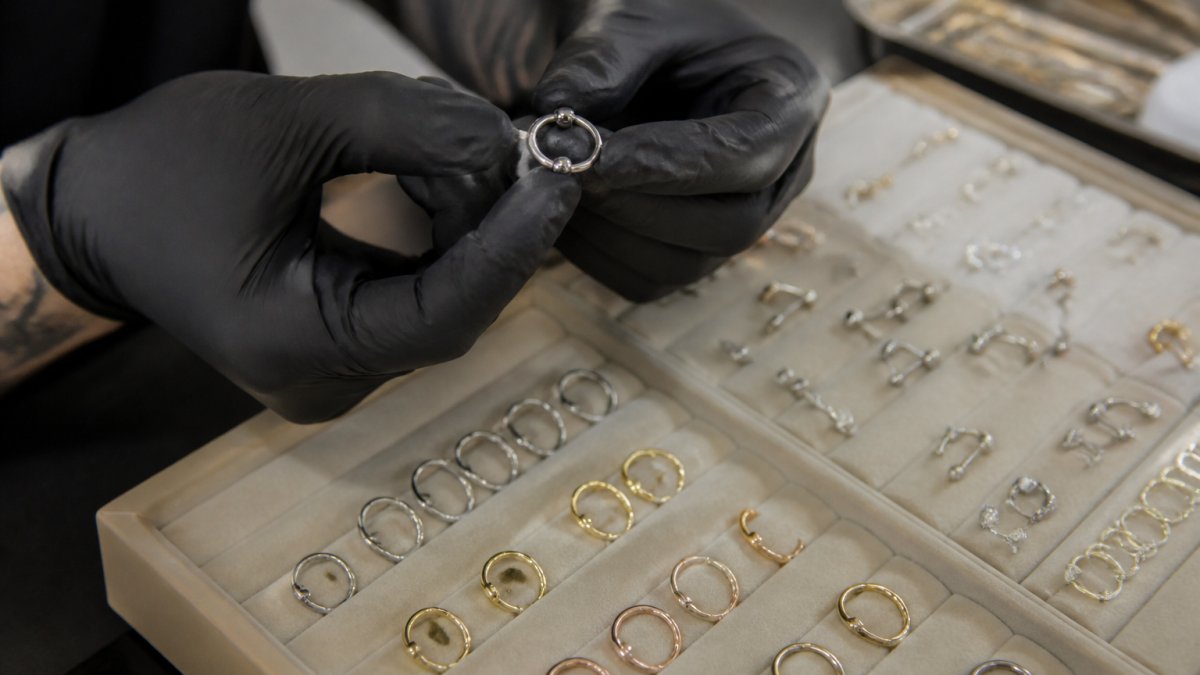
Understanding the nuances of sterling silver durability remains essential for anyone hoping to maintain the luster of their favorite pieces over years of consistent wear.
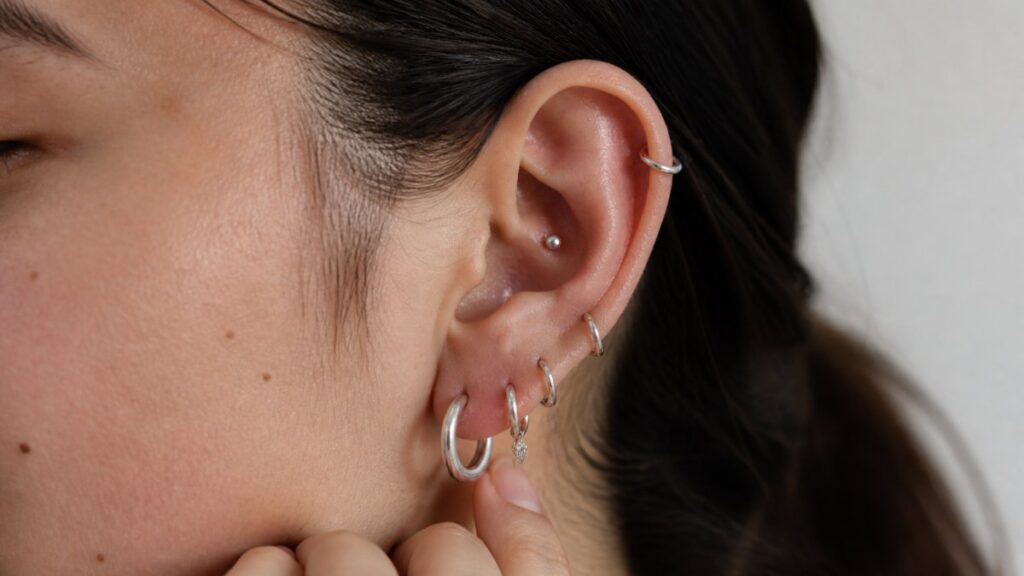
Sterling silver earrings for healed piercings are fine for most people, once the channel is fully closed and settled. That usually means 6-12 months for lobes, longer for cartilage.
| Metal | Safe for New Piercings | Safe for Healed Piercings | Notes |
|---|---|---|---|
| Implant-grade titanium | Yes | Yes | Lightweight, hypoallergenic |
| 14k/18k solid gold | Yes | Yes | Avoid plated gold |
| Niobium | Yes | Yes | Good for sensitive skin |
| Sterling silver | No | Usually | Can tarnish, soft metal |
| Surgical steel | Sometimes | Yes | Nickel risk for some |
If you want sterling silver, wait until the piercing is fully healed. Then watch for any reaction.
Conclusion
Sterling silver in piercings is a healed-piercing metal, not a healing one. If you’re unsure whether your piercing is ready, ask a professional before you swap.
At Sideshow Tattoo and Piercing, our team uses only quality jewelry for every piercing, matched to your skin and your stage of healing. We’re happy to check your piercing and recommend the right metal. Contact us to book a visit.
Frequently Asked Questions
Can you wear sterling silver in a new piercing?
No. Sterling silver piercings should stay out of a healing piercing. The metal contains copper that reacts with moisture and body fluids, and that reaction can discolor the skin around the piercing, a condition sometimes called argyria. Silver also scratches easily, and those tiny scratches trap bacteria. For a fresh piercing, stick with implant-grade titanium, 14k or 18k gold, or niobium until the site is fully healed.
Is sterling silver safe for healed ear piercings?
Once a piercing is fully healed, sterling silver earrings for healed piercings are generally fine for short wear. The fistula is closed and the skin is no longer an open wound, so the risk of irritation drops. Still, take them out before showering, swimming, or sleeping. Prolonged moisture exposure is what triggers the green or black staining silver is known for, and that stain can be hard to remove from skin.
How can you tell if piercing jewelry is irritating your skin?
Watch for redness that spreads beyond the piercing site, swelling that gets worse instead of better, a warm feeling around the jewelry, or a yellow-green discharge with a bad smell. Itching and a dry rash right where the metal touches skin often point to a metal sensitivity rather than an infection. If symptoms show up after switching jewelry, remove the piece and let a professional piercer look at it.