Last Updated: November 8, 2026
Quick Summary
Look for Pacific Beach piercing shops that sterilize tools, open needles in front of you, and never reuse them. Prioritize experienced piercers, implant-grade titanium or solid gold jewelry, and honest aftercare guidance before you book.
- Ask to see the sterilization setup and autoclave logs before committing to a studio.
- Implant-grade titanium suits fresh piercings and sensitive skin best.
- Earlobe piercings typically heal in 6-8 weeks; cartilage takes 6-12 months.
- Sort reviews by newest and search for words like autoclave, needle, and aftercare.
- Confirm deposit, ID, and minor policies by phone before your appointment.
Table of Contents
- What to Look for in Pacific Beach Piercing Shops
- Professional Piercing Jewelry: Materials That Heal Well
- Piercing Aftercare: What a Good Shop Teaches You
- Piercing Healing Time: What to Expect by Piercing Type
- How to Read Pacific Beach Piercing Shops Reviews
- Booking, Walk-Ins, and What to Ask Before You Commit
- Book Your Piercing Consultation at Sideshow Tattoo and Piercing
- Frequently Asked Questions
What to Look for in Pacific Beach Piercing Shops
Choosing among Pacific Beach piercing shops comes down to four things: sterilization practices, piercer experience, jewelry quality, and how honestly a studio explains aftercare. Get those right and the rest, from pricing to walk-in availability, is easier to judge.
A piercing studio is a licensed body art facility where a trained piercer uses sterile, single-use needles and implant-grade jewelry to create a hole in the body for decorative wear. The good ones treat that as a medical-adjacent procedure, not a quick retail transaction.
Below, we break down exactly how to compare Pacific Beach piercing shops so you can book with confidence instead of guesswork.
Safety and Sterilization Standards
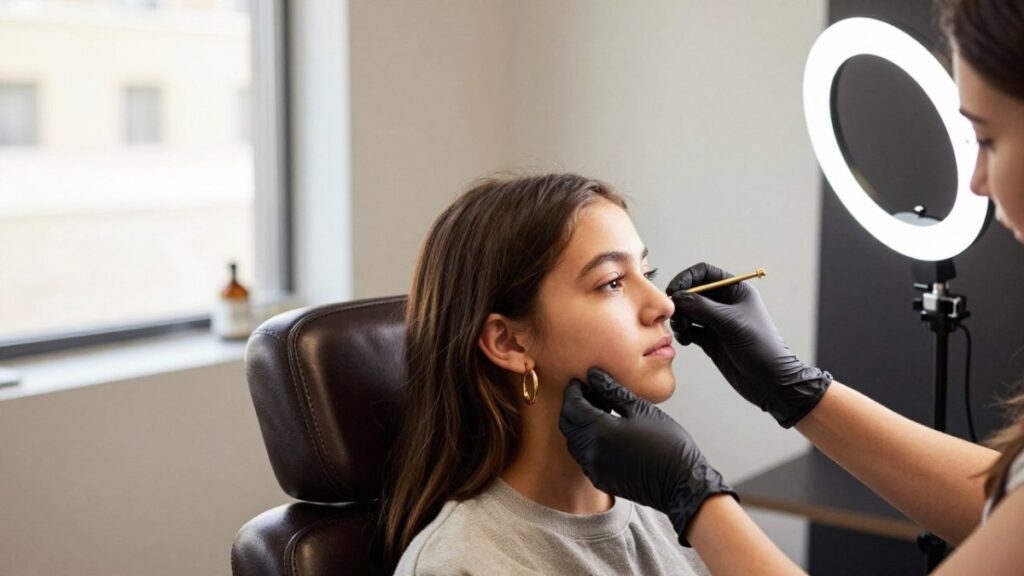
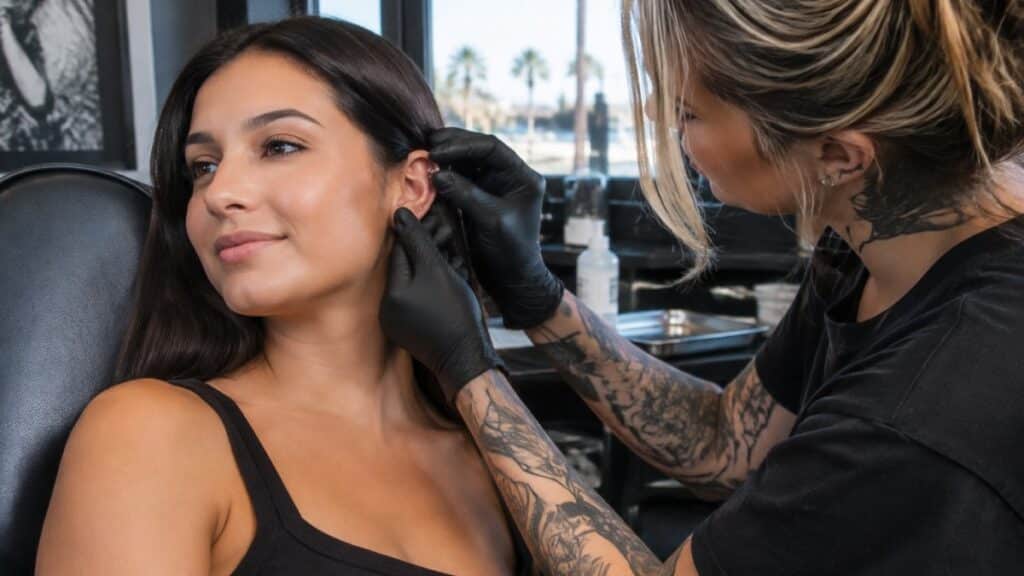
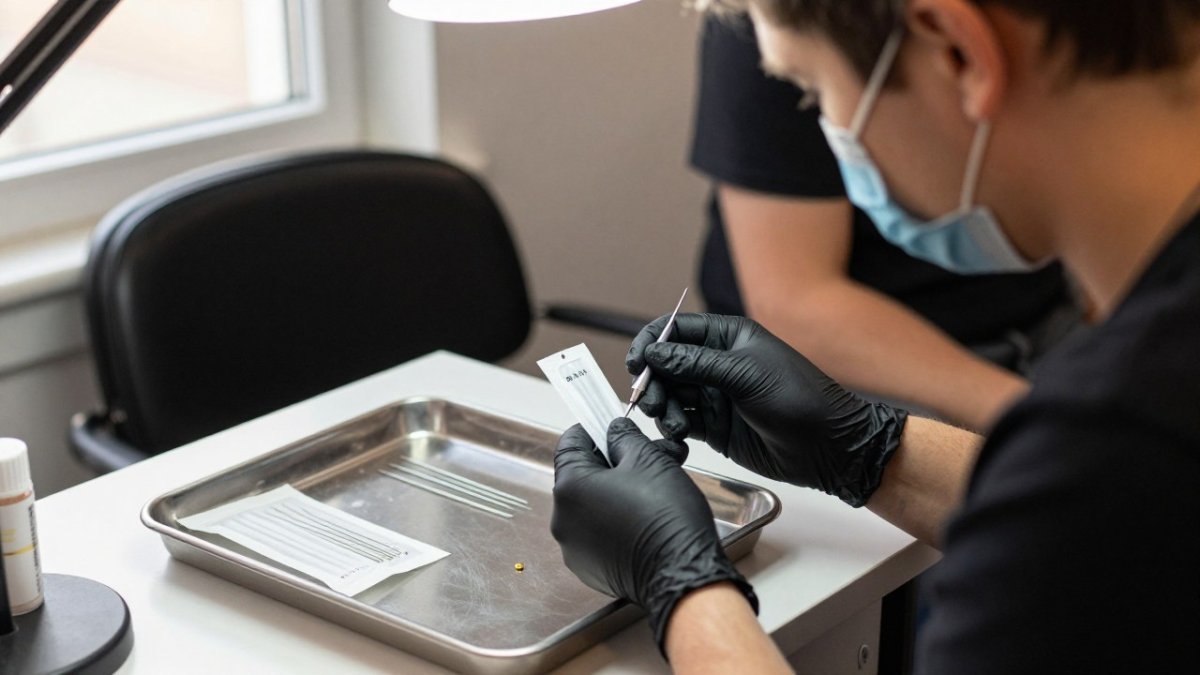
Safety is the first filter, and it is the one most people skip. A trustworthy studio sterilizes its reusable tools, opens needles and jewelry in front of you, and never reuses a needle. Gloves come off between clients, surfaces get disinfected, and sharps go into a proper container.
Ask to see the setup before you commit. If a shop hesitates to show you how tools are cleaned, that hesitation is your answer. For a deeper checklist of what separates a safe studio from a risky one, read our guide on the signs of a professional piercing studio you can trust.
Watch out: piercing guns are generally not recommended for cartilage, since they are difficult to fully sterilize and can cause more tissue damage.
Piercer Experience and Expertise
Experience shows up in the questions a piercer asks you. A skilled professional piercer checks your anatomy, explains placement options, and tells you when a piercing will not work well for your ear shape. They also know how to keep a nervous first-timer calm, which matters more than most people expect.
Look for a piercer who walks you through healing expectations before the needle comes out. That conversation is where expertise lives.
Professional Piercing Jewelry: Materials That Heal Well
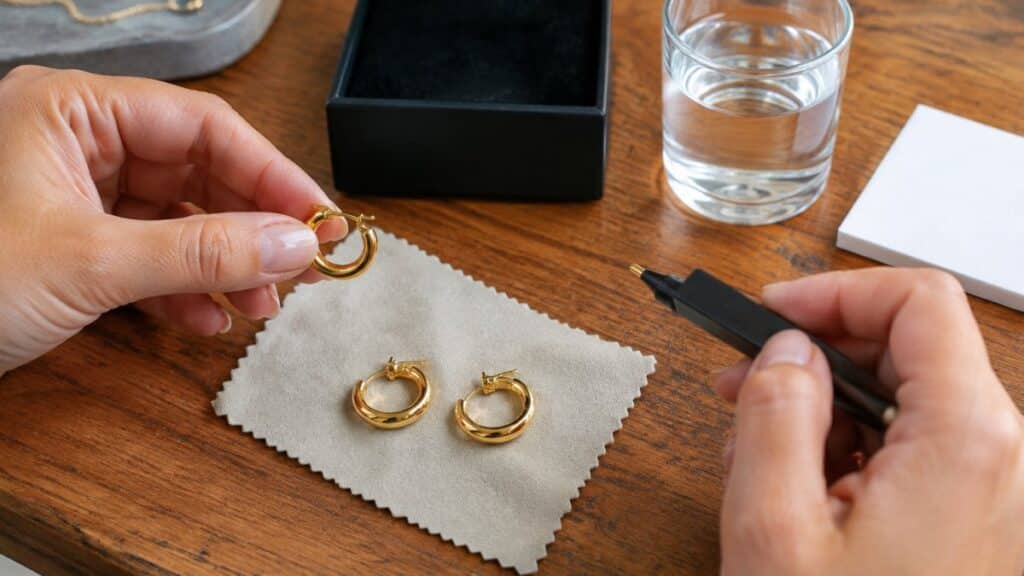
The right jewelry is the difference between a piercing that heals cleanly and one that stays irritated for months. Professional piercing jewelry should be implant-grade titanium, niobium, or solid gold, all of which are biocompatible and unlikely to trigger reactions. Cheap fashion jewelry often contains nickel, a common allergen that can cause swelling and bumps (the American Academy of Dermatology).
At Sideshow Tattoo and Piercing, we use only quality jewelry for all piercing services, because the metal stays in your body while the piercing heals. If you want specific guidance on gold options that suit sensitive skin, our breakdown of 14K gold piercing jewelry picks covers what to look for.
- Implant-grade titanium: lightest option, best for fresh piercings and sensitive skin
- Solid 14K or 18K gold: good for healed piercings and anyone who reacts to base metals
- Niobium: flexible and hypoallergenic, useful for certain placements
- Avoid: sterling silver in fresh piercings, plated metals, and anything labeled “surgical steel” without a grade
Piercing Aftercare: What a Good Shop Teaches You
Aftercare is where a great studio proves it cares about the outcome, not just the sale. A good shop sends you home knowing exactly how to clean the piercing, what to avoid, and when to come back. That means saline solution, clean hands, no twisting, and no swimming pools for the first stretch of healing.
You can follow our full suggested aftercare for body piercings at home, which covers cleaning, what to skip, and when to call your piercer.
Watch out: over-cleaning with harsh alcohol or hydrogen peroxide slows healing. Stick to sterile saline and leave the piercing alone otherwise.
Piercing Healing Time: What to Expect by Piercing Type
Piercing healing time varies widely by placement, and knowing the timeline helps you spot a problem early. Earlobe piercings tend to heal fastest, while cartilage and other body piercings take considerably longer. The table below gives a general guide, though your own healing depends on anatomy, aftercare, and jewelry fit.
| Piercing Type | Typical Healing Time | Notes |
|---|---|---|
| Earlobe | 6-8 weeks | Fastest to heal, good for first-timers |
| Helix / cartilage | 6-12 months | Slow, prone to irritation bumps |
| Tragus | 6-12 months | Needs careful cleaning around the ear canal |
| Nostril | 4-6 months | Watch for snagging on clothing |
| Navel | 6-12 months | Sensitive to friction from waistbands |
If you are weighing a specific ear piercing, our step-by-step guide on how to get a tragus piercing breaks down the process and healing expectations for that placement.
How to Read Pacific Beach Piercing Shops Reviews
That number tells you almost nothing on its own, because a shop with 40 reviews and a shop with 900 reviews are not giving you the same signal. What actually helps is knowing where the reviews live, what to search for inside them, and how to weigh what you find.
Start with where the reviews are. If you want a real read on a studio, cross-check at least two of these sources and look for the same complaint showing up in both.
Then sort by newest, not by “most relevant.” A studio can change ownership, swap out piercers, or loosen its sterilization routine, and a five-star cluster from three years ago will not reflect any of that. Read the last six to twelve months first. If the recent reviews read differently from the older ones, the recent ones are the truth.
Search the review text for specific words rather than skimming stars. Terms worth typing into the search box include “autoclave,” “needle,” “gloves,” “aftercare,” “infection,” “bump,” “rushed,” and “reused.” Reviews that mention a piercer by name, describe the jewelry that was used, or explain how a problem was handled are worth more than a paragraph of vague praise.
Pay close attention to how the studio responds to negative reviews. A response that explains what happened, offers a follow-up, and stays professional is a good sign even when the original complaint was serious.
Watch out: a perfect rating built on a small number of reviews is weaker evidence than a slightly lower rating built on hundreds, and a sudden burst of short five-star reviews posted within a few days is usually a promotion, not a pattern.
One more thing worth doing: message the shop before you book and ask a specific question, like which jewelry material they would recommend for a helix or how they handle irritation bumps. The speed and specificity of the reply is a preview of the appointment itself, and it costs you nothing to test.
Booking, Walk-Ins, and What to Ask Before You Commit
Booking is where a lot of piercings go sideways before the needle ever comes out. The practical details, like whether you need an appointment, whether a deposit is required, what ID you need to bring, and how long the wait actually runs, are the things most shop pages never spell out.
Appointments versus walk-ins. Appointment slots usually mean a dedicated piercer and a set time, which is worth having for anything beyond a lobe, since cartilage and body piercings take longer to mark and place. Walk-ins are fine for simple placements on a slow weekday afternoon but can mean a long wait on weekends.
Deposits and cancellation. Ask directly whether a deposit is required to hold an appointment and whether it is applied to the piercing or the jewelry. Also ask what happens if you need to reschedule. A shop that is clear about its deposit policy up front is usually clear about everything else.
Age and ID requirements. Rules for minors vary by studio, and most require a parent or legal guardian to be present in person with government-issued photo ID for both parties. Some studios will not pierce anyone under a certain age at all, and some limit which placements they will do on minors.
Accessibility and comfort. If you use a wheelchair, have a service animal, or need a quieter environment, ask whether the studio can accommodate you. This is rarely listed online, and a quick call saves a wasted trip.
What to ask before you commit:
- Do you use single-use hollow needles, and will you open the package in front of me?
- Which jewelry material do you recommend for my placement, and why?
- Can I see the sterilization area and the autoclave logs?
- Is a deposit required, and is it applied to the service or the jewelry?
- What ID do I need, and what is your policy for minors?
- How long is the typical wait for a walk-in on the day I plan to come?
- What does aftercare look like, and do you offer a follow-up check?
- What is your policy if the piercing has a problem during healing?
Watch out: a shop that will not give you a straight answer about its deposit, its ID policy, or its sterilization routine before you book is telling you something. Clear answers to these questions tell you more about a studio than any advertisement, and the ones that hesitate are usually the ones you want to skip.
Book Your Piercing Consultation at Sideshow Tattoo and Piercing
The best way to judge Pacific Beach piercing shops is to walk in and see how the team treats you. At Sideshow Tattoo and Piercing, our hand-picked professional artists match every client to the right placement and jewelry, we prioritize safety with quality jewelry for all piercing services, and we make first-timers and families feel comfortable from the first hello. Whether you want a curated ear, a simple lobe piercing, or a custom tattoo to go with it, we are ready to help.
Get started with Sideshow Tattoo and Piercing and book a consultation that puts safety and your comfort first. Reach out through our contact page to ask about availability and walk-in options.
Choosing a piercing studio is a decision about your body, and it deserves more than a quick scroll through star ratings. Sideshow Tattoo and Piercing offers hand-picked professional artists, a safety-first approach with quality jewelry, and a welcoming space for first-timers and families alike. Get started with Sideshow Tattoo and Piercing and book your visit today.
Frequently Asked Questions
What should I look for in a piercing shop?
Prioritize sterilization practices, piercer experience, and jewelry quality. Ask whether the shop sterilizes its tools, uses single-use needles, and offers implant-grade metals like titanium or 14k gold. Check that the piercer explains aftercare and healing time clearly before you commit. Reviews should mention cleanliness and customer care, not just design. A shop that answers your questions patiently and shows you its sterilization process is a better sign than one that rushes you.
Do Pacific Beach piercing shops accept walk-ins?
Many Pacific Beach piercing shops accept walk-ins, but availability varies by day and season. Call ahead or check the shop’s online booking page to confirm current walk-in hours. If you want a specific piercer or a complex piercing, booking an appointment is safer. Walk-ins work best for simple ear piercings on weekdays. Always bring a valid ID.
What jewelry materials are suitable for a new piercing?
Implant-grade titanium, niobium, and 14k or 18k solid gold are the safest choices for a new piercing. These metals resist corrosion and reduce irritation. Avoid cheap fashion jewelry, sterling silver in fresh piercings, and anything labeled nickel-free without a specific alloy listed. Professional piercing jewelry should have a smooth, polished surface and a secure closure. Ask the shop where its jewelry comes from and whether it is certified for initial piercings.
How long does a piercing take to heal?
Healing time depends on the piercing type. Earlobe piercings usually heal in several weeks, while cartilage and body piercings can take many months. Healing is not the same as being fully healed, so keep jewelry in and follow aftercare until a professional confirms it is ready to change. Cleaning twice daily with sterile saline and avoiding touching the jewelry speeds the process.