Table of Contents
- Top Body Parts for Large Scale Tattoos
- How to Choose Tattoo Placement for Your Design
- Large Tattoo Pain and Healing by Location
- Frequently Asked Questions
Last Updated: October 13, 2026
Top Body Parts for Large Scale Tattoos
Large scale tattoos demand careful thought about placement. Your body’s curves, movement, and how designs flow all matter. At Sideshow Tattoo and Piercing, we match your vision to the right spot.
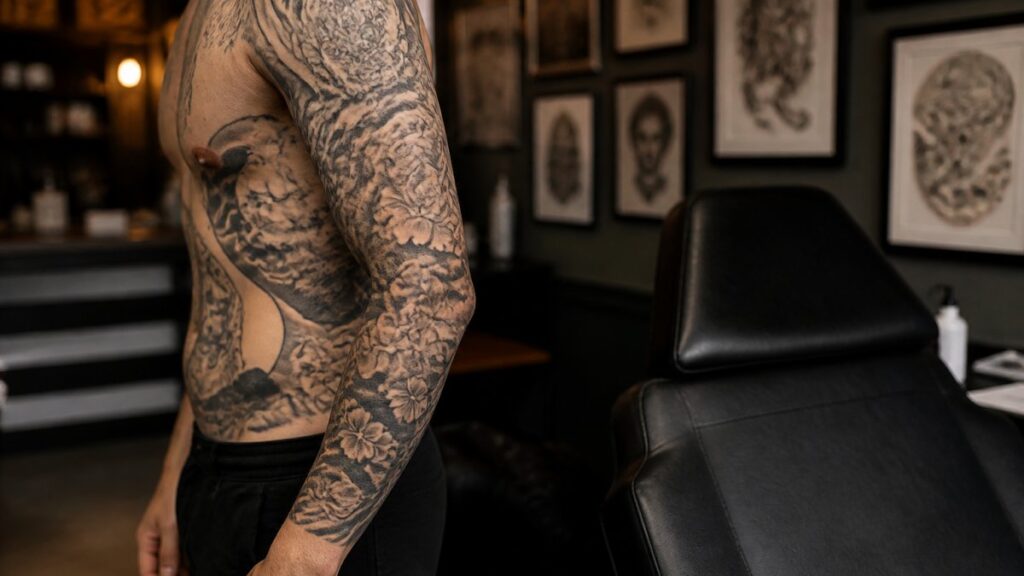
The back is the top choice for large tattoo work, a wide, flat canvas that lets designs breathe. Sleeves wrap the arm with natural flow, while chest and thighs offer coverage on your terms.
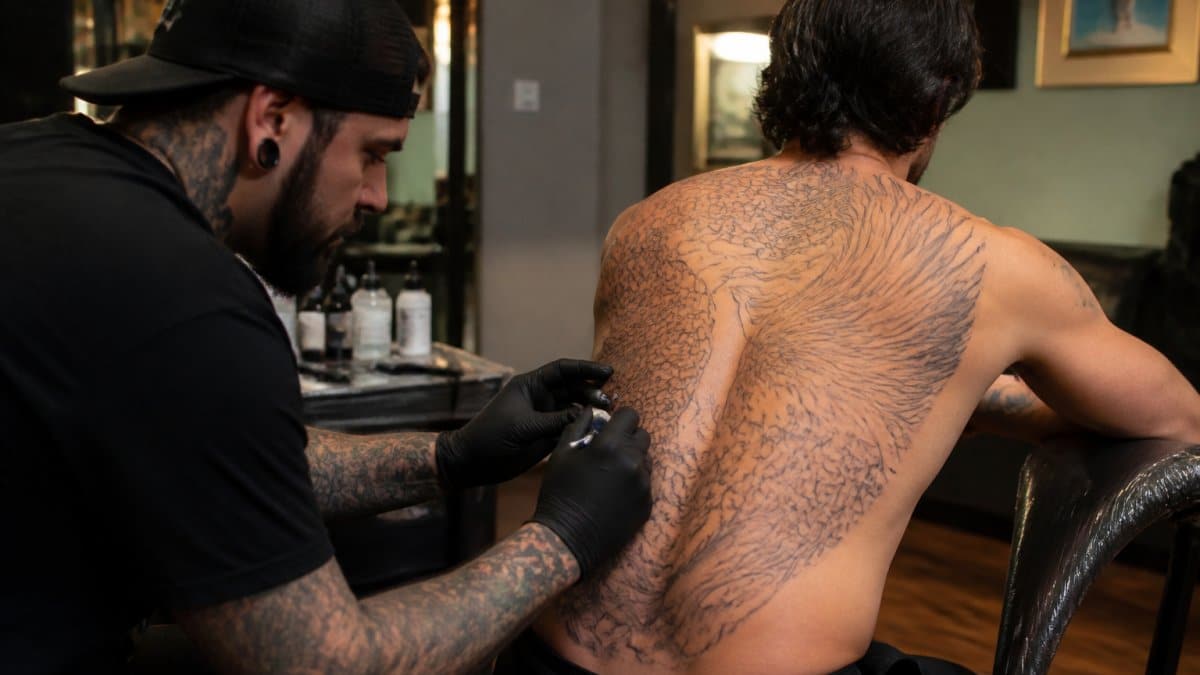
The back gives you the most real estate, spanning shoulder to shoulder and down the spine. Shoulder blades frame geometric or Japanese designs; the spine anchors the composition.
Sleeves wrap from shoulder to wrist and take multiple sessions. The bicep suits medium to large designs; forearm work shows more day-to-day, so weigh visibility.
Chest and torso let you go big without full commitment. A piece can span both pecs with the sternum as centerline, visible in summer, easy to cover professionally.
Thigh and leg pieces offer a long vertical canvas. The thigh is thick and forgiving, less visible day-to-day but great for bold work; the calf limits size.
The best placement matches three things: your design’s flow, your body’s natural contours, and how visible you want the work to be. Talk to your artist about how the design will move with your body before you commit.
How to Choose Tattoo Placement for Your Design
Start with your design’s shape and style. Geometric designs suit flat surfaces like the back or chest; organic, flowing designs adapt to curved areas like the shoulder or thigh.
Decide if you want it visible daily or hidden. Forearm and hand work shows constantly; back and thigh stay private; chest splits the difference.
Consider how your body may change. Muscle growth, weight shifts, and aging affect how tattoos sit; the back and thighs age more gracefully than areas that swell or shrink.
Think about pain and healing: bonier areas hurt more, fleshy areas like the thigh heal cleaner. Multiple sessions mean returning to the same spot, so choose somewhere you’ll be comfortable revisiting.
Placement near joints, elbows, knees, wrists, means more movement during healing. This can blur fine details. If your design has intricate linework, pick a more stable area.
Large Tattoo Pain and Healing by Location
Pain varies by body part. Bonier areas with thin skin hurt more, ribs, collarbone, and spine rank high, while fleshy areas like the thigh and upper arm hurt less.
Back and shoulders fall mid-range: muscle cushions some pain, but the spine is sensitive. Most find it tolerable for long sessions.
Chest pain depends on proximity to bone. The outer chest hurts less than the sternum. Expect moderate discomfort.
Thigh and upper arm are among the least painful; thick muscle and fat absorb needle vibration, making them easiest to sit through.
Healing depends more on placement than pain. Less movement heals cleaner, the back heals well, while forearms and hands move all day, slowing healing and blurring details.
Keep the area clean and dry, and avoid friction from tight clothing or repeated motion. Most large pieces heal within 2-3 weeks on the surface, though deep color settles for months.
| Body Part | Pain Level | Healing Speed | Best For |
|---|---|---|---|
| Back | Moderate | Fast | Large pieces, sleeves |
| Chest | Moderate to High | Moderate | Medium to large designs |
| Upper Arm | Low to Moderate | Fast | Sleeves, medium work |
| Thigh | Low | Fast | Large designs, long pieces |
| Forearm | Moderate | Slower | Visible work, medium size |
| Ribs | High | Moderate | Smaller designs |
Choosing the right placement sets your large scale tattoo up for success. The best spot matches your design’s flow, your lifestyle, and your comfort with pain and healing. When you’re ready to move forward, Sideshow Tattoo and Piercing connects you with artists who specialize in large pieces and understand how to make your vision work with your body. American Academy of Dermatology guidance on tattoo safety recommends working with licensed professionals to minimize infection risk. Reach out to discuss your design and find the placement that’s right for you.
Frequently Asked Questions
What is considered a large scale tattoo?
A large scale tattoo typically covers significant body area, generally anything larger than a few inches across. These designs span multiple body parts or take up most of a major canvas area like the back, chest, or full leg. Large scale tattoos often require multiple sessions and demand careful placement planning to ensure the design flows naturally with your body’s anatomy and curves.
Which body parts work best for large tattoos?
The back, chest, thighs, and upper arms offer the most space and flattest surfaces for large designs. These areas have fewer natural curves that distort imagery and provide enough canvas for complex compositions. Sleeves work well too, though they require thoughtful planning to ensure each section connects smoothly as the design wraps around your arm’s natural contours.
How do body movement and skin changes affect large tattoo placement?
Joints and areas prone to stretching, like the inner elbow or knee, can distort large designs over time. Body weight fluctuations, pregnancy, and aging affect how tattoos appear on the chest, abdomen, and thighs. Placement on areas with less movement, like the back or outer thigh, tends to age better and maintain the artist’s original composition longer.