Table of Contents
- What Makes a Tattoo Artist Reputable
- How to Do a Tattoo Artist Portfolio Review
- Tattoo Shop Safety Standards You Should Verify
- Questions to Ask a Tattoo Artist Before Booking
- Matching the Artist’s Style to Your Vision
- Budgeting for a Reputable Tattoo Artist
- Red Flags That Signal a Bad Tattoo Artist
- Conclusion
- Frequently Asked Questions
Last Updated: September 23, 2026
What Makes a Tattoo Artist Reputable
A reputable tattoo artist is a licensed professional whose work heals cleanly, whose studio follows health department rules, and whose portfolio shows consistent results across many clients. If you want to know how to find reputable tattoo artist talent, start with three things: valid licensing, a deep portfolio, and a clean shop. Miss any one of those, and you’re gambling with your skin.
How to Do a Tattoo Artist Portfolio Review
A strong tattoo artist portfolio review means judging finished, healed work, not just fresh photos. Ask to see pictures taken weeks or months after the session. Fresh tattoos always look sharp, the skin is still inflamed, the ink is at peak saturation, and a ring light hides almost everything. Healed ones tell the truth.
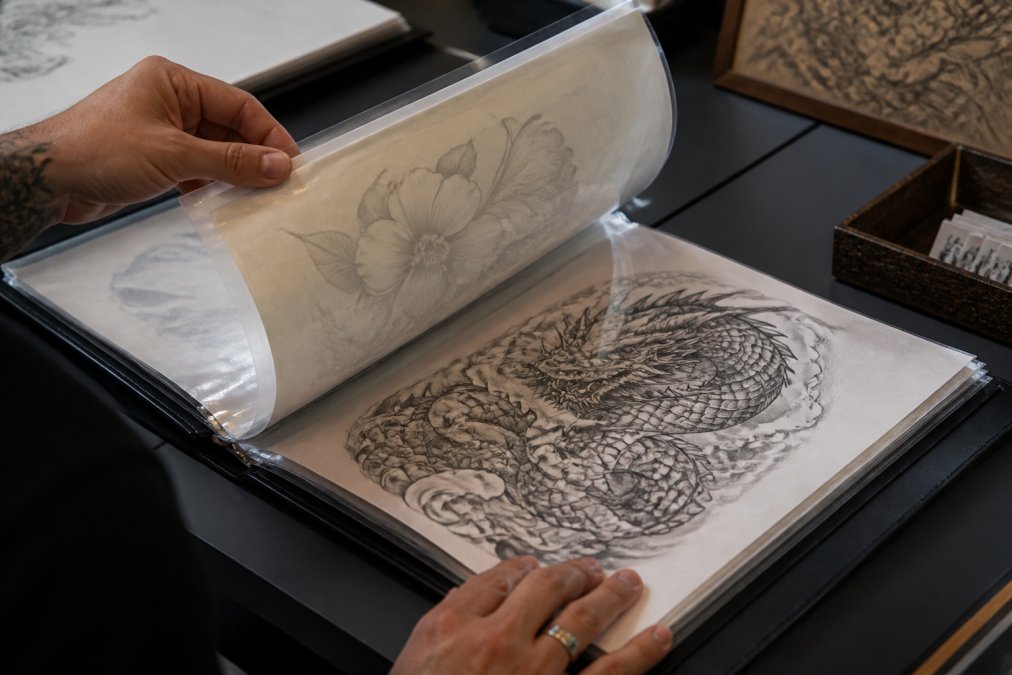
- Instagram and social feeds reward the freshest, most filtered shot. Treat them as a highlight reel, not a record.
- A studio portfolio book or tablet is curated by the artist, so ask how old each photo is.
- Google and Yelp review photos are posted by clients, often months later, which makes them the closest thing to an honest healed gallery.
Healed vs. Fresh Work: What to Look For
Healed tattoos show how ink actually settles into skin. Once the top layer has shed and the ink has been taken up by the dermis, the tattoo you see is the tattoo you keep. Compare the two stages side by side and you can read an artist’s real skill:
- Line work: healed lines should stay crisp and consistent in width. Lines that look thicker, softer, or blurry after healing are a sign of blowouts, ink pushed too deep into the skin.
- Saturation: black should stay black, not gray or patchy. Color should hold its hue rather than fade toward a muddy tone.
- Edges: clean borders stay clean. Feathering or halo-like spreading around a shape is a healing problem, not a lighting problem.
- Consistency across placements: arms and legs heal differently than ribs, hands, or feet. An artist who only shows healed work from easy placements may be hiding results from harder ones.
Reading Line Work and Shading Quality
Zoom in before you judge. On a phone, pinch to enlarge the photo and look at the thinnest lines first, that is where wobble, doubling, and inconsistent pressure show up. Then check shading: smooth gradients should transition without banding or hard edges, and packed black should look solid rather than speckled.
A few concrete things to look for:
- Symmetry and geometry: circles should be round, straight lines straight. Small distortions are hard to unsee once tattooed.
- Lettering: spacing should be even and the baseline level. Lettering is unforgiving because there is no shading to hide behind.
- Detail at scale: fine detail that looks impressive on a phone screen may blur within a year. Ask how the design will age at its actual size on your body.
- Style range vs. depth: an artist who does one style exceptionally well usually beats a generalist who does everything adequately. Match the portfolio to the style you want, not to the widest menu.
Ask for the Same Tattoo Over Time
The single most useful request you can make is for photos of one tattoo at multiple points, fresh, healed at a few weeks, and a year or more out. That sequence shows how the artist’s work holds up, which is the only question that matters for something permanent.
Tattoo Shop Safety Standards You Should Verify
Tattoo shop safety standards cover licensing, sterilization, and disease prevention. Any shop you visit should display its license and pass local health inspections. The CDC guidance on bloodborne pathogens explains why this matters: unsafe practices can spread serious infections.
Check for these basics:
- Single-use needles opened in front of you
- An autoclave for sterilizing tools
- Gloves changed between tasks
- A clean, organized work area
Licensing, Sterilization, and Bloodborne Pathogens
Every artist should hold a current license and complete bloodborne pathogens training. The OSHA bloodborne pathogens standard sets the rules that protect both artists and clients. Ask to see the license. A reputable artist won’t mind showing it.
Never book with an artist who won’t show a license or opens sealed needles out of your sight. Reused or improperly sterilized equipment can transmit hepatitis and other infections.
Questions to Ask a Tattoo Artist Before Booking
The best questions to ask a tattoo artist before booking cover experience, hygiene, process, and the logistics of actually getting on the calendar. A short consultation saves you from a permanent mistake, and from a deposit you cannot get back.
Experience and Skill
- How long have you been tattooing, and how long in this specific style?
- Can I see healed examples of this style, not just fresh ones?
- Have you done a custom design like mine before, or would you adapt an existing piece?
- How do you handle a design that needs to change after the stencil is on?
Listen for specifics. An artist who names the styles they focus on and the ones they turn away is being honest about their lane. Vague or pushy answers are a warning.
Hygiene and Safety
- Is your license current, and can I see it?
- Do you use single-use needles and open them in front of me?
- How are tubes and grips sterilized, and do you have an autoclave log?
- What is your policy if I have a skin condition, an allergy, or a history of keloids?
A reputable artist will answer these without irritation. The CDC guidance on bloodborne pathogens explains why the questions matter, and the OSHA bloodborne pathogens standard sets the rules that protect both artists and clients.
Booking, Deposits, and Design Revisions
This is where most guides stop, and where most first-timers get surprised. Ask before you pay anything:
- Deposit: How much is it, what does it apply toward, and is any part refundable if plans change?
- Rescheduling: How much notice do you need, and does the deposit carry over or reset?
- Design revisions: How many rounds of changes are included before the deposit is considered earned?
- Timeline: How far out are you booked, and how long should I expect the session to run?
- Touch-ups: Do you offer a free or discounted touch-up window, and how long does it last?
Aftercare and Expectations
- What aftercare do you recommend, and do you provide written instructions?
- What does normal healing look like at each stage, and when should I call you?
- What should I avoid, sun, swimming, gym, certain products, and for how long?
Ask how the artist prefers to be contacted if something looks wrong during healing. A clear answer here tells you they stand behind their work.
Bring your questions in a note on your phone. Consultations move fast, and it is easy to forget the deposit and touch-up terms once you are excited about the design.
What Good Answers Sound Like
Clear, patient responses signal professionalism. The artist should be able to explain their process in plain language, tell you what they are not the right fit for, and put the booking terms in writing without pressure. If any answer is evasive, especially about licensing, deposits, or touch-ups, treat it as a reason to keep looking.
Matching the Artist’s Style to Your Vision
Style match matters more than shop location. A talented artist who doesn’t work in your style will produce a weaker result. Bring reference images and describe what you want. Ask if they’ve done similar custom design work before.
Bring three to five reference photos, not just one. It helps the artist understand the range you want and spot details a single image would hide.
Budgeting for a Reputable Tattoo Artist
Tattoo pricing depends on size, detail, placement, and the artist’s experience. Most shops charge an hourly rate or a flat rate per piece, and many require a deposit to hold your appointment. Because costs vary so much by project, ask your artist for a quote based on your specific design rather than relying on general figures.
A few money-saving truths:
- Cheap work often costs more to fix later
- Good artists book out in advance
- Deposits usually go toward your final price
| Factor | What to Check | Why It Matters |
|---|---|---|
| Licensing | Current, displayed license | Legal and safety proof |
| Portfolio | Healed photos, consistent style | Real skill, not filters |
| Hygiene | Autoclave, fresh needles | Prevents infection |
| Consultation | Clear answers, patience | Fits your vision |
| Reviews | Repeat clients, referrals | Proven reputation |
Red Flags That Signal a Bad Tattoo Artist
Walk away if an artist pressures you, skips the consultation, or can’t show healed work. Other red flags include a dirty studio, cash-only demands with no receipt, and prices that seem too low for the size.
The clearest red flag is a refusal to answer safety questions. Reputable artists welcome them because they protect everyone.
Conclusion
Finding the right artist takes patience, but it protects you for life. Sideshow Tattoo and Piercing offers hand-picked professional artists matched to your needs, a clean and safe piercing environment, and high-quality jewelry for lasting results. We focus on both the tattoo and the full experience, so first-timers and seasoned collectors alike feel comfortable. Contact Sideshow Tattoo and Piercing to book a consultation and get a design built around your vision.
Frequently Asked Questions
How do you know if a tattoo artist is reputable?
Check their portfolio for healed work, verify their license and the shop’s health permits, and read client testimonials across multiple platforms. A reputable tattoo artist will have consistent line work and shading across different pieces, can explain their sterilization process, and won’t pressure you into booking. Ask about their experience with your specific style and whether they show healed photos alongside fresh ones.
What should I look for in a tattoo shop’s health and safety standards?
Look for single-use needles, autoclave sterilization, and proper sharps disposal. The shop should display health department permits and each artist should hold a current license. Artists must wear gloves and use barrier film on equipment. Ask whether they follow bloodborne pathogen training requirements. A clean, well-lit station with sealed supplies opened in front of you is a strong sign of proper tattoo shop safety standards.
What questions should I ask during a tattoo consultation?
Ask how long the artist has worked in your desired style, whether they draw custom designs or use flash art, and how they handle revisions to the stencil. Confirm their deposit policy and cancellation terms. Ask about aftercare instructions and whether follow-up touch-ups are included. Request to see healed examples of similar work. These questions to ask a tattoo artist before booking help you judge both skill and professionalism.
How can I tell if a tattoo artist’s portfolio is authentic?
Look for healed photos, not just fresh ones. Healed tattoos show true line quality and color saturation after the skin settles. Check that the portfolio shows a range of placements and skin tones, not just one flattering angle. Reverse-image search a few pieces to confirm they aren’t copied. Ask the artist to walk you through a specific piece and explain their process. An authentic tattoo artist portfolio review includes consistency across years of work.