Table of Contents
- Signs of a Professional Piercing Studio: Sterile Tools and Single-Use Needles
- Piercing Jewelry Materials Guide: Implant-Grade Titanium and Beyond
- Questions to Ask Your Piercer and Piercing Aftercare Best Practices
- Frequently Asked Questions
Last Updated: October 2, 2026
Signs of a Professional Piercing Studio: Sterile Tools and Single-Use Needles
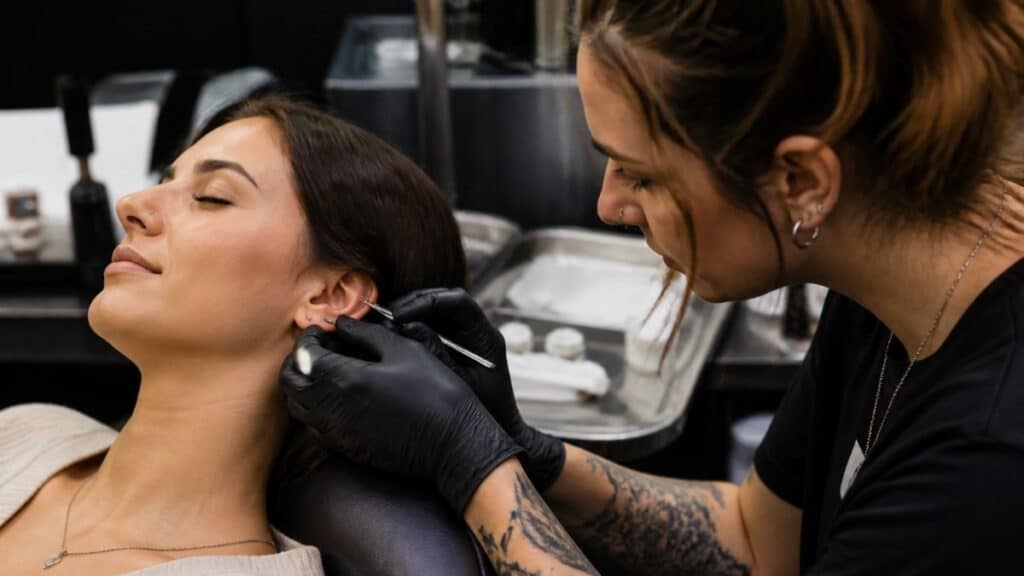
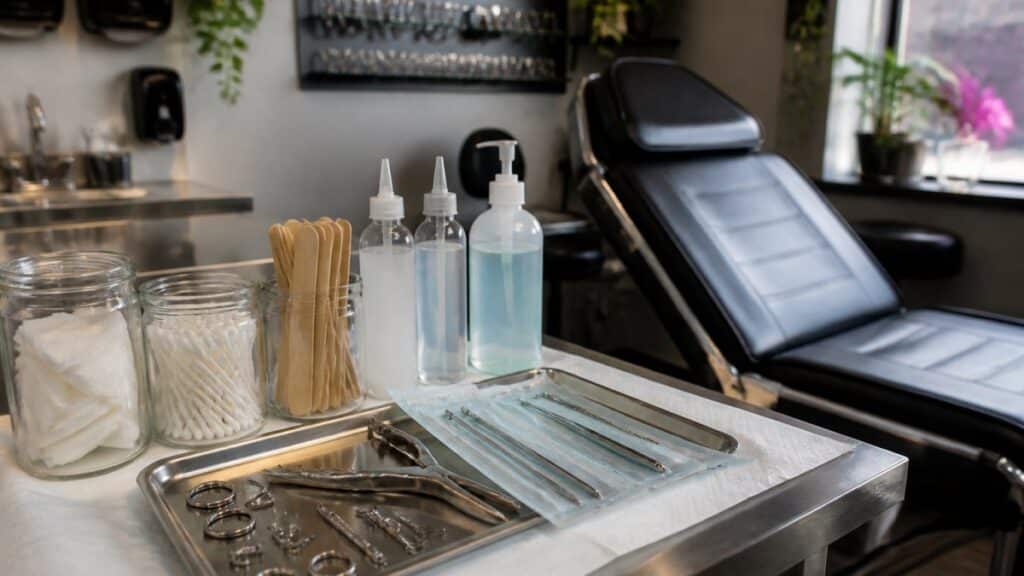
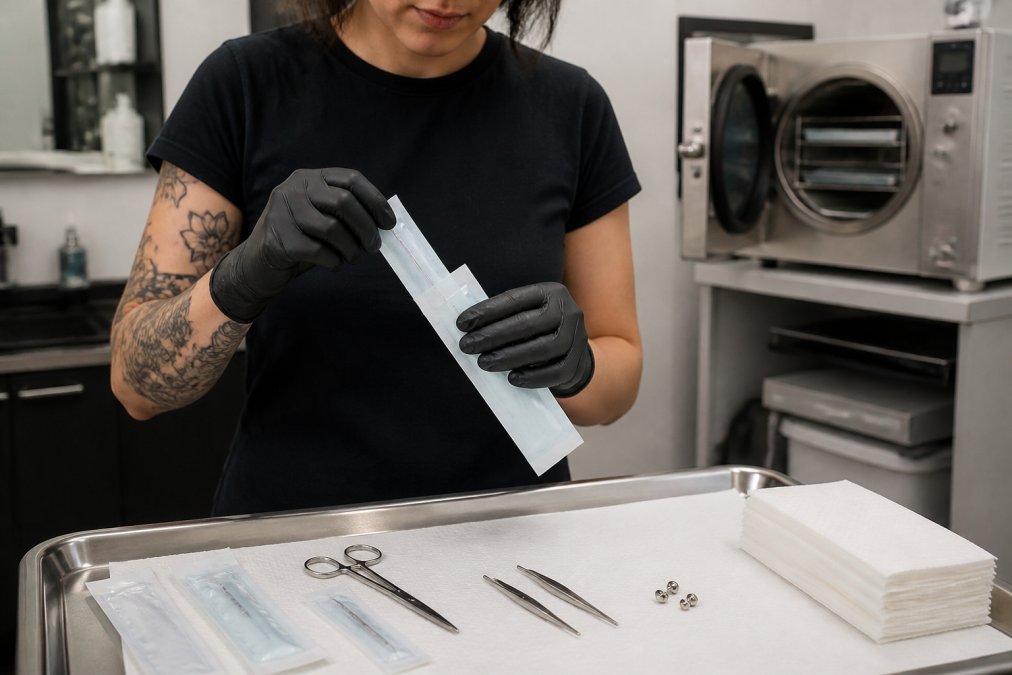
The clearest sign of a professional piercing studio is a piercer who opens a sealed, single-use needle in front of you. Every tool touching your skin should be sterile.
Watch for sealed needle pouches with indicators, an autoclave with spore testing logs, gloves changed between steps, and a clean procedure area.
A piercing gun is the biggest red flag: guns cannot be fully sterilized and force blunt jewelry through tissue, causing more trauma and slower healing.
Cross-contamination is the risk behind every shortcut. When a studio skips spore testing or reuses a needle, bacteria can move from one client to the next. The CDC guidance on safe injection practices explains why single-use equipment matters in any setting where skin is broken.
If a piercer reaches for a gun or a pre-opened needle, walk out. You cannot verify that tool was ever sterile, and an infection can follow.
Piercing Jewelry Materials Guide: Implant-Grade Titanium and Beyond
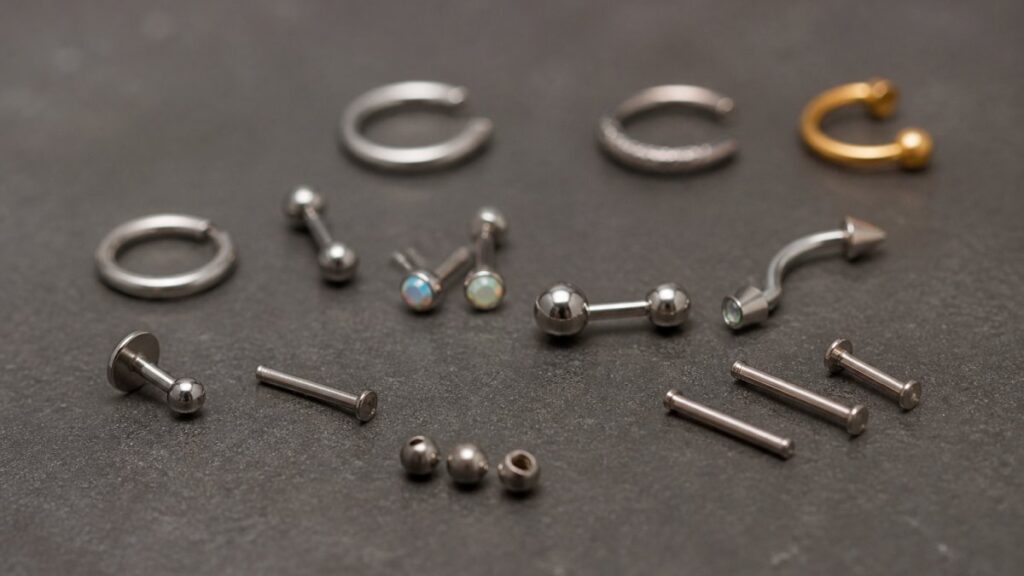
Implant-grade titanium is the safest starting metal: biocompatible, lightweight, rarely allergenic. Surgical steel, niobium, and 14k or 18k gold also work when they meet ASTM standards.
Material matters more than design. Cheap jewelry often contains nickel, a common irritant, while a professional piercing studio stocks jewelry it can name and trace.
| Material | Best For | Watch Out For |
|---|---|---|
| Implant-grade titanium | Fresh piercings, sensitive skin | Higher cost |
| Surgical steel | Healed piercings | May contain nickel |
| Niobium | Allergy-prone clients | Limited color options |
| 14k/18k gold | Healed piercings, style | Must be nickel-free |
| Bioflex | Surface piercings | Not for long-term wear |
Fit matters too: a too-tight ring cuts off blood flow, and a too-short stud can embed in swelling tissue. Once swelling drops, your piercer swaps in a shorter post.
Ask to see the jewelry packaging. Quality studios keep jewelry in sealed, labeled pouches that list the metal and grade. No label usually means no guarantee.
Questions to Ask Your Piercer and Piercing Aftercare Best Practices
A short list of questions tells you more than any review page: licensing, training, needle use, jewelry material, and what happens if something goes wrong.
Use this checklist at your consultation:
- Are you licensed and trained in bloodborne pathogens?
- Do you use single-use needles only?
- What jewelry material and aftercare do you recommend?
- When should I come back for a check-up?
The consultation itself is a sign: a good piercer studies your anatomy before marking, checks placement, and explains the risks.
Aftercare is where most piercings succeed or fail. Clean with a sterile saline solution, avoid touching the site, and skip pools and hot tubs while it heals. Do not twist or rotate the jewelry. If you see spreading redness, pus, or fever, contact a doctor. The FDA advice on tattoo and piercing safety covers infection signs worth knowing.
Healing timelines vary: earlobes heal faster than cartilage, which can take months. Follow-ups catch migration or rejection early, and a professional piercing studio schedules that follow-up instead of sending you home to hope for the best. Maintaining this level of diligence requires a studio to prioritize rigorous infection control practices that extend well beyond the initial appointment.
The two signs that matter most: a fresh needle opened in front of you, and jewelry you can trace to a known material. Everything else follows from those.
Frequently Asked Questions
What should I look for in a professional piercing studio?
Look for single-use needles opened in front of you, an autoclave with spore testing logs, and implant-grade titanium or niobium jewelry. A clean, separated procedure room, a piercer who performs an anatomy assessment, and clear aftercare instructions are also strong indicators. If a shop uses a piercing gun or reusable needles, walk away.
Should a professional piercer use a piercing gun?
No. Piercing guns force blunt jewelry through tissue, causing more trauma than a hollow single-use needle. Guns also cannot be fully sterilized in an autoclave, which raises the risk of cross-contamination. A professional piercing studio always uses single-use needles and follows aseptic technique.
How do I verify a piercer’s credentials?
Ask about their training, bloodborne pathogen certification, and years of experience. Review their portfolio for healed work and consistent placement. A legitimate piercer will welcome questions about sterilization, jewelry quality, and their process, and will provide informed consent before any procedure.
Choosing a piercer is a trust decision, and the wrong shop can cost you weeks of healing or a scar. Sideshow Tattoo and Piercing takes that risk off the table with hand-picked artists, a safety-first process, and only quality jewelry for every piercing. Whether it is your first piercing or your child’s ear piercing, our team makes the visit calm and comfortable. Get started with Sideshow Tattoo and Piercing and book a piercing you can feel good about.