Table of Contents
- What Drives the Cost of Implant Grade Titanium Jewelry
- Implant Grade Titanium vs Surgical Steel: Price and Safety
- ASTM F-136 Titanium Standards and Certification
- Frequently Asked Questions
Last Updated: September 30, 2026
What Drives the Cost of Implant Grade Titanium Jewelry
Four things drive the cost of implant grade titanium jewelry: material grade, machining and finish, threading style, and where you buy it. Cheap online jewelry often tarnishes, irritates the piercing channel, or fails to thread.
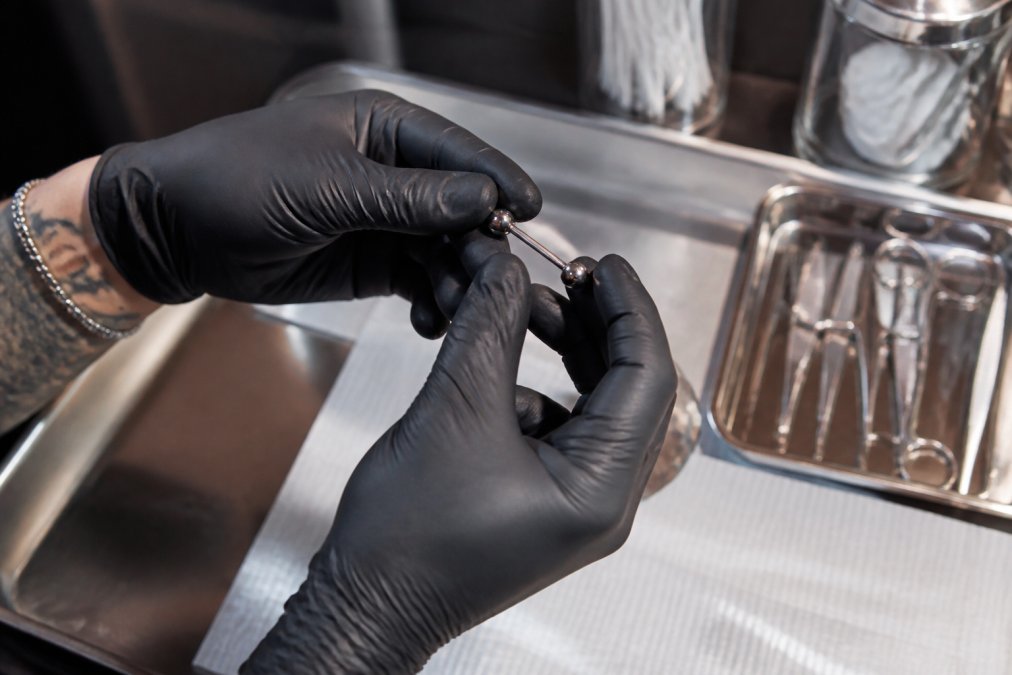
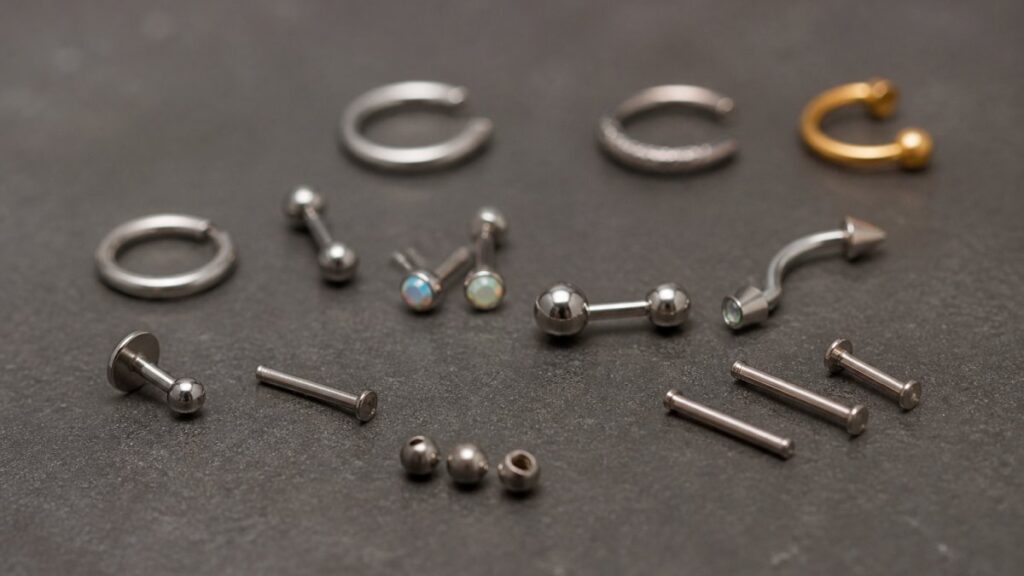
Material grade comes first: implant grade titanium meets a recognized medical standard, while cheaper “titanium” may never have been certified. Manufacturing matters next: a smooth-polished segment clicker or circular barbell takes more labor than a rough-cast piece, and polishing removes bacteria-trapping imperfections. Threading style changes the price: internally threaded jewelry slides through without scraping, while externally threaded pieces can catch tissue. Where you buy shapes the final number: a studio stocking certified jewelry carries different overhead than an untraceable marketplace listing. Understanding the titanium material value inherent in these rigorous standards provides a useful framework for evaluating the long-term durability of other high-performance accessories like a titanium watch.
| Cost Factor | What It Affects | Why It Matters |
|---|---|---|
| Material grade | Base price of the metal | Certified alloy costs more than generic titanium |
| Manufacturing and finish | Labor per piece | Smooth polish protects a healing piercing |
| Threading style | Production complexity | Internal threads reduce tissue trauma |
| Retail channel | Final markup | Certification and accountability add cost |
Ask to see the mill certificate before you buy. A reputable studio keeps supplier documentation on hand and will show it without hesitation. If the answer is “we don’t have that,” treat it as a signal.
Implant Grade Titanium vs Surgical Steel: Price and Safety
Implant grade titanium usually costs more than surgical steel, and the gap is worth it for sensitive skin or a fresh piercing. Surgical steel covers many stainless alloys, some containing nickel, a common trigger for irritation and allergic reaction. Implant grade titanium is lighter, and certified grades are nickel-free within standard limits, the safer bet for a hypoallergenic option, an initial piercing, or sensitive ears. A heavy steel hoop in a healing cartilage piercing can migrate or reject; titanium’s lighter weight reduces that pull.
| Feature | Implant Grade Titanium | Surgical Steel |
|---|---|---|
| Weight | Light | Heavier |
| Nickel content | Nickel-free within standard limits | Varies; may contain nickel |
| Best for | Fresh piercings, sensitive skin | Healed piercings, tolerant skin |
| Relative cost | Higher | Lower |
| Corrosion resistance | High | Moderate |
Don’t judge jewelry by the label alone. “Titanium” on a package means nothing without a grade and a standard behind it. Buying uncertified metal for a fresh piercing is a common mistake, and the consequence can be irritation that takes weeks to settle.
ASTM F-136 Titanium Standards and Certification
ASTM F-136, published by ASTM International, separates real implant grade titanium from everything else. It covers the Ti-6Al-4V ELI alloy and sets limits on composition and mechanical properties; the related ASTM F-67 covers commercially pure titanium. Both matter for material safety, but they aren’t interchangeable. Certification verification is the part buyers skip: a mill certificate traces a batch back to its source and confirms it meets the standard. Anodized finishes change surface color electrically without a coating that can flake; PVD coating is a deposited layer that can wear or chip on a healing piercing.
| Standard | Covers | Typical Use |
|---|---|---|
| ASTM F-136 | Ti-6Al-4V ELI alloy | Implant grade body jewelry |
| ASTM F-67 | Commercially pure titanium | Implant grade body jewelry |
| No standard | Unspecified titanium | Decorative or costume jewelry |
The single most useful question you can ask before buying is which standard the jewelry meets. A piece backed by ASTM F-136 or F-67 comes with traceable documentation. A piece without a named standard is a gamble on your healing piercing.
Choosing jewelry for a fresh piercing is a decision about your body, not just your budget, the metal, finish, and certification shape how well it heals. Sideshow Tattoo and Piercing stocks quality jewelry for every piercing service, pairs clients with hand-picked professional artists, and keeps the focus on a safe, comfortable experience from consultation through aftercare. Contact Sideshow Tattoo and Piercing to talk through your options and get jewelry that’s worth keeping.
Frequently Asked Questions
How much does implant grade titanium jewelry cost?
The cost of implant grade titanium jewelry depends on the piece type, threading style, finish, and where you buy it. Simple studs and hoops sit at the lower end, while segment clickers, circular barbells, and anodized pieces cost more. Piercing studios price jewelry to include quality verification and a sterile environment, which affects the total. Ask your piercer for a current quote based on the specific piece you want.
Is implant grade titanium good for piercings?
Yes. Implant grade titanium is biocompatible, nickel-free in the common ASTM F-136 grade, and resists corrosion, which supports the healing process for an initial piercing. It is lighter than surgical steel and works well for sensitive ears and other body jewelry placements. Many piercers choose it as a default because it lowers the risk of irritation during healing.
Does the cost of jewelry include the piercing service?
Not always. Some studios bundle the piercing service and basic jewelry into one fee, while others price the service and the jewelry separately, especially when you upgrade to implant grade titanium or a specific style like a segment clicker. Ask before you book so you know what the total covers. A studio that uses certified jewelry will explain the breakdown clearly.