Table of Contents
- Why Professional Piercing Costs More (and What You’re Actually Paying For)
- The Importance of Implant Grade Jewelry for Healing and Safety
- How to Identify a Reputable Piercing Studio
- Frequently Asked Questions
Last Updated: September 28, 2026
Why Professional Piercing Costs More (and What You’re Actually Paying For)
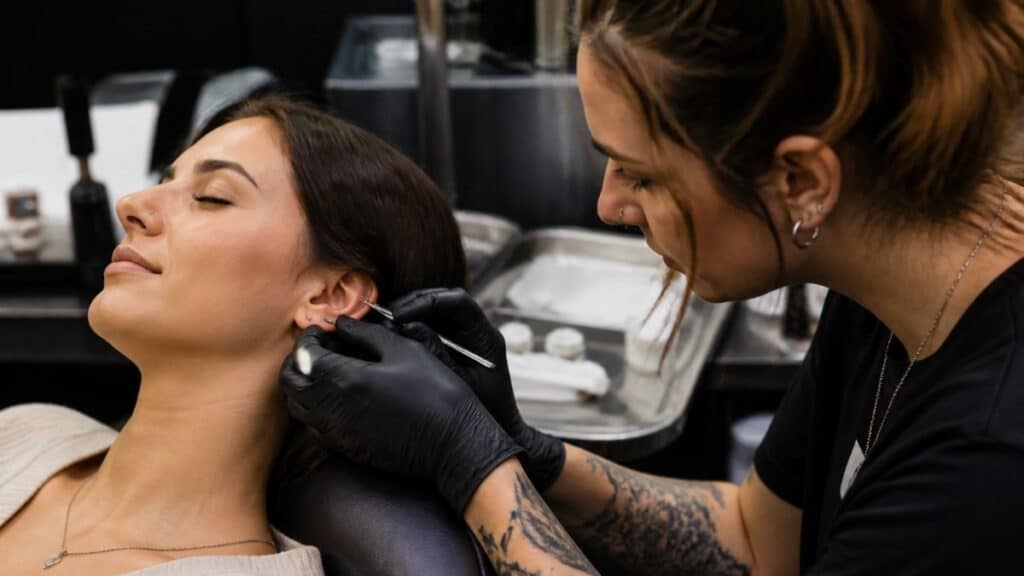
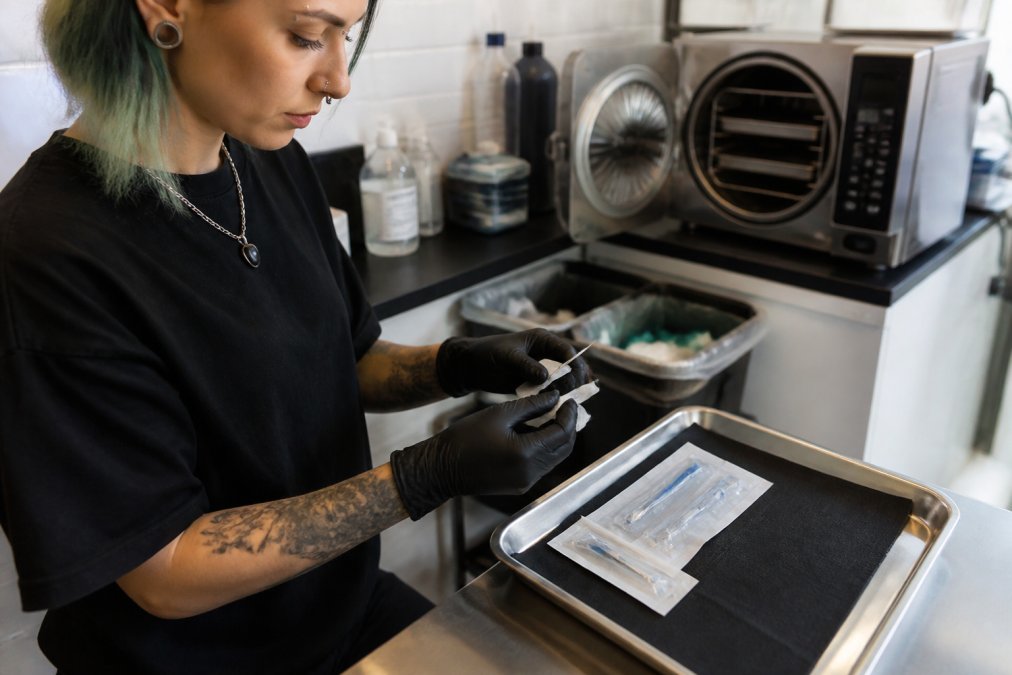
Two shops, same ear piercing, two very different prices. That gap pays for single-use needles, an autoclave, and a piercer who knows where nerves and blood vessels sit.
A professional piercing uses sterile, single-use equipment and implant-grade jewelry. The higher price covers safety, not just the piercing.
What drives the cost:
- Single-use needles and sharps disposal. A new needle per client, safely disposed.
- Autoclave sterilization. Hospital-grade steam sterilization, tested on a schedule.
- Implant-grade jewelry. Titanium or niobium that won’t trigger a nickel reaction.
- Training and certification. Bloodborne pathogen training and aseptic technique.
- Anatomy assessment. A good piercer maps your ear before marking.
Cheap piercings cut corners on all five, showing up weeks later as tissue trauma, a granuloma, or a keloid.
A piercing gun forces blunt jewelry through tissue instead of slicing cleanly with a hollow needle. That trauma raises your risk of infection and scarring, and guns are hard to fully sterilize between clients.
The Hidden Costs of Cheap Piercings
The low price at the counter isn’t the real price, add doctor visits, antibiotics, scar revision, removal and re-piercing, and jewelry replacement after a nickel reaction.
| Choice | Upfront | Hidden Costs | Long-Term Outcome |
|---|---|---|---|
| Cheap piercing | Lowest | Infection, scarring, re-do | Often removed or redone |
| Professional piercing | Higher | Rare | Heals clean, lasts years |
The Importance of Implant Grade Jewelry for Healing and Safety
Implant-grade jewelry is metal made to sit inside the body without triggering a reaction, usually implant-grade titanium, niobium, or 14k+ solid gold, not plated or mystery metal.
Nickel sensitivity is the most common cause of an angry piercing. Cheap jewelry often contains nickel. Implant-grade titanium is biocompatible, so your body accepts it.
The details most people miss:
- Threading. Internally threaded jewelry slides through smoothly; external threads scrape the healing channel.
- Gauge. Too-thin jewelry can migrate or reject.
- Length. Too short pinches, too long snags.
For aftercare: clean with sterile saline, don’t rotate the jewelry, don’t touch it with dirty hands, and give it full healing time before swapping jewelry.
How to Identify a Reputable Piercing Studio
A reputable studio shows you its safety protocols before you ask. If a shop won’t answer basic sterilization questions, walk out.
Use this checklist:
- Current bloodborne pathogen and first aid training
- Autoclave on-site, with spore test logs you can see
- Single-use needles opened in front of you
- Implant-grade jewelry, with material and gauge listed
- Visible, correctly used sharps container
- Clean, well-lit studio using aseptic technique
- Anatomy assessment before marking
- Written aftercare instructions
Ask to see the autoclave spore test log. A studio that runs one keeps dated records. A studio that doesn’t will change the subject.
Pros and Cons of Paying More
Pros: lower infection risk, implant-grade jewelry, proper anatomy assessment, cleaner healing, early detection of migration or rejection.
Cons: higher upfront cost, fewer walk-in slots, not every shop offers it.
For most people, the pros win. A piercing you have to remove and redo costs more than doing it right once.
Frequently Asked Questions
What are the health risks of getting a piercing at a non-professional studio?
Non-professional studios often skip autoclave sterilization, reuse needles, or use piercing guns that cause tissue trauma. This raises the risk of bloodborne pathogens, cross-contamination, infection, and poor healing. Jewelry may contain nickel, triggering allergic reactions or nickel sensitivity. Without proper anatomy assessment, piercings can migrate or reject. A professional piercing studio follows aseptic technique, uses single-use needles, and provides aftercare instructions to reduce these risks.
How does jewelry material affect the healing process of a new piercing?
Implant-grade titanium and other biocompatible materials reduce irritation and allergic reaction, supporting faster healing. Lower-quality metals often contain nickel, a common allergen that can cause redness, swelling, and delayed healing. Internally threaded jewelry also minimizes tissue damage during insertion. Choosing the right material is one of the most important factors in a smooth recovery and long-term comfort.
What should I look for in a professional piercing studio to ensure safety?
Look for a sterile environment, autoclave sterilization, single-use needles, and sharps disposal protocols. Ask about the piercer’s professional certification and training. Check that jewelry is implant-grade and internally threaded. A reputable piercer will perform an anatomy assessment, explain aftercare instructions, and discuss healing time. These professional studio standards protect you from infection and complications.
Choosing where to get pierced comes down to trust, not price. A studio that uses implant-grade jewelry, sterilizes with an autoclave, and hands you clear aftercare instructions protects you long after you leave. Sideshow Tattoo and Piercing offers hand-picked professional artists, a safe and professional piercing environment, and high-quality jewelry for long-lasting results. Contact Sideshow Tattoo and Piercing to book your piercing and get it done right the first time.