Table of Contents
- What to Know Before Visiting Walk-In Tattoo Shops in San Diego
- How to Prepare for a Walk-In Tattoo
- Average Cost of a Tattoo in San Diego
- Tattoo Shop Safety Standards You Should Expect
- Flash Art vs. Custom Design for Walk-In Tattoos
- Aftercare for Walk-In Tattoos
- Conclusion
- Frequently Asked Questions
Last Updated: September 20, 2026
What to Know Before Visiting Walk-In Tattoo Shops in San Diego
San Diego walk in tattoo shops let you get tattooed the same day you decide to do it, no appointment required. At Sideshow Tattoo and Piercing, we see walk-ins every week, from tourists wanting a small souvenir piece to first-timers testing the waters. The catch: walk-in availability depends on the day, the artist, and how complex your design is.
Walk-in tattoo culture thrives here because so many people decide spontaneously. A beach day turns into a flash piece. A piercings appointment turns into a small custom design.
What most guides skip is the logistics. You need to know when to show up, what to bring, and when a walk-in is realistic versus when you should book ahead.
Call ahead the same morning you plan to visit. Shops can tell you within minutes whether an artist has open time, which saves you a wasted trip.
How to Prepare for a Walk-In Tattoo
Preparing for a walk-in tattoo takes about 30 minutes of planning. Eat a full meal, hydrate, and wear clothing that exposes the area you want tattooed. Skip alcohol for at least 24 hours before your visit.
Bring a valid photo ID. Most professional studios in San Diego will not tattoo anyone under 18, and many require ID even for piercings. Bring a reference image or two if you have a specific design in mind, but stay flexible on placement and size.
Pre-Walk-In Preparation Checklist
- Eat a real meal within two hours of arriving
- Drink water throughout the day
- Avoid alcohol and blood-thinning medications for 24 hours
- Wear loose clothing that exposes the tattoo area
- Bring a valid photo ID
- Save 2-3 reference images to your phone
- Charge your phone and bring a snack for longer sessions
- Confirm walk-in hours by phone before you go
A common mistake is showing up on an empty stomach. Low blood sugar makes the pain feel sharper and raises the odds you’ll need to stop early.
Average Cost of a Tattoo in San Diego
Tattoo pricing here follows the same basic math as anywhere in the country, but the local market skews toward a few predictable patterns. Most walk-in pieces land in one of three buckets:
- Shop minimum: The floor price for any tattoo, no matter how small. At most studios this covers a tiny flash piece, a single word, or a simple symbol. Expect the minimum to apply to anything under roughly two inches.
- Hourly rate: Once a piece takes longer than the minimum covers, artists bill by the hour. Rates climb with the artist’s experience and demand.
- Flat project quote: Larger custom work is often quoted as a single number based on the artist’s estimate of total hours plus design time.
What Actually Drives the Number
- Size and detail: More linework, shading, and color means more needle time. A palm-sized piece with heavy shading can take two to three times as long as the same footprint in simple black linework.
- Placement: Ribs, sternum, hands, feet, elbows, and the back of the neck are slower to tattoo because the skin moves, stretches, or sits over bone. An arm or calf piece of the same size is usually faster.
- Color versus black and grey: Color adds setup, ink changes, and cleanup time, so it typically costs more than a comparable black-and-grey piece.
- Artist experience: A senior artist with a long waitlist charges more per hour than a newer artist at the same shop. That premium is usually worth it for detailed or visible work.
- Design time: Custom work includes drawing and stencil prep, which is either folded into the hourly rate or charged as a separate design fee.
Deposits, Minimums, and What to Ask
Most shops require a deposit to hold an appointment, and many apply that deposit to the final price.
- What is your shop minimum?
- What is this artist’s hourly rate?
- Is there a design fee, and does the deposit come off the total?
Budget a cushion above the quoted price. Sessions run long more often than they run short, and tipping your artist is standard practice.
For current pricing at Sideshow Tattoo and Piercing, contact us directly. We’ll give you an honest quote before any needle touches skin.
Tattoo Shop Safety Standards You Should Expect
Every reputable studio in San Diego should follow strict sanitation and needle safety protocols. Tattoo artists are required to use single-use needles, sterile equipment, and proper barrier protection for every client.
Look for these standards before you sit down:
- Fresh, sealed needles opened in front of you
- Single-use ink caps and gloves changed between clients
- An autoclave or documented sterilization process for reusable tools
- Artists trained in bloodborne pathogens and infection control procedures
- A clean, well-lit station with visible barriers on surfaces
Never accept a tattoo from someone who won’t open a sealed needle in front of you. Reused or improperly sterilized equipment can transmit serious infections.
Flash Art vs. Custom Design for Walk-In Tattoos
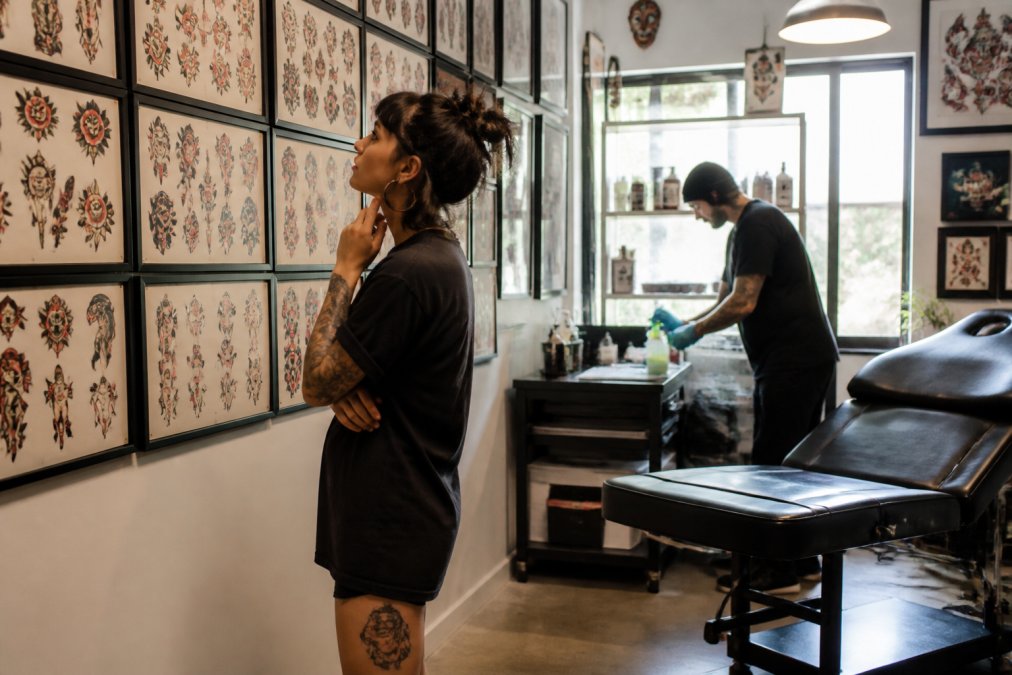
Flash art is the fastest path to a walk-in tattoo. Flash pieces are pre-drawn designs displayed on the wall, in a binder, or on the shop’s tablet, ready to tattoo with minimal setup. Custom design takes longer because the artist has to draw, revise, and stencil before the needle ever comes out.
Same-Day Feasible vs. Book Ahead
| Design Type | Same-Day Walk-In? | Why |
|---|---|---|
| Small flash (under ~2 inches) | Usually yes | Minimal setup, artist can start within the hour |
| Lettering, dates, coordinates | Usually yes | Quick to lay out and stencil |
| Simple custom linework | Often yes | Short draw time if the idea is clear |
| Medium custom with shading | Sometimes | Depends on artist’s open block |
| Large custom, sleeve, or back piece | No | Needs a consultation and multi-session plan |
| Cover-up work | Rarely | Requires assessment and design time |
| Fine-line or micro-realism | Sometimes | Depends on the artist’s specialty and current workload |
The Honest Trade-Off
Flash gets you in the chair today. Custom gets you exactly what you pictured, but usually on the artist’s schedule, not yours. If your idea is specific and personal, a short consultation is worth the wait. If you want something small, spontaneous, and well-executed, flash is the right call.
Wait Time Expectations
- Weekday mornings and early afternoons: Shortest waits. Often you can be in the chair within 15-30 minutes.
- Weekday evenings: Moderate waits as after-work clients arrive.
- Weekends: Longest waits, especially Saturday afternoons. Two to three hours is common at popular shops.
- Holidays and event weekends: Call ahead. Some shops pause walk-ins entirely.
Flash is a same-day decision. Custom is a scheduled one. Knowing which side of that line your idea falls on is the difference between walking out with a tattoo and walking out with an appointment.
At Sideshow Tattoo and Piercing, our hand-picked artists specialize in diverse styles, so we can match you with someone who actually gets your vision, whether that’s a flash piece today or a custom project planned for next week.
Aftercare for Walk-In Tattoos
Aftercare for a walk-in tattoo is no different from any other tattoo, but walk-ins often skip the planning that makes healing easier. Keep the area clean, moisturized, and out of direct sun for the first two weeks.
Follow these steps:
- Keep the initial bandage on as long as your artist instructs
- Wash gently with fragrance-free soap and lukewarm water
- Pat dry and apply a thin layer of recommended ointment
- Avoid pools, hot tubs, and ocean water until fully healed
- Don’t pick or scratch, even when it itches
Walk-in tattoos heal the same as booked ones. The only difference is that you have less time to prepare, so plan your aftercare before you leave the shop.
Conclusion
Getting a walk-in tattoo in San Diego is simpler than most people expect, but the smart move is still to plan ahead: confirm hours, prep your body, and know your budget before you walk in. Sideshow Tattoo and Piercing offers a welcoming environment for first-timers and experienced collectors alike, with hand-picked professional artists matched to your style and high-quality jewelry for every piercing.
Frequently Asked Questions
Do I need an appointment for a walk-in tattoo in San Diego?
No appointment is needed for walk-in tattoo services at most San Diego shops. Walk-in hours are typically first-come, first-served, so arrive early to secure a spot. Same-day service is common for small or flash pieces. If you want a large custom design, calling ahead to check artist availability is recommended. Some shops reserve a portion of their schedule for walk-ins while others take appointments only for larger projects.
What should I bring with me for a walk-in tattoo?
Bring a valid government-issued photo ID to prove you are at least 18 years old. Wear clothing that gives easy access to the tattoo area, such as shorts for a leg piece or a tank top for a shoulder design. Eat a full meal and drink water before you arrive to help manage discomfort. You may also want to bring a reference image on your phone, though artists can help refine your idea during the consultation.
Are walk-in tattoos more expensive than scheduled appointments?
Walk-in tattoos are generally not more expensive than scheduled appointments. Most shops charge the same hourly rate or shop minimum regardless of how you book. Some studios may offer flash designs at a set price for walk-ins, which can be a budget-friendly option. The final cost depends on size, detail, and artist experience, not on whether you walked in or booked ahead. Always ask about the shop minimum and deposit policy before starting.
How do I know if a walk-in tattoo shop is reputable?
Check that the shop uses single-use needles, sterile equipment, and an autoclave for sterilization. Look for visible health department permits and ask about bloodborne pathogen training. A reputable shop will show you artist portfolios and explain its sanitation process without hesitation. Read recent customer reviews and visit in person to see the studio’s cleanliness. Trust your instincts: if a shop feels unsanitary or rushes you, go elsewhere.